

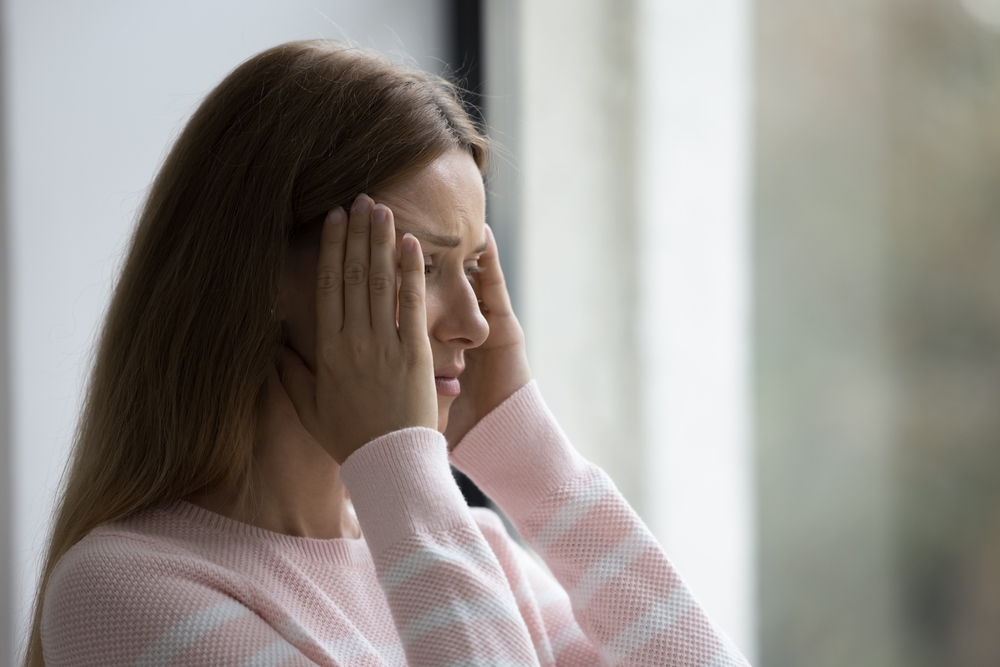
For years, some people have carried the same quiet accusation: you are too sensitive. You take things too personally. You think too much. You react too strongly. Yet a growing body of research has raised a different possibility. What if some people are not failing to cope with the world, but are simply processing more of it?
That question sits at the center of research into sensory processing sensitivity, a trait associated with deeper responses to emotional and environmental information. The science remains incomplete, and important questions are still being debated. But for many people, the research offers something that can feel surprisingly powerful: a new language for experiences they may have spent years trying to explain.

A Question That Began With One Therapist
In 1991, research psychologist Elaine Aron was sent to a therapist after being told she had “overreacted” to a medical procedure. The experience stayed with her, partly because the word carried an assumption. Her response had apparently been measured against an invisible standard, and it had been judged excessive. For anyone who has repeatedly been described as too emotional or too easily affected, that kind of judgment can reach beyond a single moment. It can slowly become part of how a person understands themselves.
The therapist offered Aron another way of looking at the experience. Perhaps she was simply highly sensitive. Aron later wrote that after the term was applied to her, she began seriously studying what the therapist might have meant. What she found was that psychology had not yet clearly described the phenomenon she wanted to understand. So she began researching it herself.
That search eventually helped shape the concept now known as sensory processing sensitivity. The idea is not that sensitive people live in a separate category from everyone else. It describes variation in how deeply people may process information from their surroundings and relationships. Some people appear to notice more, reflect longer, and respond more strongly to emotional or sensory experiences.
For a culture that often rewards speed, certainty, and emotional restraint, that distinction can carry personal weight. A trait is not the same thing as a diagnosis, and sensitivity does not automatically explain every emotional struggle. Still, having language for an experience can change the story a person tells themselves. Sometimes the difference between shame and understanding begins with finding a more accurate description.

Twenty-Seven Questions Changed the Conversation
Six years later, Elaine Aron and fellow research psychologist Arthur Aron published seven studies examining the trait. Their 1997 research described sensory processing sensitivity as something that was partly independent from social introversion and emotionality. This mattered because highly sensitive people had often been placed inside existing personality categories without much attention to whether something else might be happening.
The researchers also developed a 27-item questionnaire that became known as the Highly Sensitive Person scale. Based on early findings, the Arons estimated that around 15 to 20 percent of people might fall into the higher range of sensitivity. That estimate is the origin of the often-repeated claim that roughly one in five people are highly sensitive, although later discussions of the trait have suggested the figure may be higher.
The questionnaire asks people to reflect on how they respond to experiences such as sensory stimulation, emotional intensity, subtle changes in their environment, and other forms of information processing. Like many self-report measures, it depends on how accurately people understand and describe their own inner lives. That creates limitations, but it also reflects something psychology has always struggled to capture: the private experience of being inside a particular nervous system.
If the early estimate were broadly accurate, the implications would be easy to recognize in everyday life. In a classroom, workplace, family, or friendship group, someone may be taking in far more than the people around them realize. They may notice the shift in someone’s voice, the tension in a room, or the small details that others move past without registering.

What Brain Research Has Found So Far
In 2014, a research team led by Bianca Acevedo examined brain activity in 18 participants using functional magnetic resonance imaging, or fMRI. The participants were shown photographs of their romantic partners and strangers displaying happy, sad, and neutral expressions. Researchers then looked at whether higher sensitivity scores were associated with differences in brain activity.
The study found that higher sensitivity scores were linked with greater activity in regions associated with attention and action planning. When participants viewed happy and sad faces, researchers also observed activity in areas connected with awareness, sensory integration, and empathy, including the insula, cingulate, and inferior frontal gyrus. The findings offered an early glimpse into the possibility that highly sensitive individuals may process social and emotional information differently.
There is an important limitation here. Eighteen participants is a very small sample, and the study cannot provide a final explanation for how the highly sensitive brain works. Brain imaging can reveal patterns of activity, but it does not settle the larger questions surrounding personality, emotion, or human consciousness.
Still, the research raises an interesting possibility. Paying closer attention to the world can have consequences. The brain is constantly deciding what deserves notice, what requires reflection, and what can safely fade into the background. For some people, more of what happens around them may remain in focus.
The Research Is Still Developing
Scientists have not yet identified one simple mechanism that explains sensory processing sensitivity. A 2025 review proposed that highly sensitive brains may assign greater precision to incoming sensory signals, treating more information as worthy of careful attention. That remains a developing theoretical explanation rather than a final answer.
The uncertainty is part of what makes this field worth approaching carefully. Human differences rarely fit into a single clean explanation. Research can identify patterns without turning those patterns into permanent labels or complete identities.
Sensitivity Appears Across the Animal World
The tendency to respond differently to environmental conditions did not begin with modern psychology. Evolutionary biologists have documented differences in environmental responsiveness across more than 100 nonhuman species, including fish, birds, rodents, and primates. Within many populations, some individuals appear more cautious and observant, while others are quicker to explore or act.
Both approaches may offer advantages under different circumstances. An individual that moves quickly may discover opportunities first. Another that pauses and carefully assesses its surroundings may avoid dangers that a faster-moving companion misses. Over time, variation itself may become useful to a population.
The idea that sensitivity has evolutionary roots is therefore plausible, but the phrase “born highly sensitive” needs some care. A twin study involving adolescents, published in Molecular Psychiatry, estimated the heritability of environmental sensitivity at 47 percent. In broad terms, the findings suggested that genetic differences explain a substantial portion of variation between people.
The other part is shaped by experience. Family life, education, relationships, stress, opportunity, and countless other experiences all interact with a person’s biological starting point. Nobody arrives in adulthood as a finished blueprint. Biology may provide part of the foundation, while life continues building on it.

That interaction may be one of the most useful ideas to come from this research. Sensitivity does not have to mean destiny. A person can have a strong tendency to notice and feel deeply while still changing how they understand, manage, and respond to those experiences.
The nervous system is influenced by the world it encounters. That makes environment matter, particularly for people who may be more responsive to both harmful and supportive experiences.
Creativity And Empathy May Be Connected
On January 15, 2025, Dutch researchers published findings from 296 adults who completed questionnaires examining sensitivity, creativity, and empathy. Higher sensitivity scores were associated with generating more creative ideas and with higher levels of affective and cognitive empathy. Affective empathy involves emotionally resonating with another person’s feelings, while cognitive empathy involves understanding what another person may be experiencing.
Many of the associations remained after researchers accounted for factors including openness to experience, age, gender, and education. One part of the sensitivity measure appeared particularly important: aesthetic sensitivity. This aspect involves responsiveness to beauty and subtle experiences, such as music, art, or changes in the natural environment.
The findings are intriguing, though they do not prove that sensitivity causes creativity or empathy. The researchers acknowledged several limitations. Their sample was drawn largely from personal networks, was mostly female, and scored higher in sensitivity than the general population. A snapshot of this kind can identify relationships between traits, but it cannot determine which factor influences another.
Even so, the questions raised by the research are deeply human ones. Why do some people seem more affected by music? Why does one person notice a subtle emotional shift while another misses it entirely? Why can the same experience become a passing moment for one person and a source of creative inspiration for someone else?
The Line Between Sensitivity And Other Experiences
The concept of high sensitivity has also faced serious criticism. In December 2024, psychologist Amanda Moses argued that the Highly Sensitive Person scale had not been validated rigorously enough to clearly distinguish sensitivity from anxiety, autism, or cultural differences in emotional expression. This is more than an academic debate.
A label can be useful when it helps someone understand themselves. It can become harmful when it prevents them from seeking support that better fits their actual needs. Someone who interprets significant sensory difficulties or social challenges only through the language of sensitivity may overlook the possibility that an autism assessment or another form of professional support could be relevant.
Researchers have also found overlap between sensitivity scores and traits such as neuroticism. That complicates the popular idea that sensitivity can be neatly separated from emotional tendencies. The estimated percentage of highly sensitive people has also shifted over time, with Aron herself later suggesting the figure may be closer to 30 percent.
This is where careful language matters. Sensory processing sensitivity is a research construct, not a universal explanation for emotional intensity. Being highly sensitive does not automatically mean a person is anxious, autistic, creative, empathic, or mentally unwell.
Human experience contains overlap. A person may recognize themselves in several different descriptions, or in none of them. The purpose of research should be to bring greater clarity, not to replace one narrow box with another.
Why Support May Affect Sensitive People Differently
One of the most interesting findings in this field comes from research into what happens when sensitive people receive the right kind of support. Michael Pluess and Ilona Boniwell studied a 12-week resilience program involving 363 girls at a state secondary school in one of England’s most deprived areas. At the beginning of the study, sensitive and less sensitive students had similar levels of depressive symptoms. Over the course of the program, however, the more sensitive girls showed continued improvement. Their symptoms remained lower even a year after the program began, while the less sensitive group did not show the same pattern of improvement.
Pluess described this pattern through the idea of “vantage sensitivity.” The theory suggests that people who are especially responsive to difficult environments may also be especially responsive to positive experiences and supportive interventions.
That possibility changes how sensitivity is often discussed. The same openness to experience that can make a person vulnerable to stress may also allow them to benefit deeply from encouragement, education, meaningful relationships, and psychological support.
Research into environmental sensitivity suggests that some people may be more affected by both adversity and opportunity. That does not make sensitivity a weakness or a superpower. It suggests that context may carry unusual weight for certain individuals. The quality of a person’s relationships, surroundings, and support systems can shape what their sensitivity becomes in practice.
What A Different Word Can Change
Elaine Aron entered a therapist’s office after being told that she had overreacted. She left with a word that encouraged her to ask a different question about herself. That question eventually became a field of research involving questionnaires, brain imaging, genetics, evolutionary biology, and studies of how people respond to their environments.
Much remains unresolved. Researchers are still debating how many people fall within the highly sensitive range, how well existing questionnaires distinguish sensitivity from related conditions, and what biological mechanisms may be involved. The uncertainty deserves to remain visible rather than being hidden behind a simple viral headline.
Yet the search itself has value. Many people have spent years being told that their responses were excessive without ever being invited to understand where those responses came from. Research cannot tell any individual exactly who they are, but it can widen the range of possibilities.
Perhaps the most meaningful shift is a simple one: some experiences may feel larger because a person is taking in more of them. The world may never become quieter, but understanding how one responds to it can make that noise feel less like a personal failure.
Sources:
- Sensitivity Research. (2025, September 10). Sensory processing sensitivity, introversion and emotion. https://sensitivityresearch.com/publication/sensory-processing-sensitivity-and-its-relation-to-introversion-and-emotionality/
- Assary, E., Zavos, H. M. S., Krapohl, E., Keers, R., & Pluess, M. (2020). Genetic architecture of Environmental Sensitivity reflects multiple heritable components: a twin study with adolescents. Molecular Psychiatry, 26(9), 4896–4904. https://doi.org/10.1038/s41380-020-0783-8