

A Teacher’s Simple Request About Childhood Skills Has Millions Rethinking What Kids Need
A third grade teacher recently sparked a much larger conversation after sharing a list of everyday skills she says some of her eight and nine year old students are struggling to master. Reading an analog clock, tying shoelaces, remembering a parent’s phone number, and even knowing their home address may sound like small details. Yet when millions of people heard her concerns, the discussion quickly became something deeper: what are children learning from the world around them, and what might they be missing?
The conversation could easily become another argument about parents, schools, or technology. Her message offers a gentler place to begin. Children grow through countless ordinary moments, and many of the abilities that help them become independent are learned outside formal lessons. Sometimes the most valuable teaching happens at a kitchen table, in a parked car, while getting dressed, or during the few extra minutes an adult gives a child to figure something out alone.
The Ten Skills That Started The Conversation
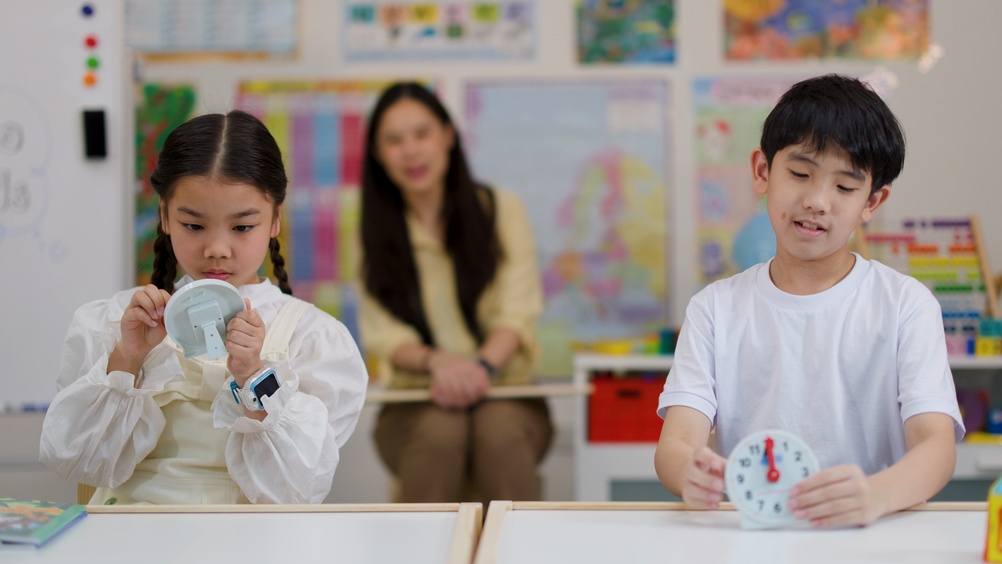
On November 8, 2025, a third grade teacher who goes by @mommy_n_zachy shared a short video describing ten everyday skills she said some of her students were arriving at school without. Her list included reading an analog clock, writing in cursive, counting physical money and identifying coins, tying shoelaces, using a dictionary, putting words in alphabetical order, and following directions with more than one step.
The final four skills carried a different kind of weight. She said some children did not know their home address, their parents’ phone numbers, their parents’ names, or the year they were born. Those details may appear simple to an adult who has carried them for years, but they are forms of knowledge children can rely on when they need to communicate independently.
Her request was not framed as an attack on families. Instead, she asked viewers for help. “If y’all can help us out, we need to go back to basics,” she said, turning what could have been a complaint into an appeal for cooperation.
That distinction helped the video travel far beyond the classroom where the concerns began. Close to five million people watched it, while other teachers shared their own experiences and parents debated which skills still belong in modern childhood. Beneath the disagreement was a question many adults seemed willing to consider: are children getting enough chances to practice doing things for themselves?
Some Childhood Skills Have Simply Changed
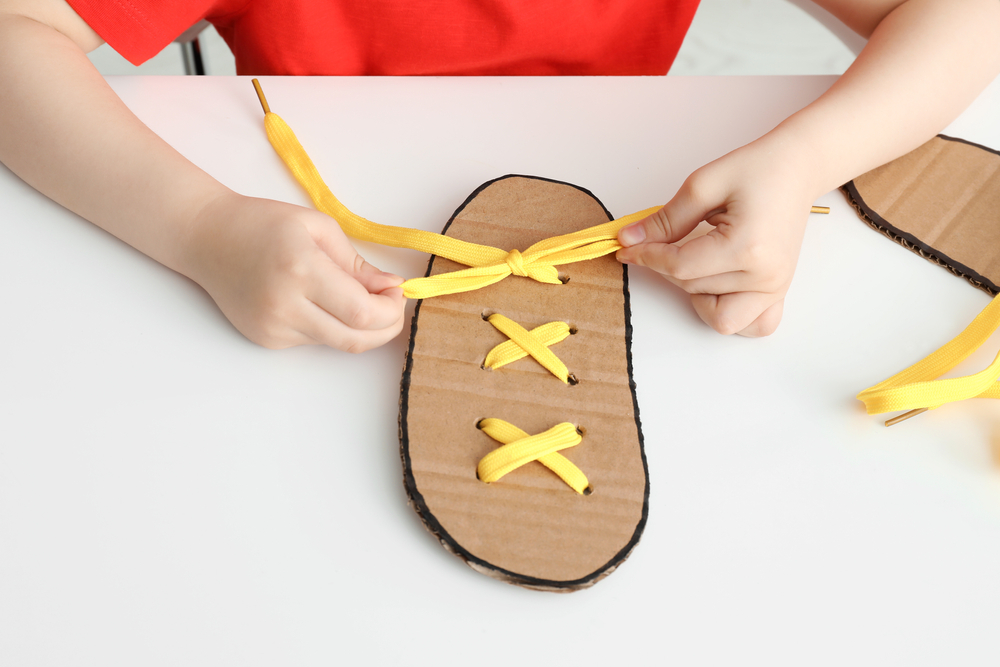
Several items on the list are closely tied to a world that has changed. Many adults learned cursive because handwritten communication was central to school and everyday life. Today, children spend much more time typing, tapping, and communicating through digital devices, so cursive naturally occupies less space in many people’s lives.
The same shift can be seen with dictionaries and cash. A phone can define a word within seconds, while a digital payment can eliminate the need to count coins. These technologies are useful precisely because they remove small tasks that previous generations had to perform themselves.
That does not automatically make those older skills worthless. Learning to alphabetize words can teach organization, while counting money can strengthen practical number sense. Reading an analog clock can require a child to connect numbers, positions, and the passage of time in a way that looking at a digital display does not.
The more useful question may therefore be what each skill teaches along the way. A child does not necessarily need to become an expert in every traditional ability, but opportunities to practice patience, memory, coordination, attention, and problem-solving remain valuable regardless of the technology available.

Knowing How To Get Home Is Different
There is an important distinction between losing an old-fashioned skill and losing information that a child may need in an emergency. Forgetting how to write in cursive is unlikely to leave a child unable to explain who they are. Not knowing their address or a parent’s phone number can create a very different situation.
Children eventually need to communicate with adults outside their immediate family. If they become separated from a parent, get lost, or need assistance, being able to provide basic identifying information can make it easier for someone to help them.
These skills can also be taught without creating fear around emergencies. A parent might practice a phone number while driving, ask a child to recite their address during a routine conversation, or explain the names of family members in a way that feels natural rather than instructional.
The process is less about memorizing a list for a test and more about giving children information they can carry with them. Independence often begins with knowing a few simple things without having to reach for a device or wait for an adult to answer.

Telling Time Still Has A Place In School
Reading an analog clock also occupies an interesting position because it is not simply a nostalgic preference. The Common Core third grade mathematics standard asks students to tell and write time to the nearest minute and measure time intervals in minutes. For children working within that curriculum, understanding a clock with hands remains part of their academic learning.
That makes the teacher’s observation more complicated than a debate about whether old skills are still fashionable. A child may rarely encounter an analog clock outside school, yet still be expected to understand one in the classroom.
Cursive has also begun receiving renewed attention in some parts of the United States. California enacted legislation requiring cursive instruction from first through sixth grade, with the requirement taking effect in 2024. The change reflects an ongoing debate over which traditional skills deserve a place in modern education.
Technology will continue changing what children need to know. The challenge for families and educators is deciding which skills can disappear without consequence and which ones still provide children with useful foundations for independence, learning, and everyday life.
Children Are Growing Up With More Technology
The teacher connected some of her observations to the role technology now plays in childhood. That connection deserves careful consideration, especially because digital devices have become part of family life at increasingly young ages.
A Common Sense Media census published in February 2025 found that children eight and under averaged about two and a half hours of screen media each day. The same report found that 40% of two year olds had their own tablet and that 25% of eight year olds had a cellphone.
James P. Steyer of Common Sense Media described young children as being “on the front lines of an unprecedented digital transformation.” The numbers show how quickly technology has become embedded in childhood, but they cannot establish that screen use caused the specific difficulties described by one teacher.
That distinction matters. One classroom experience is not a national study, and children develop within very different families, schools, communities, and circumstances. The conversation becomes more useful when technology is treated as one influence among many rather than as the single explanation for every change in childhood.
Parents And Teachers Are On The Same Side
The response from other educators suggested that the teacher was not alone in noticing gaps among some students. One teacher wrote, “I have students that don’t know their birthday.” Other people pushed back, arguing that some skills disappear because society no longer depends on them.
There is truth in both observations. Schools cannot teach every practical skill a child might need, while parents cannot be expected to provide every piece of academic instruction. Children learn through a combination of formal education, family routines, friendships, technology, and the ordinary experiences that fill their days.
That makes cooperation more useful than blame. A teacher can reinforce reading a clock, following instructions, and organizing information in the classroom. A parent can reinforce those abilities through simple experiences at home without needing to create another demanding schedule.
Children also benefit when adults allow them to participate in tasks instead of constantly making those tasks easier. Letting a child count the change, read the clock, tie their own shoes, remember a phone number, or complete several instructions can take longer. That extra time can also give them something increasingly valuable: practice being capable.
Five Simple Ways To Build Independence
The skills the teacher described do not require expensive classes or specialized equipment. Many can be practiced naturally during routines that families already have.
- Practice important information: Help children learn their address, a parent’s phone number, their parents’ names, and their birthday.
- Use everyday directions: Give children two or three connected instructions and allow them to complete the sequence independently.
- Let children handle real objects: Counting coins, reading clocks, tying shoes, and organizing words provide hands-on practice.
- Allow room for mistakes: A child learning a practical skill may need several attempts before getting it right. Resist the urge to take over too quickly.
- Turn practice into routine: A few minutes during a car ride, meal, bedtime, or shopping trip can reinforce useful abilities without feeling like homework.
These activities offer something beyond the individual skill being practiced. They give children repeated experiences of solving problems without immediate assistance. That experience can gradually change how a child approaches unfamiliar tasks.
A child who struggles to tie a shoe may eventually discover that persistence works. A child learning an address may become more confident speaking to an unfamiliar adult. A child who learns to follow several instructions may begin handling responsibilities with less supervision.
None of those outcomes requires parents to recreate school at home. They simply require children to be given opportunities to participate in the world around them.
The Request Was Smaller Than The Debate
The teacher eventually explained what she wanted from families: “We’re going to do our part as teachers, but we just need a little extra help at home. Please, please, please. We’re a community. We work together. So let’s set our kids up for success.”
That request is easy to overlook beneath the larger arguments about technology and education. She was not asking families to reject modern life or return to an earlier version of childhood. She was asking adults to notice the small abilities children can learn through repetition and everyday responsibility.
The debate over cursive, dictionaries, clocks, and cash will probably continue because society will keep changing. But some skills are less about the object itself than about what children experience while learning to use it.
A child who can complete something independently carries that experience into the next challenge. Sometimes the best preparation for a complicated world begins with giving a child enough time to tie their own shoes.