


What Happens When a Country Bans Products Designed to Break? France Has the Answer
Across the globe, consumers have grown used to a frustrating routine. A phone slows down after a few updates. A washing machine breaks just outside its warranty period. A printer suddenly refuses to function without explanation. For years, these experiences were treated as unfortunate but inevitable side effects of technological progress. Yet in France, a different narrative began to take shape, one that questioned whether some products were intentionally designed with short lifespans built into their DNA.
That national reckoning did not begin in a boardroom or a ministry office. It began with a documentary and a young activist who refused to accept that disposability was simply the price of modern living. Laetitia Vasseur, founder of HOP, once said, “I’m not ‘David vs. Goliath’. I just want the law to be respected.” From that conviction grew lawsuits against multinational corporations, new criminal penalties, and sweeping transparency rules that are now influencing policy far beyond French borders. The deeper question remains whether these reforms can permanently reshape how companies design and sell the products that fill our homes.
A Documentary That Lit the Spark
The turning point came in 2012 when Vasseur watched “The Light Bulb Conspiracy,” a film that explored historical and contemporary examples of shortened product lifespans. The documentary examined how a 1920s lightbulb cartel allegedly agreed to limit bulb durability and presented modern cases such as printers disabled by internal chips and electronics sealed shut to prevent battery replacement. “It was a turning point in my life,” Vasseur later recalled.
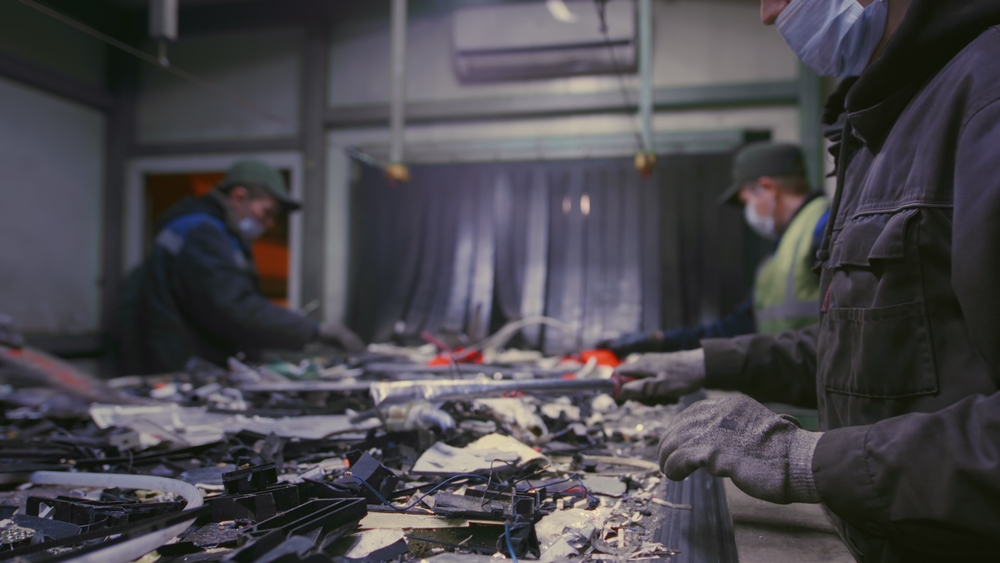
The film also laid bare the environmental consequences of throwaway culture. In 2016, the world generated more than 44 million tons of electronic waste. Much of it ended up burned or buried, leaking toxic substances into ecosystems. According to global estimates, humanity produces roughly two billion tons of solid waste every year. Behind every discarded device lies a chain of extraction, manufacturing, and transportation that consumes vast quantities of energy and raw materials.
Motivated by what she had seen, Vasseur approached Senator Jean Vincent Placé with urgency. “We need to make a law against planned obsolescence in our country,” she told him. Placé later admitted, “Honestly, I didn’t know what it was at the time,” and conceded he was skeptical. Nevertheless, he invited her to research the issue and propose concrete action. What followed would test both political patience and corporate resistance.
Confronting Denial and Doubt

As Vasseur began meeting consumer groups, environmental organizations, manufacturers, and economists, she encountered stiff opposition. Industry leaders rejected the premise outright. Gérard Salommez, President of Gifam, stated, “There is no planned obsolescence in household appliances.” Economist Alexandre Delaigue dismissed the idea as “a myth, nurtured by a left wing ideology of degrowth,” adding, “This practice has never been seen on household appliances, whether large or small.”
Critics maintained that competitive markets would discourage poor quality design. If a product failed prematurely, consumers could switch brands, thereby disciplining manufacturers. However, Vasseur’s research suggested a more complicated reality. In sectors dominated by a handful of global players, meaningful choice can be limited. Increasingly complex electronics, glued components, and proprietary parts have made independent repair more difficult and costly.
In early 2013, members of the Green Party introduced proposals aimed at countering the trend. These included longer warranties, guaranteed access to spare parts, and financial penalties for companies found guilty of deliberately shortening product lifespans. Although the Greens represented only a minority in Parliament, a debate was held. Notably, while concerns about economic impact were voiced, no lawmaker publicly defended the principle of intentionally reducing durability. That absence of defense marked a subtle but important shift.
Turning a Concept Into Criminal Law

Momentum eventually culminated in August 2015, when France passed an energy transition law that formally defined planned obsolescence as a criminal offense. Companies found guilty could face two years in prison and fines of up to 300,000 euros. France became the first nation to enshrine such a ban in its legal system, sending a signal that durability was not merely a consumer preference but a matter of public interest.
For activists, the passage of the law represented a beginning rather than an end. Adèle Chasson described the moment by saying, “When that law passed in 2015, that was really the start of it for us, the catalyst.” The challenge quickly became enforcement. Demonstrating intent requires detailed technical evidence and coordinated complaints from affected consumers.
To meet that challenge, Vasseur founded Halte à l’Obsolescence Programmée, known as HOP. The organization collected testimonies from customers reporting malfunctioning printers, slowing smartphones, and other suspicious failures. In 2017, HOP filed cases against Epson and Apple. The Apple investigation ultimately resulted in a 25 million euro fine for deceptive commercial practices related to iPhone performance management. Although small relative to corporate revenues, the decision confirmed that the law could be activated.
Building Transparency Through the Repairability Index

After the Apple case, Vasseur recognized that courtroom victories alone would not redefine industrial norms. “After the Apple case, I understood that there wouldn’t be a lot of clear cut cases like this one,” she acknowledged. Sustainable change would require altering incentives and empowering consumers with clear information.
This insight gave rise to France’s Repairability Index, introduced in 2020 under a broader anti waste circular economy framework. The index assigns a visible score from 1 to 10 to products such as smartphones, laptops, and household appliances, indicating how easy they are to repair. Criteria include accessibility of components, availability and pricing of spare parts, and access to repair manuals.
The policy has influenced both consumers and manufacturers. Surveys indicate that more than half of French citizens are aware of the index and that a large majority of those familiar with it consider it trustworthy. Manufacturers aiming for higher ratings have begun redesigning products to improve accessibility and parts supply. Camille Beurdeley of Gifam observed that companies are already adapting in response to the scoring system, demonstrating how transparency can reshape market behavior.
Rethinking the Economic Model

Beyond specific regulations, the French debate has revived interest in the concept of a circular economy. This model seeks to minimize waste by encouraging repair, reuse, refurbishment, and recycling. During her extended travels abroad, Vasseur experimented with living minimally and consuming less. Reflecting on that experience, she said, “The fact of disconnecting totally from mass consumption reconnected me to nature. That’s when I became an environmentalist.”
The broader European context underscores the urgency. Pascal Durand noted, “Every day in Europe, 43 kg of resources is consumed, per inhabitant. That is 30% more than 50 years ago! We have become a disposable society.” Resource extraction, waste generation, and greenhouse gas emissions are intertwined consequences of short product lifecycles.
Public attitudes appear to be evolving. Christopher Santerre remarked, “Nine years ago, almost no one had heard about planned obsolescence. It sounded like a barbaric technical term. But it’s huge!” France has complemented legislative measures with practical incentives, including a Repair Fund that offers discounts at approved repair shops, helping make fixing an item more affordable than replacing it.
Influence Beyond French Borders

France’s approach has resonated at the European level. In 2017, the European Parliament adopted a resolution promoting longer product lifespans and stronger repair rights. Durand acknowledged the limits of policy by stating, “Nobody claims to solve all problems with a magic wand,” yet emphasized that durability is no longer a fringe concern. Subsequent European initiatives have strengthened right to repair provisions across member states.
The movement has also reached other countries. The United Kingdom now obliges manufacturers to provide spare parts for certain appliances. In the United States, numerous states have introduced right to repair bills, with several already enacted. While legal frameworks vary, the underlying idea is gaining legitimacy worldwide.
Chasson stressed that legislation must be enforced to matter, warning that if planned obsolescence is banned but not applied, “there’s no point having a law.” Vasseur remains focused on expansion, stating, “Now that we have a prototype that works in France, we are working on extending the Durability Index to the European Union and the rest of the world.” Whether that ambition materializes will depend on cooperation among governments, businesses, and consumers alike.
A Shift That May Outlast the Law
France’s campaign has not eliminated waste, nor has it resolved every enforcement difficulty. Proving intent remains complex, and multinational supply chains extend beyond national jurisdiction. Still, within little more than a decade, the country has criminalized planned obsolescence, imposed penalties on global firms, introduced repair scoring, and mobilized tens of thousands of citizens.
Equally significant is the cultural transformation underway. Repair has reentered mainstream conversation. Longevity is increasingly framed as innovation rather than nostalgia. Consumers are beginning to weigh durability alongside price and design when making purchases.
Whether planned obsolescence truly becomes obsolete is uncertain. What is certain is that a movement once dismissed as marginal has influenced legislation across Europe and sparked global debate. Vasseur’s insistence that “I just want the law to be respected” reflects a broader demand for accountability in an era defined by rapid consumption. In confronting the lifespan of everyday objects, France has challenged the lifespan of an entire economic mindset.
Featured Image Source: Shutterstock