

Students Are Learning Auto Repair By Helping Families In Need
A garage door rises, a mother sees a car waiting for her, and a room full of teenagers starts clapping. For the students who rebuilt it, months of mechanical work suddenly become something much bigger.
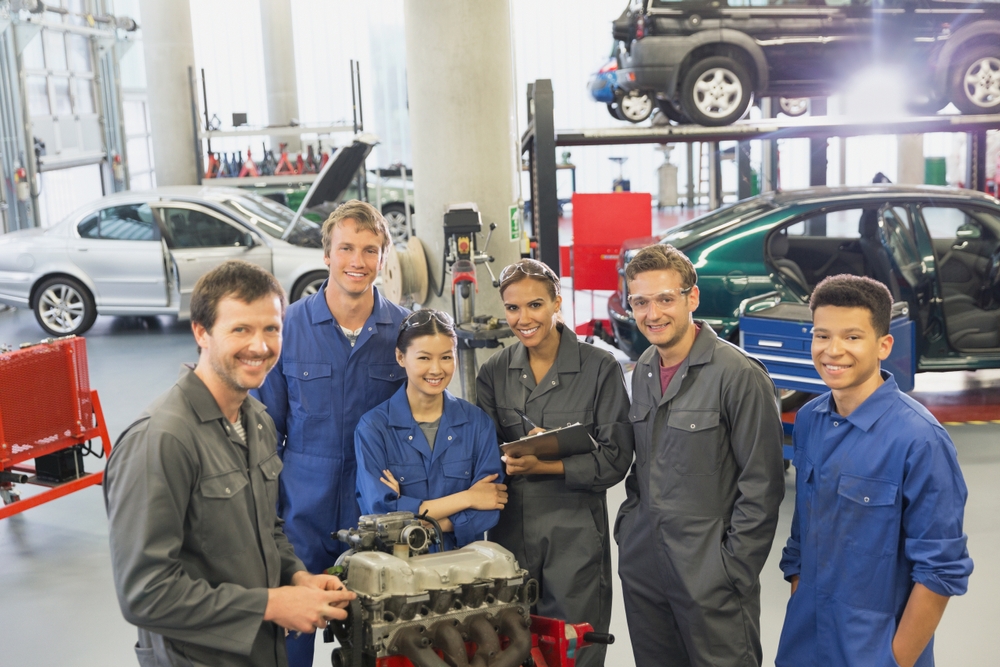
At Louisa County High School in Mineral, Virginia, automotive students restore used vehicles and donate them to single mothers who need reliable transportation. The project turns everyday shop lessons into a chance to change someone’s life.
The Moment The Garage Door Opens
Holden Pekary was 16 when he found himself putting the final screws into a license plate on a car he would never drive.
Nearby stood a mother holding her baby. She had come to receive the vehicle that Pekary and his classmates had spent school days repairing.
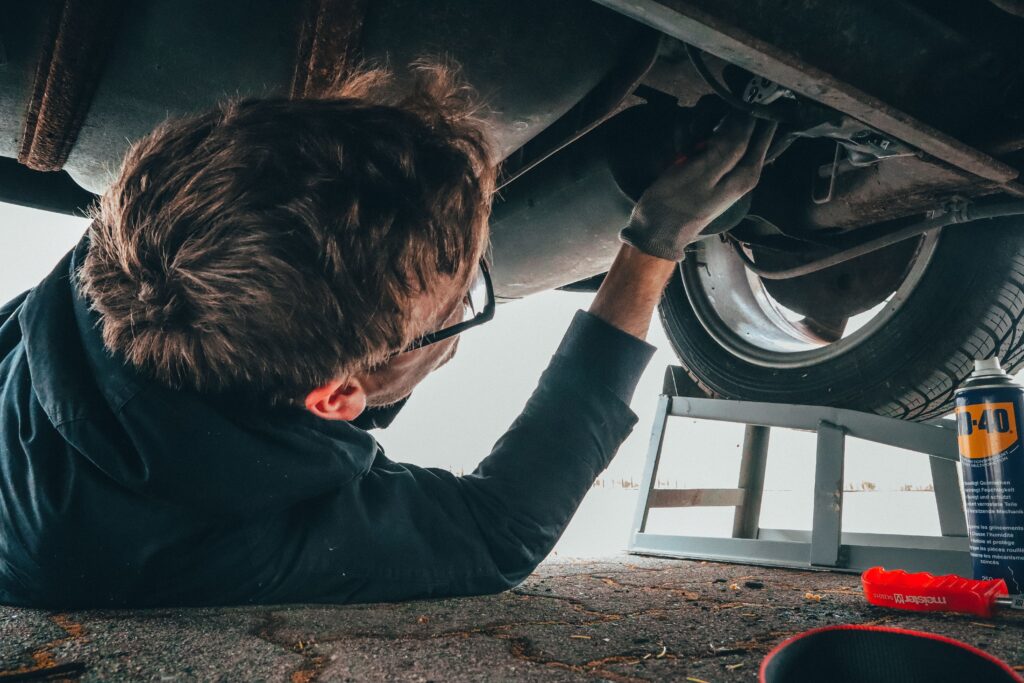
The students had worked on the brakes, tires, heating and cooling systems, fluids, and battery. Before the car could leave the school, it also had to pass a safety inspection.
Then came the part no worksheet could prepare them for.
Shane Robertson, who teaches the automotive technology program, described the experience simply: “They get a real shop experience. You’ve got real life intersecting with education.”
That intersection is what makes the program unusual. Students are not practicing on a vehicle that will sit behind the school. Their work is being handed to someone whose daily life can depend on whether that vehicle starts in the morning.
Twenty Students Work On Every Car
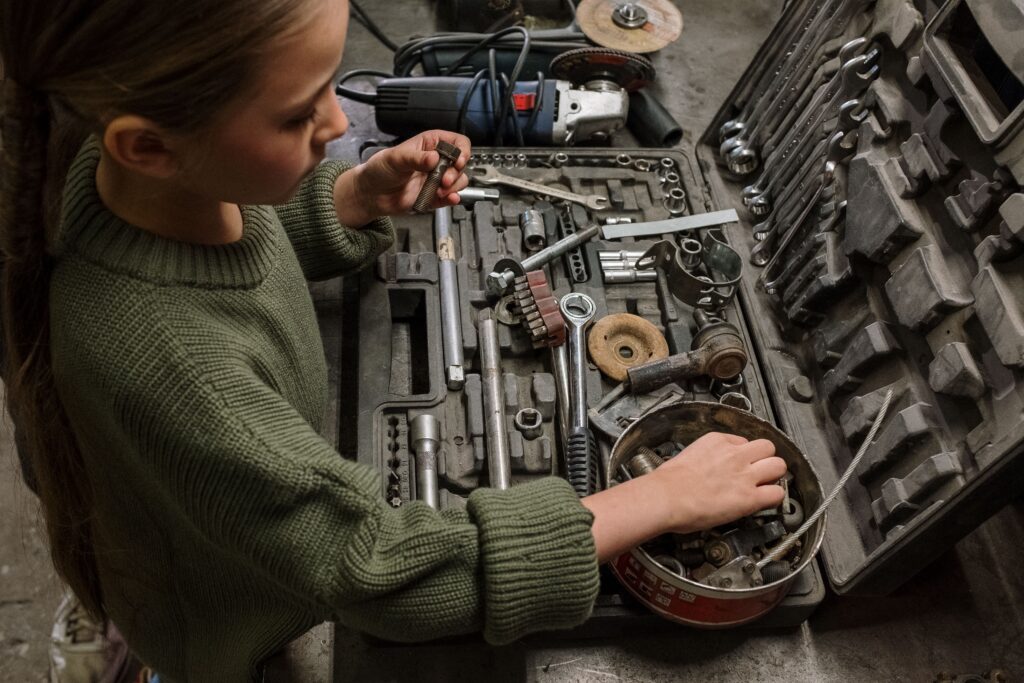
About 20 students work on each donated vehicle. The program typically produces around five finished cars a year, giving teenagers repeated opportunities to practice mechanical skills while working toward a concrete purpose.
The lessons are technical, but the stakes are human.
Tyler Shelton, a student in the program, described learning about the electrical systems behind the vehicles. “We’re learning about all the electricity of the car and how the wiring works.”
The students learn several things through the work:
- Mechanical skills: They practice repairs involving brakes, tires, fluids, batteries, heating, and cooling systems.
- Problem-solving: When something does not work, they identify the problem and keep working toward an answer.
- Responsibility: Their finished work has to be safe because another family will depend on it.
- Empathy: The person receiving the vehicle stops being an abstract beneficiary and becomes someone standing in front of them.
That last lesson can be difficult to teach from a textbook.
Shelton put it another way: “If you can’t figure it out, you just gotta keep trying. It teaches you that failing is OK.”
For teenagers learning a trade, that lesson could follow them long after graduation.
A Single Parent Helped Start The Idea
The cars come from Giving Words, a nonprofit founded by Eddie Brown and his wife in 2018.
Brown’s motivation came from his own experience as a single parent. He remembered sitting on the floor coloring with his children while worrying about how he would provide for them.
“I remember as a single parent sitting in the floor, coloring with my children and not being present because I was worried about how I was going to feed them,” Brown said.
Transportation was part of that pressure.
A vehicle can determine whether someone gets to work, takes a child to an appointment, or makes it home without relying on another person. For a parent already managing limited time and money, a broken-down car can create a chain reaction of problems.
Brown explained the concern directly: “A broken-down car means she can lose her job, miss her appointments.”
That understanding shaped Giving Words’ mission. The organization began providing vehicles to people who needed dependable transportation, while the school partnership gave students a way to turn their automotive training into practical service.
One 2007 Prius Changed A Mother’s Work Life
Jessica Rader was 40 and raising three children when she was selected to receive a vehicle.
Before the donation, she depended on friends and family for rides. The uncertainty made ordinary responsibilities harder to manage.
Then she received a 2007 gold Prius that students had rebuilt.
“It wasn’t even three months later, and they gave me a car,” Rader said.
The vehicle changed more than the way she traveled.
Rader worked at the Zoe Freedom Center, and having dependable transportation allowed her to move from part-time work to full-time employment.
“Because I had that vehicle, I was able to go from a part-time job to a full-time job,” she said.
The students eventually met Rader in person. That meeting gave the classroom project a face.
“I got to meet all of them; it was breathtaking,” Rader said.
She also described what the experience meant beyond the vehicle itself: “It’s not just about the car. It’s about community.”
The Students Learn What A Classroom Cannot Teach
There is a particular kind of education that happens when your work affects someone you have never met.
A student can make a mistake while learning how a braking system works. They can take something apart and struggle to understand why it is not functioning properly. They can ask questions, try again, and eventually get the answer.
But when the finished vehicle belongs to a mother with children, the work carries another layer of responsibility.
Pekary experienced that firsthand.
When the garage doors opened for one recipient, the students clapped. Pekary had been responsible for putting the license plate onto the vehicle.
“I put the license plate on the car for her, and she had a little baby in her arms,” he said.
Those four screws became a small physical symbol of a much larger experience.
The students had spent their time learning how cars work. They also discovered what it feels like when something they built becomes useful to another person.
Pekary said the experience gave him “more of a purpose.”
Brown has seen that effect develop among students participating in the project.
“It builds character and empathy,” he said. “Everything has a ripple effect.”
Virginia Has Taken Notice Of The Program
The project has grown beyond individual classroom assignments.
Virginia’s Department of Education recognized the Louisa County program with a Creating Excellence Award on June 12, naming it the top career and technical education program among the 20 divisions in Region Five.
Six weeks later, Robertson and co-instructor Pete Galanti received the Virginia School Boards Association’s Excellence in Workforce Readiness Award. The competition included all 132 school divisions in Virginia.
The automotive program also had 156 students enrolled across Automotive I, II, and III during the 2024 to 2025 school year.
The partnership with Giving Words has produced an even more tangible result.
The nonprofit has handed over more than 60 cars since Brown founded it. More than 260 vehicles have been put back on the road through the broader partnership, with students rebuilding about half of those 60-plus donated cars.
The Car Is Only Part Of What Gets Passed On
It would be easy to describe this as an automotive education success story.
The students are certainly learning valuable trade skills. They are gaining experience with real vehicles and working through problems that cannot always be solved by following a classroom exercise.
But the deeper lesson comes from the person waiting at the end.
A brake repair can help someone get to work. A working battery can make a morning less uncertain. A reliable car can mean fewer calls asking friends or relatives for a ride.
Shelton captured that shift when he said, “Not everybody has everything they want. And given something that someone needs, it feels good.”
That is a useful distinction for any classroom.
Education often asks students what they can accomplish. This program also asks what they can do with what they have learned.
A School Garage Became A Place Of Connection
The most striking image from the program may be the simplest one: teenagers standing inside an automotive shop while a mother receives a car they helped rebuild.
No elaborate ceremony is required.
The garage door rises. The students see the recipient. She sees the people who worked on her vehicle. For a few minutes, the distance between a classroom and a community disappears.
Rader’s experience shows what can happen afterward. A donated car helped her move from part-time work to full-time employment. For the students, the experience offered something less measurable but just as significant: proof that their skills could make another person’s life easier.
A teenager may forget a particular repair procedure years after leaving school. The memory of putting the final screw into a car and watching its recipient drive away is harder to forget.
Sometimes the most valuable thing a student takes from a classroom is knowing that what they learned can help someone else.