


Baby Girl Inherits The Same Beautiful Hair Trait As Her Mother
Some parents spend months wondering whether their baby will inherit their eyes, smile, or sense of humor. For Elma Godwin, the answer revealed itself the moment she looked at her newborn daughter. Resting beneath a tiny blanket was a baby girl with the very same striking patch of white hair that had made her mother instantly recognizable throughout her own life.
For Elma, it was more than a remarkable genetic coincidence. It marked the beginning of a new chapter in a story that started more than three decades earlier, when she entered the world carrying a rare inherited trait that shaped both her childhood and her confidence.
A Rare Birthmark That Defined Her Early Years
Thirty-four years ago, Elma Godwin was born with a white forelock, a distinctive patch of white hair at the front of her scalp. While many people initially assumed it was dyed or intentionally styled, the striking feature had been present since birth.
As a child, she gradually realized that very few people shared her appearance. The attention became especially noticeable as she grew older.
“I especially struggled during my teenage years, where I received a lot of unwanted attention,” Elma recalled. “I always felt different from everyone else.”
Teenage years often magnify even the smallest differences, and standing out physically can become emotionally exhausting. Curious looks, unsolicited questions, and occasional insensitive comments reminded her daily that she wasn’t like everyone else around her.
Although the birthmark itself never caused pain or health problems, coping with the reactions of others proved far more challenging than living with the condition itself.
The Parents Who Changed the Way She Saw Herself

Every child develops their sense of self through the people closest to them. In Elma’s case, her parents refused to let her unique appearance become something she viewed as a flaw.
Instead of encouraging her to hide it, they taught her to embrace it.
“Fortunately for me, my parents were my rock,” she explained. “They taught me to be proud of my unique difference, making me understand I was special while also being no different than anybody else.”
That message became the foundation of her confidence.
Rather than seeing the white streak as something unusual to conceal, Elma slowly began viewing it as an important part of her identity. The support she received at home gave her the resilience to deal with opinions from the outside world.
As the years passed, her outlook changed dramatically.
“As I got older, I learned to rock my birthmark with attitude and embraced my identity with all the blessings that have come with it,” she said.
What had once made her feel isolated gradually became one of the features she appreciated most about herself.
A Joyful Surprise in the Delivery Room

When Elma became pregnant with her second daughter, there was always the possibility that the genetic trait could be passed on.
Conditions like hers often follow a dominant inheritance pattern, meaning a parent carrying the responsible gene has about a 50 percent chance of passing it to each child. Even knowing that, no one could predict the outcome until the baby arrived.
The answer came immediately after birth.
Her newborn daughter, Aninoritse Bridget-Chimereya Ludart, had the same brilliant white forelock positioned almost exactly where her mother’s had been since birth.
The resemblance was impossible to miss.
Sharing one of their first photographs together on Instagram, Elma celebrated the emotional moment with a simple caption.
The image quickly spread across social media, captivating hundreds of thousands of people who were amazed by the extraordinary likeness between mother and daughter.
For Elma, the matching birthmark represented something much deeper than genetics.
“Now our growing family has been blessed with another special baby girl that was born with the same beautiful birthmark, just like her mama. I am no longer ‘the only one’ in my family.”
After spending decades as the only family member with the distinctive feature, she now had someone who would understand that experience from the very beginning of life.
The Science Behind the White Forelock
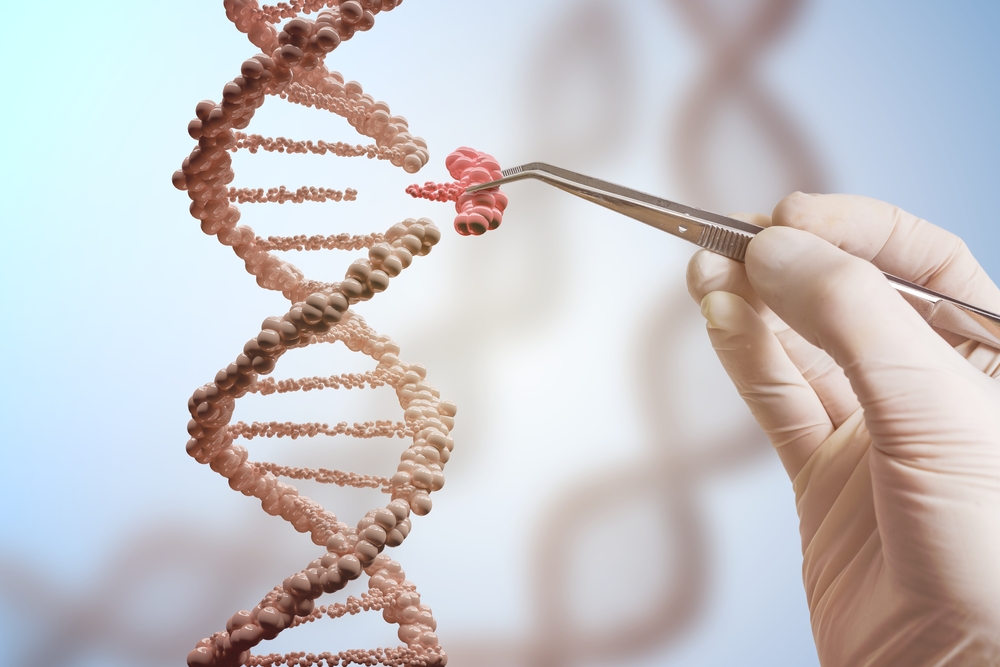
The striking white patch that connects mother and daughter is linked to a rare inherited condition known as piebaldism. Some reports also describe the visible hair feature as poliosis, which refers specifically to a localized absence of pigment in the hair. In Elma’s case, the white forelock results from a genetic lack of melanin in that area.
Melanin is the natural pigment responsible for giving hair, skin, and eyes their color. During early development, certain cells responsible for producing this pigment fail to populate specific areas of the body. The result is sharply defined patches without pigmentation.
People with piebaldism are commonly born with:
- A white forelock at the front of the scalp.
- Small patches of lighter skin.
- Normally pigmented eyes.
- No impact on intelligence, development, or general health.
The condition is considered rare and is caused by mutations affecting pigment-producing cells during fetal development.
Unlike many genetic disorders, piebaldism is largely cosmetic. It does not shorten life expectancy, impair physical abilities, or interfere with everyday activities.
For families like Elma’s, the greatest challenge is often not the condition itself, but helping children feel comfortable when their appearance attracts attention.
Turning Personal Experience Into a Gift for Her Daughter

Few parents are better prepared to guide a child through a shared experience than someone who has already lived it.
Elma understands both the difficult moments and the rewarding ones. She knows what it feels like to answer strangers’ questions, receive unexpected stares, and wonder why she looks different.
More importantly, she knows how powerful encouragement can be.
“With firsthand experience, it will give me great joy to help my daughter own her gift the same way my parents helped me.”
She hopes her daughter will grow up surrounded by the same unwavering support that transformed her own outlook years ago.
That support extends beyond Elma herself. She has spoken about the love surrounding her daughter from her father, grandparents, older sister, and their wider family.
Instead of fearing that her daughter may face the same insecurities she once experienced, Elma sees an opportunity to pass down something even more valuable than genetics.
She can pass down confidence.
Her own childhood taught her that acceptance begins at home. When children are reminded every day that their differences are beautiful, outside opinions gradually lose their power.
For Elma, that lesson has come full circle.
The very feature that once made her feel alone has become a visible bond connecting two generations, transforming a childhood source of uncertainty into one of motherhood’s happiest surprises.
Thousands of People Fell in Love With Their Matching Look

The touching photograph of Elma and her newborn daughter quickly spread across social media, where thousands of people celebrated the pair’s unmistakable resemblance.
Within hours, the comments section filled with messages of admiration. Many users were struck not only by the baby’s distinctive white forelock but also by the emotional significance behind it. To them, it was a reminder of how remarkable genetics can be and how physical traits often become cherished family stories.
One person wrote, “This is beautiful. God is awesome. Congratulations. No need of DNA.”
Another added, “The true definition of you see me you see her.”
Others focused on the strength of family genetics.
“Genes are strong. God bless you both,” one commenter shared.
Many people were equally touched by Elma’s caption, “I gave birth to my twin,” saying the words perfectly captured what they saw in the photograph.
The reactions continued across different platforms, where users described the pair as beautiful and inspiring.
One admirer commented, “So beautiful, and your story is so touching. It’s funny how that same thing that makes you exceptionally beautiful was a thing that made you feel different from everyone else.”
Another wrote, “Your birthmark is one of the coolest I’ve ever seen! She’ll have a rocking time with it!”
Some people even compared Elma’s distinctive white streak to Storm, the iconic X-Men superhero known for her dramatic white hair.
“It’s so crazy how the world works! I always thought, ‘She has such beautiful hair with that silver patch. She reminds me of Storm from the X-Men.’ Just beauty all around.”
Another heartfelt message read, “I admire your white hair. You must be a unique being, even your baby.”
The overwhelming response reflected how attitudes toward visible differences have evolved. Features that might once have attracted unwanted attention are increasingly being celebrated as unique expressions of individuality.
Growing Up Different Can Shape a Child’s Confidence

Although piebaldism itself is harmless, growing up with a noticeable physical difference can still affect a child’s emotional well-being.
Children naturally become aware of how they compare with classmates. A unique birthmark, unusual hair color, or visible skin condition can lead to curious questions from other children and adults alike.
Psychologists have long noted that children’s self-esteem is strongly influenced by how trusted adults respond to those differences. When parents present a unique characteristic as something positive rather than something to hide, children are more likely to develop a healthy sense of identity.
That approach mirrors exactly how Elma was raised.
Instead of allowing her to believe she needed to change, her parents consistently reinforced that she was special while also reminding her she was no less capable than anyone else.
Years later, she plans to pass those same lessons to her own daughter.
Children often learn confidence long before they fully understand the reasons behind it. When parents celebrate differences without making them the center of a child’s identity, those differences become just one part of a much larger picture.
Helping Children Embrace What Makes Them Unique
Every child develops confidence differently, but experts generally agree that family support plays a central role when a child has a visible physical difference.
Parents can encourage healthy self-esteem in several ways.
- Explain the condition in age-appropriate language so children understand why they look different.
- Speak positively about their appearance instead of treating it as something unusual.
- Prepare them for questions they may receive from classmates or strangers.
- Introduce them to books, role models, or public figures who celebrate uniqueness.
- Encourage interests, talents, and friendships that help build confidence beyond physical appearance.
These simple habits help children recognize that while appearance may draw attention, it never defines their worth.
Elma’s own experience demonstrates how powerful that kind of encouragement can become over time.

A Growing Celebration of Visible Differences
Stories like Elma’s resonate because they reflect a broader cultural shift toward embracing diversity in appearance.
Social media has given people with rare genetic traits, birthmarks, vitiligo, albinism, and other distinctive features a platform to share their experiences with millions. What once felt isolating for many individuals has gradually become an opportunity to build supportive communities across the world.
Models, actors, athletes, and content creators with unique appearances are increasingly challenging traditional beauty standards.
Rather than hiding their differences, many now celebrate them openly.
For children growing up today, this greater visibility can make an enormous difference. Seeing people who look like them succeeding in every aspect of life reinforces an important message that uniqueness is not a limitation.
It is simply another expression of human diversity.
For Elma’s daughter, that means she will grow up in a world that may be more accepting than the one her mother experienced decades ago.
Combined with the unwavering encouragement of her family, she will likely have every opportunity to wear her white forelock with the same confidence her mother eventually found.
A Family Story That Came Full Circle
Looking at the photograph of Elma and her newborn daughter, it is easy to focus on the matching white streaks in their hair. Yet the image tells a much deeper story than genetics alone.
It represents one generation passing along not only a rare inherited trait but also years of hard-earned wisdom about self-acceptance.
As a teenager, Elma often wished she looked like everyone else. Today, she celebrates the very feature that once made her feel different.
Now, instead of facing that journey alone, she has the opportunity to walk beside her daughter every step of the way.
Few mothers can truly understand every challenge their child may encounter. Elma is one of those rare exceptions.
She knows what the curious questions sound like. She knows how confidence grows. Most importantly, she knows that unconditional support at home can transform a childhood insecurity into lifelong pride.
Her daughter’s white forelock may attract attention throughout her life, just as her mother’s did.
But thanks to the example set by the generations before her, it is likely to become something she wears not with hesitation, but with confidence.
Sometimes the most meaningful family inheritance is not simply a shared physical trait. It is the love, encouragement, and acceptance that accompany it from one generation to the next.