

NASA’s James Webb Telescope Just Deepened One Of The Biggest Mysteries In Science
Pause for a moment and imagine this: the universe is not standing still. Every second, every minute, every year, the fabric of space itself is stretching. Galaxies drift farther apart, light travels unimaginable distances, and the cosmic story continues to unfold.
For decades, scientists believed they had a solid understanding of how fast this expansion was happening. But sometimes the universe humbles us. Sometimes it whispers a quiet reminder that what we think we know may only be a fraction of the truth.
Recently, observations from NASA’s James Webb Space Telescope confirmed something both exciting and unsettling: the universe appears to be expanding faster than our best theories predicted. And the deeper scientists look, the clearer it becomes that something fundamental may be missing from our understanding of reality.
The discovery does not simply refine our knowledge of the cosmos. Instead, it opens the door to a deeper mystery, one that suggests the universe may still be hiding something fundamental from us.
A Universe That Refuses To Sit Still
For much of human history the universe was imagined as static and unchanging. That idea began to collapse in the twentieth century when astronomers studying distant galaxies noticed something remarkable. The light arriving from those galaxies appeared stretched toward the red end of the spectrum, a phenomenon known as redshift. The farther away a galaxy was, the stronger this effect appeared. This pattern suggested that space itself was expanding and carrying galaxies along with it, an insight first supported by the work of astronomer Edwin Hubble in 1929. Modern observations continue to confirm that galaxies on large cosmic scales are moving away from each other as space grows between them.
Understanding expansion requires a shift in perspective. Galaxies are not simply flying outward from a central point through empty space. Instead the structure of space itself stretches over time, carrying galaxies with it much like dots on the surface of an inflating balloon. From any galaxy’s viewpoint distant galaxies appear to be moving away in every direction. This property makes the universe look broadly similar no matter where an observer is located, an idea that forms the foundation of modern cosmology.
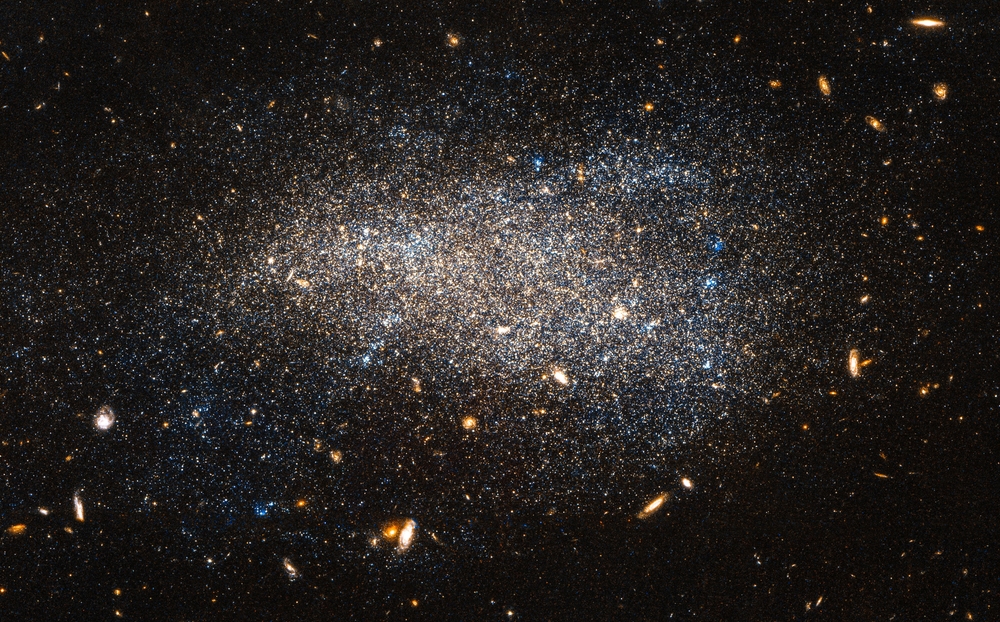
Over the decades astronomers refined the tools needed to track this expansion more precisely. By comparing how fast galaxies appear to recede with how far away they are, scientists can determine the overall expansion rate of the universe. That measurement became one of the most important numbers in cosmology because it connects observations of distant galaxies to deeper questions about the universe’s age, history, and long term evolution. Yet as technology improved and measurements grew more precise, researchers began to notice subtle inconsistencies that hinted the story might be more complicated than once believed.
Webb Confirms What Hubble Saw
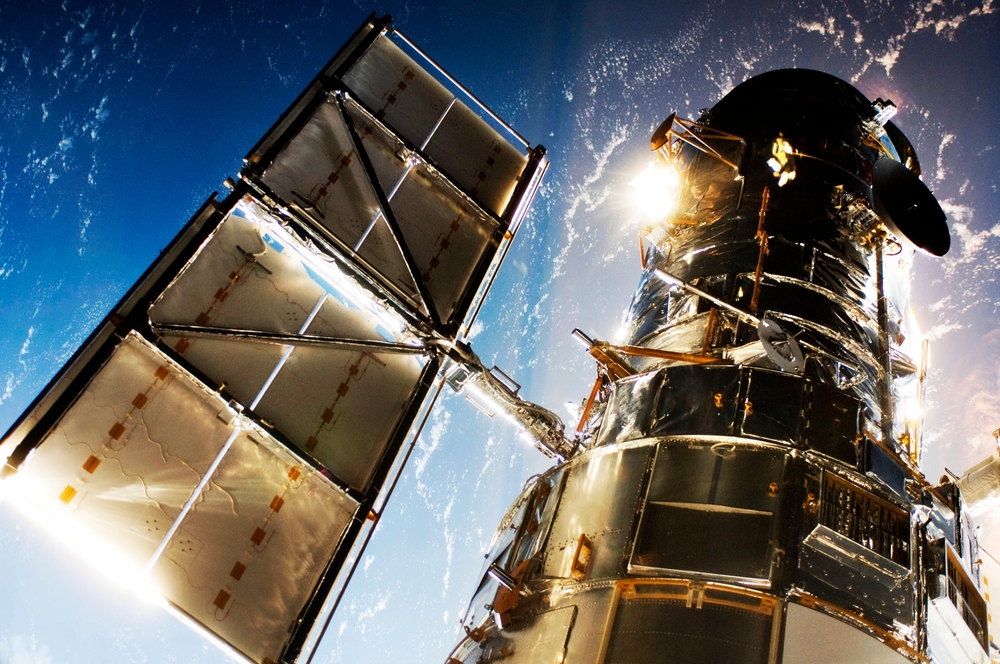
When the James Webb Space Telescope began sending back observations, astronomers saw an opportunity to test one crucial question. Were earlier measurements from the Hubble Space Telescope slightly distorted by technical limitations, or were they pointing toward a real cosmic discrepancy. To investigate this, Nobel Prize winning astrophysicist Adam Riess and his colleagues revisited galaxies that had already been carefully studied with Hubble. Webb’s larger mirror and sharper infrared vision allowed researchers to observe the same stellar markers with far greater clarity, reducing the chance that crowded stars or faint background light could subtly bias earlier readings.
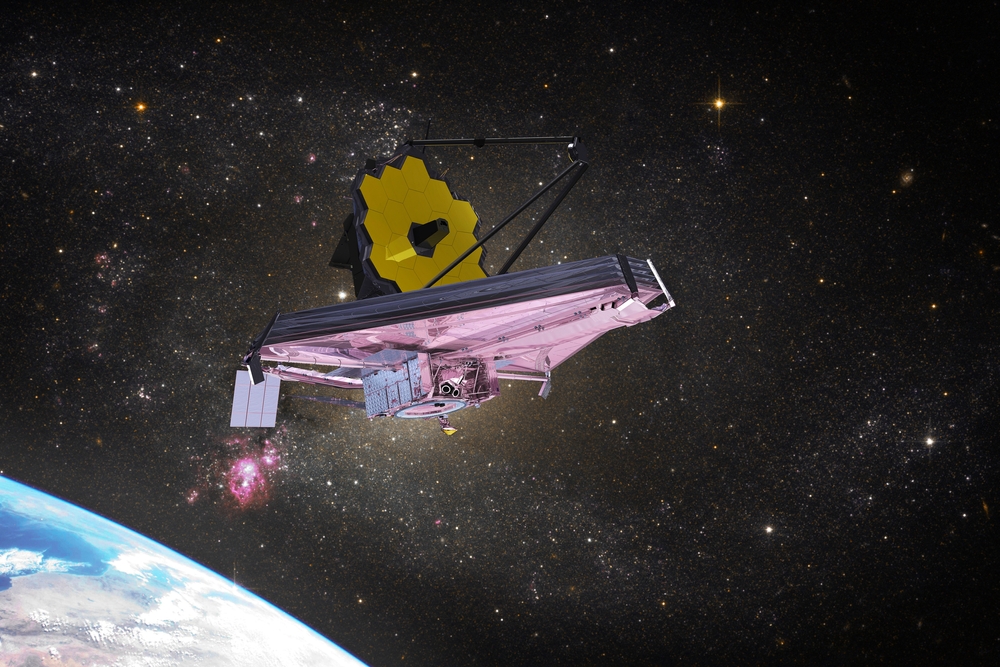
What made this test so important was the opportunity for independent verification. In science, confidence grows when separate instruments looking at the same universe arrive at the same conclusion. Webb examined many of the same galaxies previously measured with Hubble, but with improved sensitivity and resolution. If the earlier measurements had been skewed by observational noise, the new telescope should have revealed a noticeably different outcome. Instead, the results aligned. Riess explained the significance in a statement:
“With two NASA flagship telescopes now confirming each other’s findings, we must take this [Hubble tension] problem very seriously—it’s a challenge but also an incredible opportunity to learn more about our universe.”
The confirmation did something subtle but powerful. It strengthened the reliability of the observations themselves. By showing that two different space observatories measuring the same galaxies produce consistent results, the focus of the mystery shifts away from telescope error and toward deeper questions about how the universe actually behaves.
The Numbers That Don’t Match
At the center of the puzzle is a disagreement between two independent ways of calculating the universe’s expansion rate. One approach reconstructs the value by looking deep into the early universe. Astronomers analyze the cosmic microwave background, the faint radiation left behind roughly 380,000 years after the Big Bang. Tiny fluctuations in this ancient light allow scientists to model how the universe evolved over billions of years and to predict what the present day expansion rate should be. Measurements from missions such as the Planck satellite place that value at roughly 67 to 68 kilometers per second per megaparsec.
A separate method measures the expansion rate directly in the nearby universe by observing how quickly galaxies appear to recede relative to their distance from Earth. When astronomers apply this observational approach they consistently obtain a higher number, close to 73 kilometers per second per megaparsec. The gap between these two results is not trivial statistical noise. In modern cosmology even small numerical disagreements can signal deeper inconsistencies in the underlying model that describes how the universe formed and evolved.
The situation leaves scientists with a striking dilemma. Either the early universe calculations are missing some piece of physics or the late universe measurements are revealing behavior that current models cannot fully explain. As Emilee Speck summarized for FOX Weather, “the problem with science is that answering one question creates many more.” The mismatch between these two values has therefore become one of the most closely watched questions in cosmology because resolving it could reshape how researchers understand the history and structure of the universe.
How Webb Helped Recheck The Universe
To understand why the latest observations matter, astronomers revisited the method used to measure cosmic distances. In a NASA blog describing the research, Adam Riess illustrated the challenge of interpreting faint signals from distant galaxies. “Did you ever struggle to see a sign that was at the edge of your vision? What does it say? What does it mean? Even with the most powerful telescopes, the ‘signs’ astronomers want to read appear so small that we struggle too.” He continued, “The sign cosmologists want to read is a cosmic speed limit sign that tells us how fast the universe is expanding — a number called the Hubble constant. Our sign is written into the stars in distant galaxies.” Astronomers decode that signal using the cosmic distance ladder, a sequence of calibrated observations that connects nearby stellar measurements to far more distant galaxies.
Cepheid variable stars provide the crucial first step because their predictable pulsations reveal their true brightness. By comparing that intrinsic brightness with how bright the stars appear from Earth, astronomers can determine their distance and use those measurements to calibrate Type Ia supernovae observed in the same galaxies. Those supernovae then act as bright markers visible across enormous cosmic distances. Webb strengthens this chain because its infrared instruments can isolate individual Cepheid stars even in crowded galactic regions, reducing contamination from neighboring light sources. Riess emphasized the value of that improvement, saying, “This kind of improvement is the stuff astronomers dream of!” Even with this sharper view, however, the resulting measurements remained consistent with earlier observations, reinforcing that the discrepancy scientists observe is unlikely to be caused by simple measurement error.
A Cosmic Reminder Of Humility
There is something deeply humbling about a discovery like this, not because it gives us final answers, but because it reminds us how partial even our greatest knowledge can be. Human beings have learned to read traces of events that happened billions of years ago. We have built observatories powerful enough to detect ancient light and study stars in galaxies unimaginably far from our own. Yet the more precisely we observe the cosmos, the more clearly we encounter the limits of our understanding. That tension is not a failure of science. It is evidence that reality is always larger than the models we use to describe it.
There is a quiet wisdom in that. We often move through life believing that progress means certainty, as if every breakthrough should bring complete control or perfect clarity. But science advances in a more honest way. It moves by correction, by revision, by the willingness to admit when the universe is telling us that our picture is still incomplete. In that sense, discoveries like this do more than expand our knowledge of space. They teach intellectual humility. They remind us that wonder is not the opposite of understanding. It is what keeps understanding alive.
The James Webb Space Telescope has shown once again that the deeper humanity looks, the more profound the questions become. That is not a reason for discouragement. It is a reason for perspective. In a universe this vast, perhaps wisdom begins with recognizing that mystery is not something to be embarrassed by. It is something to be respected. And sometimes the most meaningful progress we make is not in declaring that we have mastered the cosmos, but in realizing how much more there is to learn.
The Universe Is Still Teaching Us
If there is a lesson in all of this, it may be that discovery is not only about finding answers. It is also about learning how to live with better questions. Human beings often treat knowledge like a finish line, as if enough data will one day remove all uncertainty. But the history of science tells a different story. Each time we see farther, we also see how much remains beyond our reach. That does not diminish the value of what we know. It deepens it. It reminds us that understanding is not built through arrogance or finality, but through patience, discipline, and the courage to keep looking when reality refuses to fit neatly into expectation.
There is something profoundly human in that process. We are a species standing on a small planet, trying to make sense of a universe vast enough to overwhelm the imagination, and yet we continue to ask, measure, compare, and learn. That pursuit says something beautiful about who we are. It shows that wonder is not childish and that uncertainty is not weakness. In the best sense, mystery becomes an invitation. It calls us to remain intellectually awake, to resist the comfort of easy conclusions, and to recognize that the search for truth is itself part of what gives knowledge meaning.
So perhaps the universe is still teaching us not only about cosmology, but about perspective. It teaches us to be serious in our inquiry and humble in our claims. It teaches us that progress does not always arrive as closure. Sometimes it arrives as a deeper question, one that asks us to grow large enough in spirit to hold both awe and discipline at the same time. And maybe that is why mysteries like this matter so much. They do not merely tell us that the cosmos is unfinished in our minds. They remind us that we are still unfinished too.
Featured Image from Shutterstock