


Two Teachers in Their 30s Sold Everything, Moved Onto Cruise Ships, and Spend Less Than $1,300 a Month
Most people know the feeling. You are on the last day of a vacation, packing a suitcase that feels heavier than it did when you arrived, and somewhere between folding a shirt and zipping a bag, a thought surfaces that you quickly push aside. What if you just stayed? What if you never went back?
For most people, that thought lasts about thirty seconds before reality reasserts itself. Rent is due. Work starts Monday. Life is waiting, and life does not pause because you found a place you loved. Monica Brzoska and her husband Jorell Conley let that thought run a little longer. And then they acted on it.
A Vacation That Never Ended
Brzoska, 32, and Conley, 36, spent years teaching in Memphis, Tennessee, living the kind of life that looks perfectly reasonable from the outside, steady jobs, a three-bedroom home, weekday routines, and the occasional holiday to break the monotony. They had taken cruises before, falling for the format after their first trip together in 2016 to Mexico, Belize, and Grand Cayman. They had built up a loyal relationship with Carnival Cruises over the years of repeat bookings.
In March 2023, they boarded a week-long Caribbean cruise with a return date already on the calendar. When that week ended, they looked at each other and made a decision that most people would never seriously entertain. Instead of flying home, they booked another cruise. And then another. And they have not stopped since.
What made two teachers in their early thirties walk away from a stable life on land and keep sailing is a story that starts not with wanderlust but with something far more sobering.
The Moment That Changed Everything

In August 2022, Brzoska’s father, Andrzej, then 67, needed a liver transplant. Sitting with that kind of news does something to a person’s relationship with time. It strips away the comfortable assumption that the future is long and the things you keep postponing will still be there when you get around to them. Her mother, Lucyna, 60, offered words that Brzoska has repeated in nearly every interview since. “Don’t wait for retirement to follow your dreams. Do it now,” she said.
Those eight words did not just offer permission. They reframed everything. Brzoska and Conley had already been dreaming about extended travel. What her mother gave them was a reason not to wait any longer. With her parents’ blessing, they began doing what most dreamers never do: they ran the actual numbers.
How Two Teachers Made the Numbers Work

Cruise living sounds like a fantasy reserved for people with inherited wealth or suspiciously large investment portfolios. Brzoska and Conley are neither. What they had was loyalty status with Carnival Cruises, a willingness to take the cheapest available cabins, and enough patience to calculate exactly what a life at sea would actually cost before committing to it.
“It sounds mad, but the numbers made sense. Accommodation, food and entertainment would be included – we’d only need spending money,” Brzoska said. “And because we’d been on so many Carnival cruises, we’d earned access to some amazing offers.”
Years of repeat bookings had earned them significant discounts on future trips. Choosing the most affordable cabin options and applying those loyalty deals, they found they could book the first eight months of consecutive cruising for $9,989.19. Some trips were paid in full upfront. Others were secured with deposits. Broken down, that figure works out to roughly $1,250 per month for accommodation, all meals, and onboard entertainment included.
To keep money coming in while they sailed, they rented out their Memphis home. A three-bedroom rental in that area brings in somewhere between $1,200 and $1,900 a month, meaning their rental income effectively covers or offsets their cruising costs and gives them a financial floor that makes the lifestyle genuinely sustainable rather than just a prolonged splurge.
Hopping between ships is simpler than most people imagine. Many cruises depart from the same ports, so the transition from one ship to the next often requires nothing more than walking across a dock. Occasionally, they fly to reach a departure point, which adds cost, but it remains the exception rather than the rule.
What Daily Life Actually Looks Like
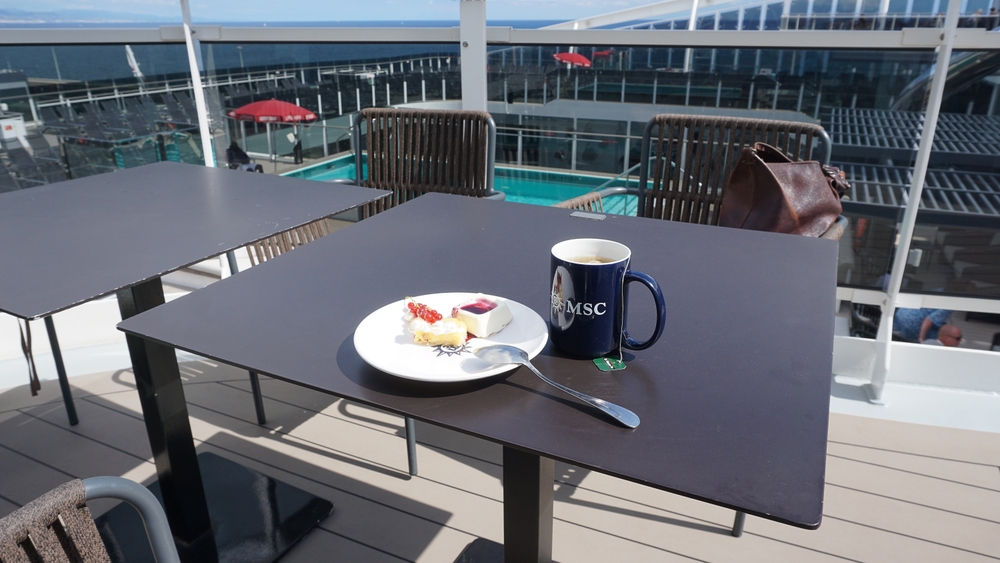
Strip away the romance of it for a moment and consider what Brzoska and Conley actually gave up by leaving land. Lesson plans. Grocery runs. Cooking. Laundry. Commutes. Household maintenance. The accumulated friction of a conventional adult life that most people manage without ever stepping back to ask whether they want to keep managing it. “All my meals are cooked by chefs, and staff change my bedding,” Brzoska said. “I haven’t stepped into a kitchen or used a washing machine for a year.”
Brzoska fills her days with craft activities, onboard trivia competitions, and comedy shows. Conley gravitates toward the television lounges and the social life that forms naturally at any bar where new passengers arrive every week with new stories. Every cruise brings a fresh cast of people, which means the social environment never goes stale.
Once a week, the couple sets aside a dedicated date night. They dress up, choose one of the ship’s fancier restaurants, and treat the evening as a deliberate ritual in a life that could otherwise blur into one long, pleasant drift. Over their first year at sea, they completed 36 consecutive cruises, often stepping off one ship and directly onto another at the same port.
The World as Their Backyard
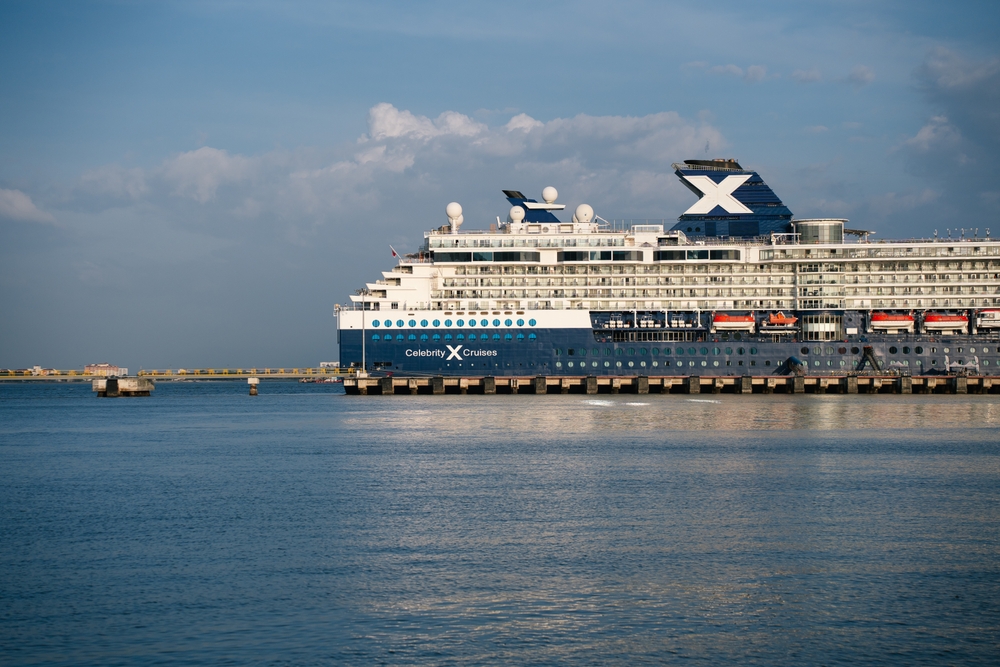
After more than two years and over 106 cruises, Brzoska and Conley have visited more than 45 countries. Ask them to name a favorite, and they struggle, which is perhaps the most telling sign of how thoroughly their sense of the world has expanded.
Japan left a mark with its cultural depth. Greece held them with its history. Iceland felt, in Brzoska’s words, like being on another planet entirely. More recently, they moved through Amsterdam, the United Kingdom, Germany, and Belgium, each port a chapter in a story that keeps adding pages.
For most people, international travel is an event, something planned months ahead and recovered from afterward. For Brzoska and Conley, it is simply Tuesday. New coastlines appear outside their cabin window not as a reward for hard work but as a feature of ordinary life, which is a genuinely radical shift in how a person relates to the world.
What the Open Sea Does to a Marriage
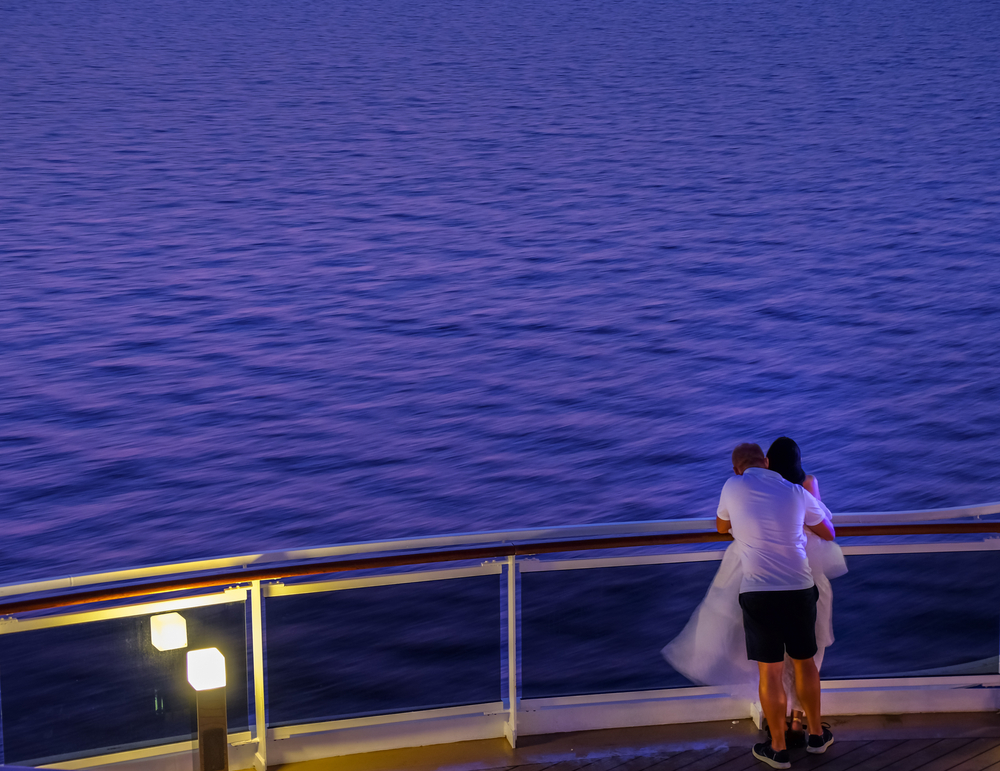
There is a version of this story where two people confined to a small cabin on a moving ship, far from friends and family and familiar routines, start to drive each other slowly mad. Brzoska tells a different version. “Without the daily stresses of life, we rarely argued, but always told each other if we needed space or more time together,” she said.
Remove the pressure of lesson plans, bills, household chores, and career anxieties, and what remains is a marriage with room to breathe. Brzoska has described her old life as containing occasional “glimmer” moments, flashes of magic against a background of routine. At sea, she says, her entire life feels like one of those moments. That shift in baseline happiness is nothing. It is, by most measures, exactly what people spend decades hoping to find.
The weekly date night matters here too, not as a compensation for a stressful week but as a structure the couple chose deliberately to keep their relationship intentional rather than comfortable in a way that slides toward invisible.
The Trade-Offs They Don’t Hide
Brzoska and Conley are not selling a perfect life. They are honest about what the lifestyle costs beyond money, and those costs are real.
The missing family sits at the top. Living months at a time on ships means missing birthdays, dinners, and the kind of ordinary proximity that holds relationships together. They know they can fly home if something serious happens, and they have accepted the distance as a condition of the choice they made, but they do not pretend it is painless.
They also acknowledge that the financial math depends on variables outside their control. Cruise prices can rise. Loyalty deals can change. The rental income from their Memphis home is reliable now, but not guaranteed forever. Living this way requires ongoing attention to the numbers, not just a one-time calculation made before departure.
A Growing Movement Worth Paying Attention To
Brzoska and Conley were among the first couples to document permanent cruise living publicly and attract serious media attention for it, but they are far from alone in the choice. Permanent ship living has become increasingly popular among retirees who find it more affordable and more socially engaging than assisted living or retirement communities. Remote workers and people running location-independent businesses have discovered that a cruise ship cabin, with its reliable wifi and all-inclusive structure, suits a digital nomad lifestyle well.
What Brzoska and Conley represent is not a fringe experiment but an early, visible version of something more people are quietly calculating for themselves. When accommodation, food, and entertainment can be bundled into a monthly cost that rivals the rent for a modest apartment, the lifestyle stops looking eccentric and starts to look like a reasonable option, provided you are willing to leave certain things behind.
Most people delay the life they want until they feel ready. Brzoska’s father needed a liver transplant before his daughter stopped waiting. Readiness, it turns out, rarely announces itself. Sometimes it arrives as a crisis, and the only question left is whether you listen.