

Five Year Old Milo Garza Wins Hearts After Sweet Goat Show Moment
There are moments on the internet that fade almost as quickly as they appear, disappearing into an endless stream of content that rarely leaves a lasting impression. Then there are moments that feel different. They linger quietly, resurfacing in conversations, shared again and again not because they are shocking or dramatic, but because they remind people of something simple and deeply human.
One such moment arrived in the form of a five-year-old boy, a yellow ribbon, and a goat named Teddy Bear. It did not come with a grand stage or a headline-making victory. Instead, it unfolded at a local livestock show in Kingsville, Texas, where expectations were modest and the stakes were personal rather than global.
What happened next was not about competition in the traditional sense. It was about perspective, connection, and a kind of joy that does not depend on coming first. In just a few seconds, Milo Garza showed millions of people what it looks like to celebrate a moment without measuring it against anyone else.
A Fourth-Place Finish That Felt Like First
At the Compadres Cabritos goat and lamb show held on June 22, children gathered with their animals, each hoping to present them well and earn recognition for their efforts. These events are often the result of weeks or months of preparation. Early mornings, careful feeding routines, and consistent training all lead up to a few minutes in the ring.
Milo Garza’s presence there was not part of a long-planned journey. His older brother, Adam, had originally been scheduled to compete, but a school-related trip meant he could not attend. Rather than leave the opportunity unused, Milo stepped in. There were no heightened expectations placed on him. He was simply there to participate.
When the results were announced, Milo and his goat Teddy Bear were awarded fourth place. In many competitive settings, finishing fourth can feel like just missing out. It sits outside the spotlight, acknowledged but not celebrated in the same way as the top positions.
But Milo did not interpret it that way.
As he received his yellow ribbon, his face lit up with unmistakable excitement. He looked at it with a sense of wonder, as though it represented something far greater than its placement. Then, without hesitation, he turned to Teddy Bear, crouched down, wrapped his arms around the goat, and kissed him repeatedly.
There was no trace of disappointment. No awareness of what fourth place is supposed to mean in a competitive framework. For Milo, it was a moment worth celebrating fully.
The Moment That Captured Millions

The interaction was captured on video by Laechelin Farms, who had been documenting the event. What might have otherwise remained a personal memory quickly became something much larger after the clip was shared online.
Within a short time, the video began circulating across platforms, accumulating millions of views. Reports indicate that it surpassed 7.5 million views, with engagement continuing to grow as more people discovered the moment.
What drew viewers in was not just the cuteness of a child hugging a goat. It was the authenticity of the reaction. Milo’s joy was immediate and unfiltered. He was not reacting for an audience. He was simply expressing how he felt.
The comments that followed reflected how deeply the moment resonated. People from different backgrounds, age groups, and experiences found themselves moved by the simplicity of what they were watching.
Some described it as a reminder of how happiness can come from small achievements. Others said it made them reflect on how often adults tie their self-worth to outcomes rather than effort. Many focused on the affection Milo showed toward Teddy Bear, noting that it was the kind of connection that often gets overlooked in competitive environments.
The video became more than just a viral clip. It became a shared experience, one that prompted reflection as much as it prompted smiles.
A Bond Built Beyond Competition
To understand why the moment felt so genuine, it helps to look at Milo’s everyday life.
Milo comes from a family of goat ranchers, where caring for animals is part of the daily routine. For him, goats are not distant or unfamiliar. They are a constant presence, woven into his daily experiences.
In interviews, Milo explained his responsibilities with a level of clarity that reflects both routine and enthusiasm. He helps feed the goats, ensures they have water, walks them, and works with them regularly. These tasks are not framed as chores in his mind. They are part of a relationship he enjoys.
When asked what he loves most about Teddy Bear, his answer was simple and endearing. He said it was the goat’s legs because they were fat. The response captured the kind of unfiltered perspective that often fades with age.
His parents have described Milo as someone who spends much of his time in the barn, interacting with the goats not out of obligation but out of genuine affection. He hugs them, kisses them, and treats them as companions.
That relationship was evident in the viral moment. The hug was not about celebrating a win. It was about sharing a moment with a friend.
An Unexpected Entry, An Unforgettable Impact
What adds another layer to the story is how unexpected the entire situation was.
Milo was not originally supposed to be in the competition. The decision for him to step in was made simply to fill a gap. It was not framed as a significant opportunity or a defining moment.
Yet it turned into exactly that.
Although Milo had participated in competitions before, including a recent Peewee Showmanship Championship win just weeks earlier, nothing about this particular event suggested it would stand out. It was one of many shows, one of many experiences in a young child’s life.
And yet, it became the moment that people across the world connected with.
His parents later reflected on how unexpected the reaction was, describing it as raw and genuine. It was not rehearsed or encouraged. It was simply who Milo is.
That authenticity is what made the moment resonate so widely. It did not feel staged or exaggerated. It felt real.
Why This Moment Resonated So Deeply
There is a reason why millions of people paused to watch and share a short video of a child hugging a goat after placing fourth.
At its core, the moment challenges a common narrative about success. In many parts of life, success is often defined narrowly. It is associated with being the best, finishing first, or achieving a specific outcome.
Milo’s reaction offers an alternative perspective.
He did not compare himself to others. He did not evaluate his placement against expectations. He simply accepted the result and found joy in it.
This kind of response highlights something that is often lost over time. The ability to appreciate effort without immediately attaching it to ranking.
As people grow older, competition tends to become more complex. Achievements are measured, compared, and sometimes diminished if they do not meet certain standards. Over time, it becomes harder to feel satisfied with anything less than the top position.
Milo’s reaction interrupts that pattern. It suggests that fulfillment can come from participation, from connection, and from recognizing value in the experience itself.
Many viewers expressed that this was what struck them most. The reminder that joy does not have to be conditional.
The Role of Animals in Teaching Empathy
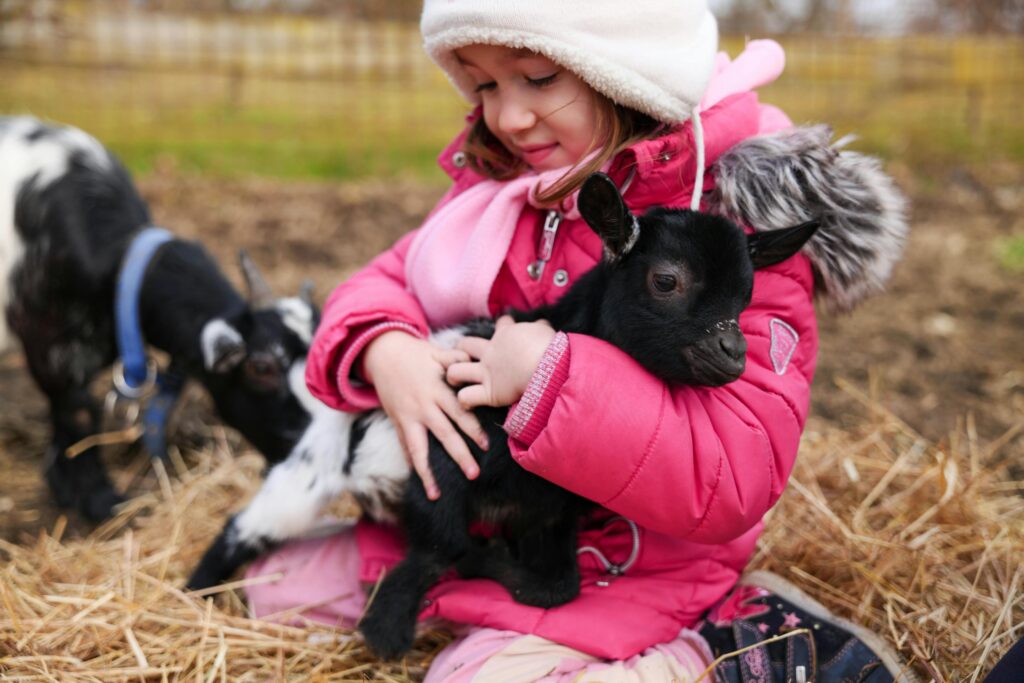
Another important aspect of the story is the role that animals can play in shaping emotional development.
Children who grow up caring for animals often develop a sense of responsibility at an early age. Feeding, grooming, and looking after another living being requires consistency and attention. It also encourages empathy, as children learn to recognize the needs and behaviors of animals.
In Milo’s case, his relationship with Teddy Bear reflects these qualities.
He does not see the goat as a tool for competition. Instead, he sees him as a companion. That distinction matters. It changes how success is perceived. It shifts the focus from outcome to relationship.
Studies and observations have suggested that children who interact closely with animals may develop stronger emotional awareness and social skills. They learn to care, to be patient, and to respond with kindness.
Milo’s reaction can be seen as an example of this. His instinct was not to evaluate the result but to share the moment with his goat.
It was an expression of connection rather than comparison.
A Reminder Hidden in a Simple Gesture
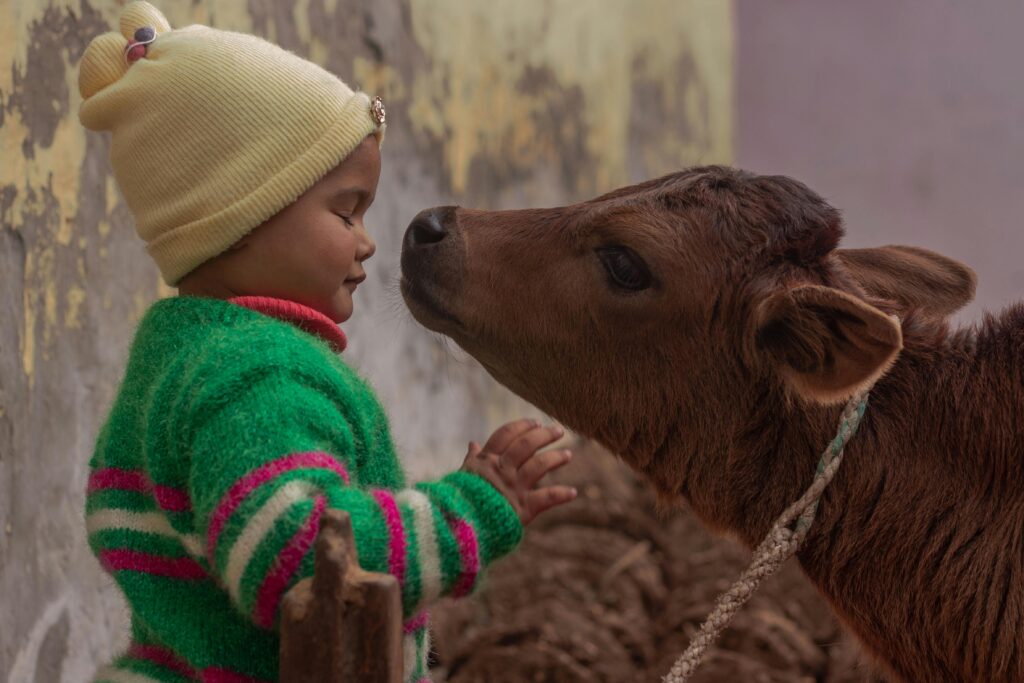
It would be easy to overlook the deeper meaning behind a short viral clip. At first glance, it appears to be a lighthearted moment, something to smile at before moving on.
But for many, it has carried a more lasting message.
Milo’s happiness was not dependent on external validation. It did not rely on being told that he had done the best. It came from within, from his love for his goat and his excitement about participating.
There is something quietly powerful in that kind of self-contained joy.
It suggests that satisfaction does not always need to be earned through comparison. It can exist independently, shaped by how a person chooses to interpret their experience.
For Milo, the yellow ribbon was enough. It was not a symbol of falling short. It was a recognition of effort, and that was all he needed.
The hug he shared with Teddy Bear carried more meaning than any ranking could.
The Internet’s Reaction and Shared Reflection

As the video continued to circulate, it sparked broader conversations about how people define success and how those definitions are passed down to younger generations.
Many viewers praised Milo’s parents, noting that his reaction reflected a healthy perspective on competition. Others shared personal stories about moments when they or their children experienced similar situations, often highlighting how difficult it can be to maintain that kind of outlook.
The comment sections became spaces for reflection. People discussed the pressures of achievement, the role of encouragement, and the importance of celebrating effort.
Some expressed a desire to adopt a mindset closer to Milo’s. To focus less on outcomes and more on experiences. To find satisfaction in participation rather than perfection.
What began as a simple video evolved into a broader conversation about values.
It served as a reminder that moments of clarity can come from unexpected places.
Redefining What It Means to Win
Milo Garza may have placed fourth in a goat showing contest, but the significance of his reaction extends far beyond that placement.
In a brief and unfiltered moment, he demonstrated a perspective that many people spend years trying to rediscover. The idea that success is not always tied to being first. That joy can exist without comparison. That connection can matter more than competition.
The yellow ribbon marked his position in the event, but it was his response that defined the moment.
There is something valuable in that distinction.
It encourages a shift in how achievements are viewed. Instead of focusing solely on outcomes, it invites people to consider the experience itself. The effort, the relationships, and the emotions that come with it.
For Milo and Teddy Bear, fourth place was not a limitation. It was an opportunity to celebrate. To share a moment that was meaningful in its own right.
In a world that often emphasizes striving for more, this small and genuine reaction offers a different message. Sometimes, what you have in front of you is already enough.
And sometimes, the most meaningful victories are the ones that do not come with a first-place finish.