
The Moment Your Privacy Stops Being Yours
It often begins in a way that feels ordinary and harmless, the kind of moment you would normally overlook without a second thought. A notification appears, a passport is scanned, and you move through an airport expecting nothing more than routine. Yet within that seemingly simple sequence, something shifts in a way that is easy to miss but difficult to ignore once you see it clearly. In a world where our lives are stored inside our devices, where memories, conversations, identities, and even private reflections exist behind a screen, the idea of being asked to unlock everything is no longer abstract. It becomes immediate, personal, and deeply unsettling.
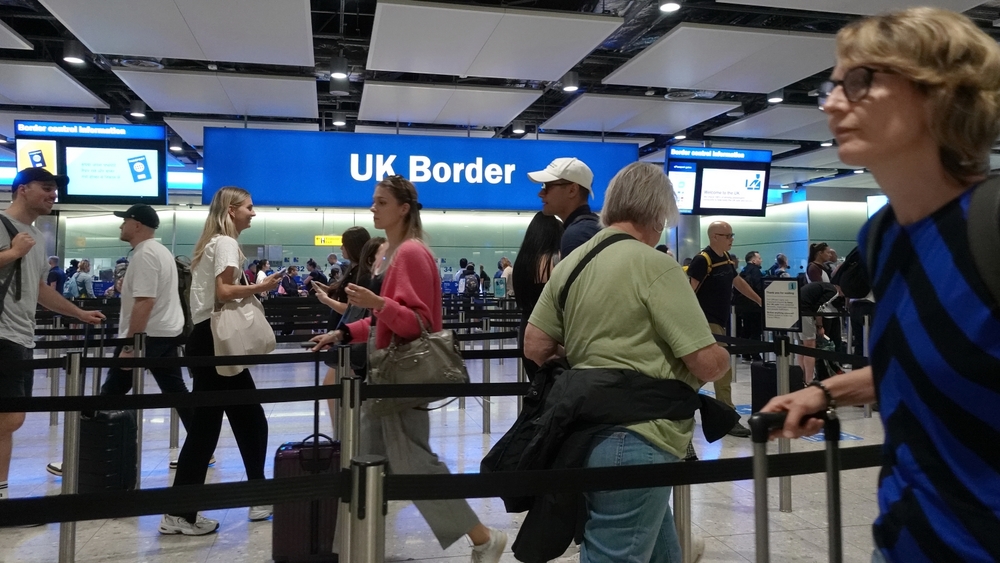
This is no longer a distant possibility but a present reality. According to a recent advisory from the U.S. Consulate General in Hong Kong, new national security rules mean that travelers, including U.S. citizens, may now be required to hand over passwords to their phones and laptops, and refusing to comply can be treated as a criminal offense. The weight of that statement is not just in the policy itself, but in what it represents about the evolving relationship between personal privacy and state authority. It invites a deeper question that lingers beneath the surface, not just about laws or travel, but about what it truly means to own something in a time when access can be demanded.
When a Border Redefines Your Privacy
For many of us, borders are imagined as simple lines on a map, but in practice they are spaces where legal authority is at its most concentrated and discretionary. On March 23, 2026, the Hong Kong government amended rules tied to its National Security Law, and as outlined in the U.S. Consulate’s March 26 statement, refusing to provide “passwords or decryption assistance” to law enforcement is now considered a criminal offense. What makes this particularly significant is not only the existence of the rule, but its scope. It applies to anyone within Hong Kong’s jurisdiction, including individuals who are not entering the city in a traditional sense but are merely transiting through Hong Kong International Airport, a detail that expands the reach of the law beyond what many travelers might reasonably expect.
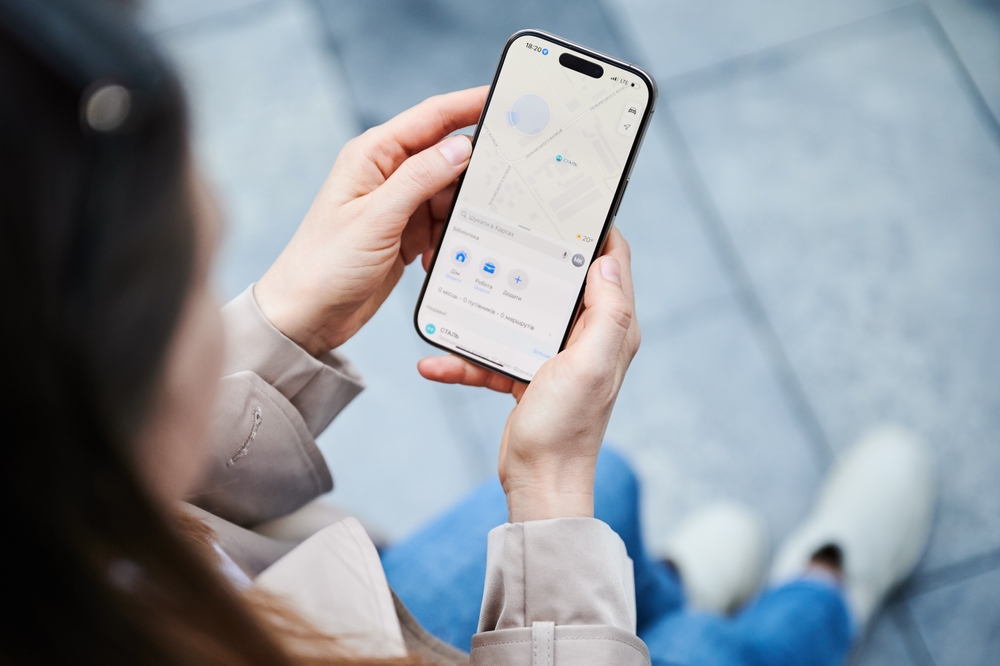
Legal analysts have long noted that border environments often operate under a different threshold of scrutiny, where authorities are granted broader powers in the name of security and public order. In Hong Kong’s case, these expanded powers now explicitly include the ability to compel access to encrypted personal data and to retain devices as part of investigations tied to national security concerns. The practical boundaries of how these powers are exercised remain unclear, as the U.S. advisory itself does not specify how frequently such measures will be used or under what precise circumstances they will be enforced, leaving travelers to navigate a legal landscape defined as much by uncertainty as by written rules. The broader trajectory of these expanding powers is reflected in analysis that outlines how legal frameworks tied to national security have evolved over time, steadily increasing state authority while drawing sustained concern from international observers and policy experts.
This creates a distinct legal reality in which presence alone can trigger obligations that override personal expectations of privacy, regardless of intent or duration of stay. It also underscores an often overlooked aspect of international travel, which is that legal exposure is not determined by citizenship but by jurisdiction at any given moment. In this context, the border is not simply a checkpoint but a legal threshold where assumptions about rights are tested against the specific frameworks of the place you have entered, even if only temporarily.
Your Digital Life and the Trade We Have Been Making
If you pause and consider what exists on your phone, the scope becomes clear. It holds photos of your family, private conversations, personal notes, financial details, work documents, and a detailed record of your movements and habits. It is not simply a device but a reflection of your life in digital form. Under these new rules, authorities now have expanded power not only to access that information but also to seize personal devices if they believe they are connected to national security concerns, with the advisory noting that they may “take and keep any personal devices, as evidence.”
What often goes unexamined, however, is how much of this digital exposure is structured long before any policy is enforced. Modern devices are designed to continuously generate, store, and sync data across platforms, creating layers of information that extend beyond what users consciously save. Research has shown that smartphones can passively collect extensive behavioral data, including location patterns, usage habits, and interaction histories, forming a detailed profile of daily life that is far more comprehensive than most people realize. This means that the significance of device access is not limited to visible content, but includes patterns and metadata that can reveal routines, relationships, and personal tendencies over time.
This dynamic is examined in research which explains how digital platforms are structured around the continuous extraction and monetization of user information, often beyond what individuals consciously provide. When viewed through this lens, the issue is not only about what is stored, but about how deeply integrated data collection has become in everyday life. The distinction between voluntary sharing and compelled access becomes more complex, because the volume and depth of information available are shaped by systems that operate continuously in the background, long before any moment of enforcement occurs.
A Global Shift in Power and Responsibility
What is unfolding is not simply a series of isolated policy decisions but a broader recalibration of how power is exercised in a digital age. Legal systems that were once built around physical evidence and geographic limits are now adapting to a reality where information moves instantly and identities exist across multiple platforms at once. This shift is forcing governments to rethink enforcement capabilities, often expanding authority in ways that extend beyond traditional boundaries, while leaving individuals to navigate rules that can change significantly from one jurisdiction to another.
At the same time, this transformation places a new kind of responsibility on both institutions and individuals. Governments are increasingly expected to justify how and when such powers are used, particularly as concerns about proportionality and oversight continue to grow among legal scholars and civil society groups. At the individual level, travelers and global citizens are being drawn into a more complex legal environment where understanding the implications of movement, data, and jurisdiction is no longer optional but necessary. Analysis from global policy research highlights how shifts in governance and digital control are becoming more pronounced across different regions, reflecting a wider trend in how authority is asserted and experienced.
This evolving landscape does not point to a single outcome but to an ongoing negotiation between security and autonomy, one that is likely to continue shaping policy decisions in the years ahead. What makes this moment distinct is not only the expansion of power, but the speed at which these changes are occurring, often outpacing public understanding and leaving individuals to interpret their place within systems that are still being defined in real time.
What Awareness Looks Like in Practice
In response to these developments, the U.S. Consulate advises travelers to take practical steps, including contacting the U.S. Consulate General if arrested or detained, following updates from the State Department’s Bureau of Consular Affairs, and enrolling in the Smart Traveler Enrollment Program to receive alerts. These recommendations are important, but they represent only one layer of awareness.

A deeper level of awareness comes from reflecting on your own relationship with your data and your environment. It involves asking what you are carrying, why it matters, and how different legal contexts may affect you. This is not about fear but about understanding, because clarity allows you to move through the world with greater intention and responsibility.
A New Understanding of Freedom
Freedom today extends beyond physical movement and into the realm of information and control. It is increasingly defined by what remains private and what can be accessed, by who holds authority and how that authority is exercised. In a world where identity is stored in data, the question of control becomes central to how we understand autonomy itself.
This shift also changes how freedom is experienced on a personal level. It is no longer only about the ability to move across borders or express ideas, but about maintaining a sense of ownership over the intangible parts of life that exist in digital spaces. The boundaries that once felt clear are now more fluid, shaped by systems and policies that can reach into areas that were previously considered personal and self contained.

This moment reflects more than a policy change in one location. It offers a glimpse into a broader transformation, one that challenges individuals to reconsider assumptions about privacy, ownership, and the boundaries that define personal space in a digital age.
What Does It Mean to Keep Something Yours
Consider, for a moment, how you would feel if asked to reveal everything on your phone. Not because of wrongdoing, but because some aspects of life are inherently personal. Thoughts, conversations, and memories carry meaning precisely because they are held within a space that feels private and self contained.
The deeper question is not only about laws or enforcement but about the boundaries we recognize and uphold. The future will not be shaped solely by policy or technology, but by what individuals and societies come to accept as normal. As you move through the world, it may be worth asking not only where you are going, but what you are carrying and what it means to protect it.