

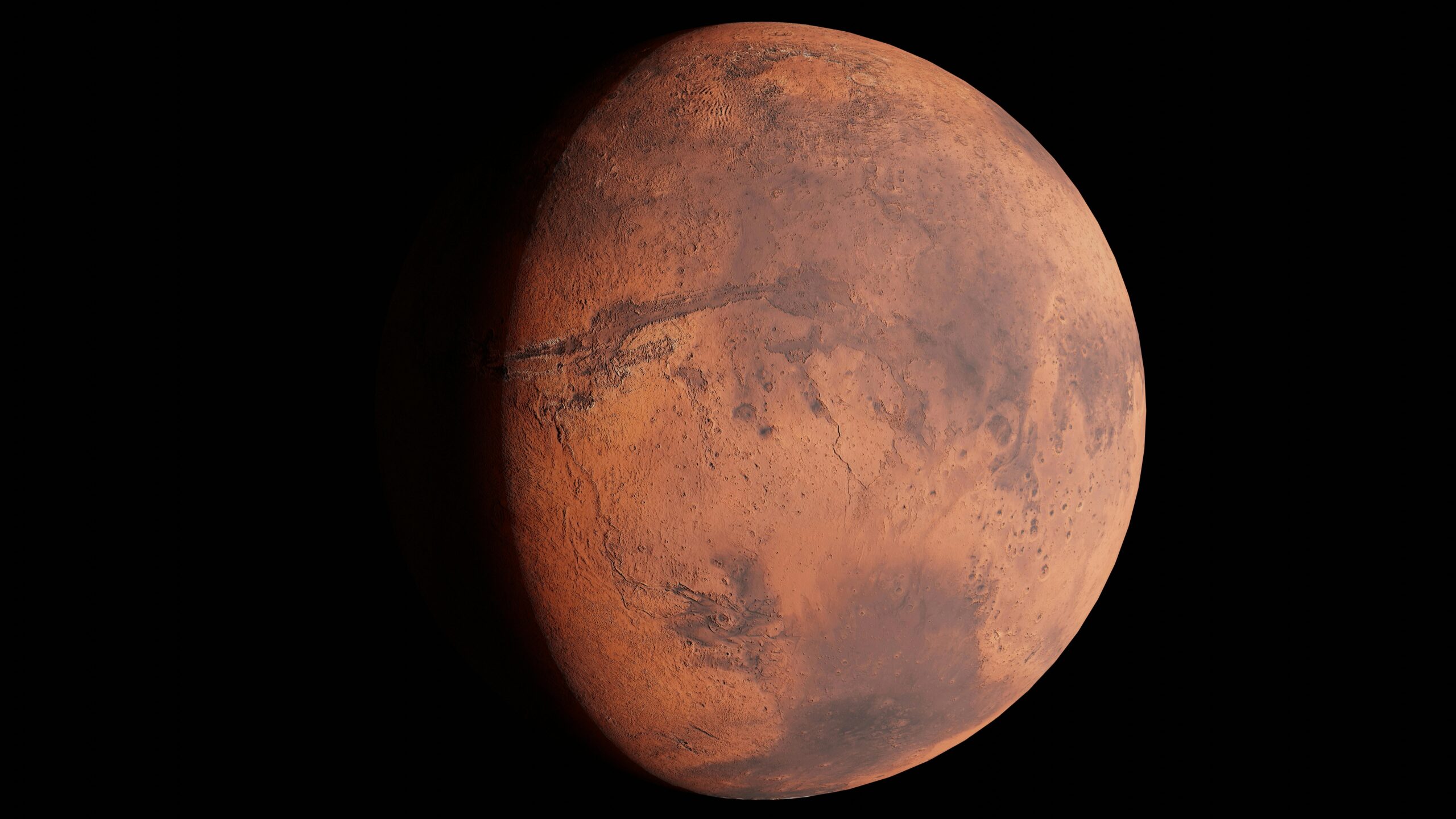
NASA Reveals Artemis II Moon Photos Few Humans Have Ever Seen
For decades, the most powerful space photographs have done more than document a mission. They have changed the way people think about Earth, distance, and humanity’s place in the universe. The famous Apollo 8 “Earthrise” image became a symbol of wonder and fragility in 1968. Now, more than half a century later, NASA’s Artemis II crew has sent back a new collection of lunar flyby images that could end up carrying a similar emotional weight.
The photos are remarkable on their own. They show an “Earthset” slipping behind the Moon’s horizon, a rare eclipse with the Sun’s corona glowing around the lunar edge, and stark close-up views of the Moon’s far side that almost no human has ever witnessed with their own eyes. But what makes these images hit harder is the context behind them. These were not taken on a casual sightseeing trip. They were captured during a mission that has already entered the record books.
NASA astronauts Reid Wiseman, Victor Glover, Christina Koch, and Canadian Space Agency astronaut Jeremy Hansen traveled more than 252,000 miles from Earth aboard Orion, officially going farther into space than any human crew in history. In the process, they gave the public something rare: a reminder that even in an age saturated with images, there are still sights capable of making the world stop and stare.
Artemis II Has Already Become a Historic Mission
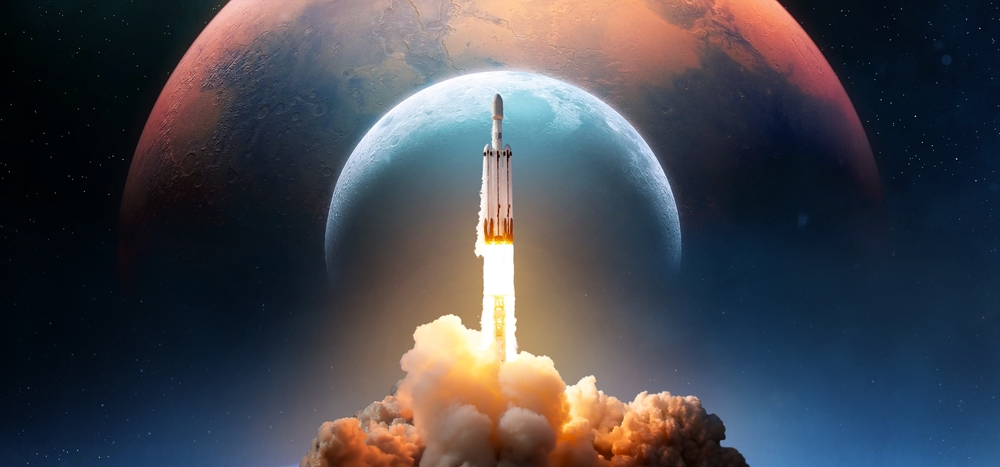
Artemis II was designed as a proving ground for NASA’s return to deep space human exploration. Unlike the Apollo era, when missions came in rapid succession under Cold War pressure, Artemis is unfolding in a very different world. Every milestone carries years of planning, billions in investment, and enormous expectations.
That is part of what made this week’s images feel so significant. They are not just pretty pictures from orbit. They are visual proof that humanity has once again sent astronauts beyond low Earth orbit and around the Moon.
According to the mission updates provided in the reference reports, Orion followed a free-return trajectory around the Moon. That means the spacecraft used lunar gravity to sling itself around the far side before beginning the journey back to Earth.
It is an elegant path, and one chosen for safety as much as for engineering efficiency. If all goes according to plan, the trajectory naturally brings the crew home.
That safety-first design does not make the achievement feel any smaller. In fact, it may make it more impressive. Artemis II is not trying to recreate Apollo for nostalgia. It is trying to build a durable pathway for what comes next, from sustained lunar missions to eventual crewed journeys toward Mars.
By traveling farther from Earth than Apollo 13’s record-setting crew, Artemis II crossed an invisible line in the history of exploration. Records alone do not define a mission, but they do shape public imagination. People understand distance instinctively. And when that distance is measured not in a road trip or a flight but in hundreds of thousands of miles away from home, it becomes something almost mythic.
The Moon Photos Are Stunning Because They Show Both Beauty and Isolation
The images NASA released quickly spread because they tap into two emotions at once. The first is awe. The second is vulnerability.
One of the standout shots is the “Earthset” image, which echoes the emotional impact of Apollo 8’s Earthrise. This time, instead of Earth emerging above the lunar horizon, our planet appears to be sinking behind it. It is a subtle reversal, but one that changes the emotional texture of the image. Earth does not look triumphant or dominant. It looks distant, delicate, and startlingly small.
That visual effect is difficult to overstate. Earth is where every war, every love story, every political argument, every family dinner, and every personal heartbreak has ever happened. Yet from Orion’s window, it can be reduced to a bright crescent hanging over an ancient gray landscape.
NASA’s released descriptions noted visible cloud systems over Australia and Oceania in the Earthset image. In the foreground, lunar terrain such as Ohm crater could be seen in extraordinary detail, with terraced edges and central peaks rising from an impact-scarred surface. Those scientific details matter, but they also deepen the emotional punch of the photo. It is not simply Earth in space. It is Earth seen from a place so stark and lifeless that home begins to feel almost miraculous.
The crew also captured an “Earthrise” counterpart later in the flyby, showing Earth reappearing after the period when Orion passed behind the Moon. Together, the two images create a visual narrative. Home disappears. Home returns. In a mission built around distance, those moments feel especially human.
One Eclipse Image May Become the Defining Photograph of the Mission
If the Earthset image is emotional, the eclipse image is almost surreal.
One of the most widely discussed photographs from Artemis II shows the Moon blocking the Sun while the corona glows around its edges. It is the kind of scene that feels computer-generated even when you know it is real. Seen from Orion’s perspective, just a few thousand miles from the lunar surface, the eclipse looked less like an event and more like a cosmic stage effect.
The references describe the astronauts’ reaction in deeply human terms. Reid Wiseman reportedly said the scene was “indescribable” and that ordinary language did not feel adequate. Victor Glover described it as “sci-fi” and “unreal.” Those are not polished scientific summaries. They are the kind of instinctive reactions people have when they encounter something their brains are not fully prepared to process.
And that may be why the image has landed so strongly. People are used to seeing eclipses from Earth. They understand the phenomenon. But seeing one from deep space, with the Moon looming in front of the Sun and the corona blazing around it, shifts the perspective in a way that feels almost physically disorienting.
NASA noted that because Orion was so close to the Moon, the crew was able to experience nearly 54 minutes of totality. That is a dramatically different experience from the brief total eclipses visible from Earth, where the event can pass in just a few minutes. In one of the reported images, Venus appears as a bright point near the frame, adding another layer of strangeness to an already extraordinary scene.
This is the kind of photograph that tends to live far beyond the mission that created it. It is scientifically useful, visually unforgettable, and emotionally accessible all at once. That combination is rare.
The Far Side of the Moon Still Feels Like a Frontier
The Moon is one of the most photographed objects in the sky. Satellites have mapped it in extraordinary detail. Scientists know vastly more about it now than they did during Apollo. And yet, when humans physically return to its vicinity and look at it with their own eyes, the place still manages to feel unknown.
That tension runs through many of the Artemis II images and crew observations.
During the flyby, the astronauts documented impact craters, fractures, lava flows, and the dramatic boundary known as the terminator, where lunar daylight meets darkness. Jeremy Hansen reportedly described the terminator as bringing the Moon’s hills, shadows, and valleys to life. That observation matters because the Moon’s surface can look flat and almost abstract in ordinary photographs. At the terminator, however, the low-angle light exaggerates every ridge and depression, turning geology into something almost theatrical.
The crew also focused on major features like the Orientale Basin, one of the Moon’s most striking multiringed impact structures. Mission science teams had prepared detailed guides in advance to help the astronauts identify and describe what they were seeing in real time.
That is one of the most fascinating parts of this mission. Even in an era of remote sensing and robotic imaging, there is still immense value in direct human observation. The references note that NASA scientists are now analyzing not just the photos themselves, but also the astronauts’ spoken descriptions and timing notes. Those observations can help refine the interpretation of features, events, and visual conditions in ways that purely automated imaging sometimes cannot.
That is why these images matter beyond social media excitement. They are not just beautiful. They are data-rich. They will inform future lunar science and help shape later missions that aim to build a longer-term human presence near and on the Moon.
The Most Haunting Detail May Be What the Astronauts Saw in the Dark
Among the many striking details from Artemis II, one of the eeriest is also one of the least cinematic at first glance: brief flashes on the Moon’s darkened surface.
According to the reference material, the crew observed multiple meteoroid impact flashes while looking at the Moon’s far side. In simple terms, they watched space rocks hit the lunar surface in real time.
That detail changes the emotional texture of the mission in an instant.
The Moon often feels static in the public imagination. Ancient. Frozen. Untouched. But those flashes are a reminder that space is not quiet in the way people often imagine it. It is active, violent, and constantly in motion. The lunar surface is still being shaped, even now, by collisions large and small.
NASA scientists are reportedly comparing the crew’s observations with data from amateur astronomers and other monitoring efforts. That cross-checking could help refine the timing and location of the impacts and add to scientists’ understanding of how often these events occur.
There is something deeply unsettling and beautiful about the image of astronauts silently watching impact flashes from the far side of the Moon. It sounds almost poetic, but it also underlines the practical reality of why Artemis II matters.
If humanity is serious about sustained missions to the Moon and, eventually, Mars, then understanding the hazards of deep space is not optional. Micrometeoroid activity, radiation exposure, communication blackouts, and the psychological demands of distance all become real operational concerns once humans move beyond Earth’s protective envelope.
And Artemis II is gathering those lessons in real time.
This Mission is as Much About Risk as It is About Wonder
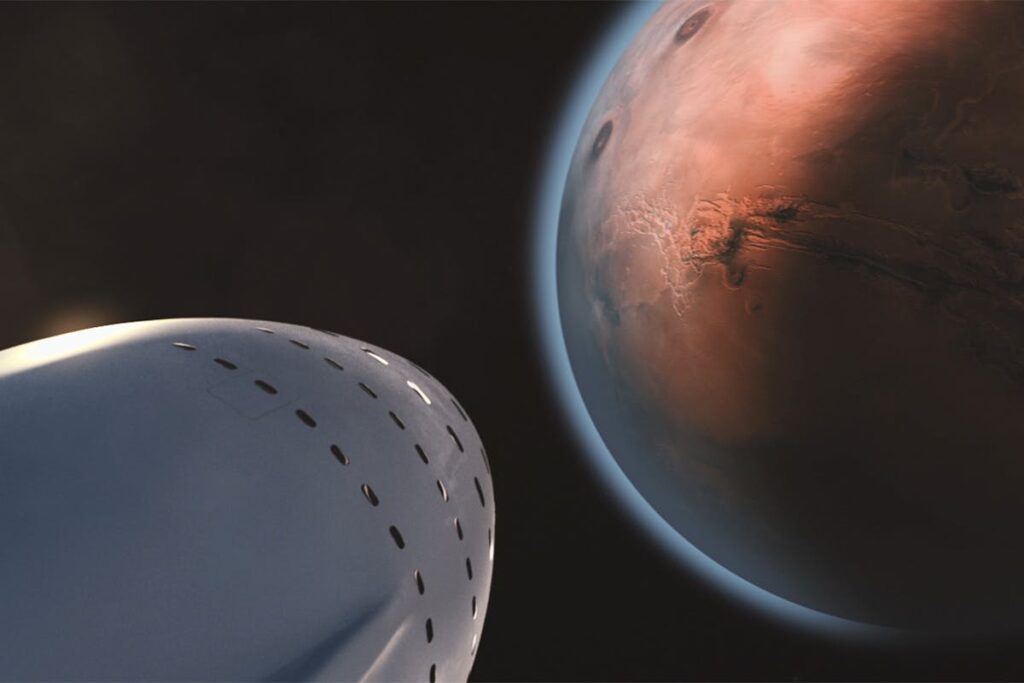
One of the easiest mistakes to make when looking at Artemis II’s images is to forget how much danger sits behind the beauty.
The Orion crew did not just travel farther from Earth than any humans in history for the sake of a visual milestone. They also left behind much of the natural radiation shielding provided by Earth’s magnetic environment. That makes Artemis II an important test of how human bodies and systems perform in deep space conditions.
That may not be the part of the story that goes viral, but it is arguably the most important.
Long-duration missions beyond Earth orbit will depend on understanding what astronauts can physically and psychologically endure without causing unacceptable long-term health damage. Artemis II helps answer some of those questions. Every measurement, every systems check, every observation contributes to a bigger picture NASA needs before committing astronauts to even more ambitious missions.
There was also the expected communications blackout as Orion passed behind the Moon. For around 40 minutes, the spacecraft was out of radio contact with Earth simply because the Moon itself blocked the signal. That kind of silence is planned and routine in one sense, but it still carries an emotional charge. The crew is there. Earth is here. And for a stretch of time, there is only distance.
Moments like that are a reminder that human spaceflight is never normal, no matter how polished the broadcasts or how clean the mission graphics look on screen. Every successful milestone is built on layers of engineering, discipline, and managed risk.
That tension between wonder and danger is exactly what gives Artemis II its power. It is beautiful because it is difficult. It is inspiring because it is not guaranteed.
Why These Photos Are Resonating Far Beyond Space Fans
The reason Artemis II’s images are spreading so quickly is not just because they are historically important. It is because they arrive at a time when many people are hungry for something bigger than the usual cycle of outrage, distraction, and doomscrolling.
Space images have a way of briefly rearranging people’s priorities. They do not solve earthly problems. They do not make politics disappear or personal struggles vanish. But they can interrupt the scale at which people are used to thinking.
That is what happened with Apollo 8’s Earthrise, and it is part of what is happening again now.
There is also a deeply human narrative attached to this crew. Artemis II is not a faceless technological event. It is a mission carried by four astronauts whose presence represents both continuity and change in human spaceflight. Reid Wiseman, Victor Glover, Christina Koch, and Jeremy Hansen are part of a new era that is trying to honor the emotional legacy of Apollo without simply living in its shadow.
Even small details from the references reinforce that humanity. One report noted that Hansen suggested naming a crater “Carroll” in honor of Wiseman’s late wife, Carroll Taylor Wiseman, who died of cancer in 2020. Whether or not that name becomes formal, the gesture says something important about exploration itself. Even at record-breaking distances, people bring memory, grief, love, and personal history with them.
That may be why the mission does not feel cold or remote. It feels personal.
Competing for the Moon, but Seeing the Earth
Artemis II is not an ending, but the setup for what comes next. If it returns safely, the mission will be remembered as a turning point that helped make future lunar landings feel real again. With NASA’s goal to establish an enduring human presence on the Moon and eventually stretch toward Mars, these photos are not just souvenirs from a singular moment. They are previews of what future crews will see as the Moon becomes newly relevant, hinting at the massive emotional and scientific payoff of going back.
The mission also exists within a larger geopolitical story. With China building its own lunar ambitions, the race to shape the next era of deep space exploration is no longer theoretical. Yet, the photos themselves feel far more poetic than political. What lingers most from these images is not the undeniable international competition, but the profound shift in perspective they offer to the world.
These images matter because they do what the best space photography has always done: they make the impossible feel briefly intimate. They bring an unimaginably distant view into ordinary human life, reminding us that exploration is not just about flags and technological milestones, but about seeing. By showing Earth’s fragility and the Moon’s textured, scarred reality, these photos hit hard not merely because they are beautiful, but because they make history feel visible.