


They Quit Teaching, Sold Everything, and Moved Onto a Cruise Ship for $1,250 a Month
You have spent a week somewhere beautiful, good food arriving without effort, evenings full of entertainment, mornings with nowhere urgent to be. And then comes that quiet, deflating moment when you zip up your suitcase and remember that real life is waiting for you on the other side of a flight home. Most people board the plane. Most people go back. Two people from Memphis, Tennessee, did not.
What they chose instead was not a sabbatical, a gap year, or an extended holiday. What they chose was a complete dismantling of the life they had built on land, followed by something that, on the surface, sounds like a fantasy reserved for the wealthy retired. Except they were in their early thirties. Except they were schoolteachers. And except the whole thing costs them less per month than many people spend on rent in a mid-sized American city. How that happened, and what it took to get there, is a story worth sitting with.
The Moment That Reframed Everything
Monica Brzoska grew up in Chicago with a hunger to see the world. When she moved to Memphis for a teaching job in 2015, she met Jorell Conley, a fellow teacher whose adventurous spirit matched her own. A year into their friendship, Jorell suggested a week-long cruise to Mexico, Belize, and Grand Cayman. Monica had never been on a cruise before. Seven days later, she was completely hooked.
Over the four years that followed, the couple took nine more cruises, visiting Puerto Rico, the Panama Canal, Costa Rica, and Turks and Caicos. They got married in July 2020, during the quietest wedding ceremony the pandemic would allow. Life continued with lesson plans, school terms, weekends, and the slow accumulation of a normal life. Then Monica’s parents fell ill.
Watching her mother and father face serious health challenges forced Monica and Jorell to confront something that most people push to the edges of their awareness. Time is not guaranteed. Health disappears without warning. When Monica’s father, Andrzej, needed a liver transplant in August 2022, her mother Lucyna pulled her close and said something that landed differently than any advice Monica had received before. “Don’t wait for retirement. Follow your dreams.” Monica heard it not as comfort but as instruction.
A One-Week Cruise That Never Ended
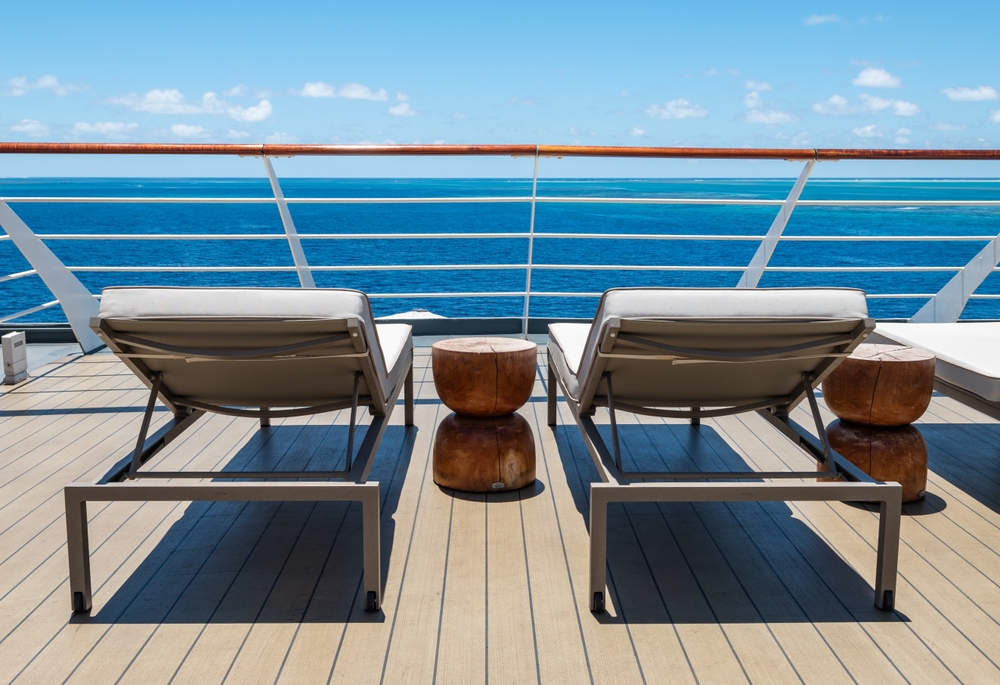
In March 2023, Monica and Jorell boarded a Caribbean cruise they had already booked. Seven days out at sea, as their ship prepared to return to Miami, the couple sat with a question that had been forming quietly for months. They had enjoyed their time on board. They had no pressing reason to rush home. Their jobs, if they chose, could be left behind.
What if they simply did not go back? Rather than booking a flight home, they opened their laptops and started looking at what came next. Carnival Cruises, with whom they had sailed more than a dozen times, had accumulated loyalty rewards and promotional offers sitting in their account. Cheap cabins were available. Many ships departed from the same ports they were already in. With some careful calculation, Monica and Jorell realized that consecutive cruising was not a wild financial gamble. It was, if they did it right, genuinely affordable. They booked the next cruise. And then the one after that.
How They Made the Numbers Work

Before stepping off the ship in Miami as permanent sailors, the couple did what any financially thoughtful person would do. They crunched the numbers with clarity and without sentiment.
“It sounds mad, but the numbers made sense. Accommodation, food and entertainment would be included — we’d only need spending money,” Brzoska explained. “And because we’d been on so many Carnival cruises, we’d earned access to some amazing offers.”
By choosing the cheapest available cabins and applying every loyalty discount and promotional deal in their account, Monica and Jorell booked their first eight months of consecutive cruising for $9,989.19. Some trips were paid in full upfront. Others required only deposits. That works out to roughly $1,250 per month for two people, with all meals, entertainment, housekeeping, and access to some of the most beautiful coastlines on earth included.
To keep cash flowing while they sailed, they rented out their three-bedroom home in Memphis. Average rental income for a similar property in that area runs between $1,200 and $1,900 per month, which gave them a steady financial foundation to draw from as they extended their cruising beyond the initial eight months. They quit their jobs, sold nearly all their possessions, and stepped aboard a ship in Miami with no fixed return date on the calendar.
What Life on Land Had Actually Cost Them
It is worth pausing here to consider what they gave up, because the answer is more layered than a job title and a house.
Monica describes stepping onto that first ship in March 2023 and feeling something she had not felt in years. Freedom. Not the surface-level freedom of a holiday, but a deep, structural release from the architecture of obligation that had organized her entire adult life. Lesson plans were gone. Grocery shopping was gone. Cooking was gone. Laundry was gone. Cleaning was gone. Chefs prepare every meal. Staff change the bedding. Neither Monica nor Jorell has touched a washing machine or stepped into a kitchen since they left. “Before, there had always been lesson plans, cooking and cleaning,” Monica told The Sun. “But all of that was gone.”
At first, their cabins were small and without windows. On a ship that size, it did not matter. Monica’s days settled into a rhythm she had never experienced before. She attended morning craft sessions, competed in trivia quizzes, and made sure never to miss the comedy show. Jorell found his own pace watching cooking programs, sitting at the bar, and striking up conversations with the rotating cast of fellow passengers that every new cruise brought aboard. Every few days, a new port. Every week, a new group of people to meet.
36 Cruises. 45 Countries. One Year.

Over their first year as full-time sailors, Monica and Jorell completed 36 consecutive cruises. That number still reads as almost impossible even when you say it slowly. By the time the second year rolled around, they had visited over 45 countries and logged more than 106 cruises in total.
Japan offered a cultural richness that Monica says she still thinks about. Greece fed her love of history in ways that no textbook ever had. Iceland, she told a Carnival Cruise director on Instagram, felt like the closest thing to standing on another planet. More recently, they have moved through Amsterdam, Germany, Belgium, and the United Kingdom, along with extended time in Australia, Fiji, Hawaii, and across the Caribbean.
On land, they keep costs low by skipping packaged excursion tours and using local transport to explore on their own terms. They have won excursion tickets, jewelry, and spa treatments through onboard raffles. Every financial angle gets considered, and every loyalty perk gets used.
What Happens to a Marriage at Sea
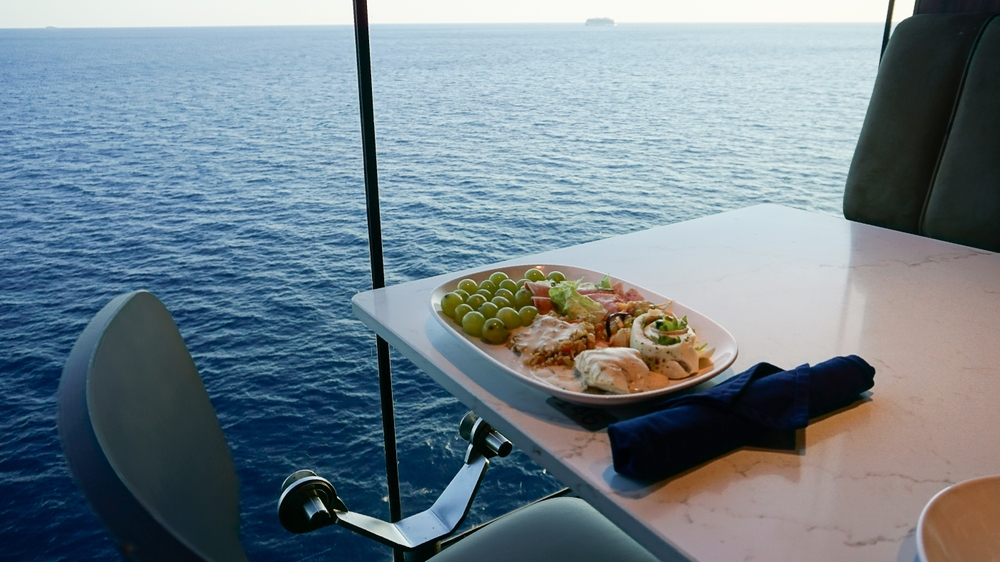
One of the less expected outcomes of this life has been what it did to their relationship. Shared stress is one of the quietest killers of intimacy in long-term partnerships. When two people carry the weight of mortgages, commutes, professional exhaustion, household management, and financial anxiety, they often direct the resulting friction at each other. Remove those pressures, and something shifts. “Without the daily stresses of life, we rarely argued, but always told each other if we needed space or more time together,” Monica said.
Rather than growing on top of each other in a small cabin, Monica and Jorell carved out their individual rhythms. She had her morning crafts and comedy shows. He had his television and conversations at the bar. They came together, intentionally dressing up every week for a formal date night at one of the fancier onboard restaurants rather than defaulting to proximity without connection.
The Parts Nobody Posts on Instagram

An honest account of this life does not edit out the harder parts. Missing family is real. Monica left behind parents who had faced serious health crises, and the distance between a cruise ship in the Pacific and a hospital in Tennessee is not a small thing. She and Jorell stay aware that a flight home is always possible in an emergency, but the emotional weight of that distance does not disappear simply because a solution exists.
Logistics require constant attention. Some ships depart from the same port where the previous one docked, which makes transitions easy. Others require a flight to meet the next vessel. Planning consecutive cruises without gaps means staying organized, staying flexible, and accepting that some weeks will involve more travel friction than others.
Small, windowless cabins were the starting reality, and they remain the default when costs need to stay low. Life at sea is not a resort suite. It is a bunk, a porthole, and an ocean.
They Are Not the Only Ones
Monica and Jorell were among the first couples to draw real media attention to full-time cruising as a viable lifestyle, but the broader movement behind them has grown. Retired adults and seniors have discovered that long-term cruising can cost less than assisted living while offering infinitely more stimulation. Remote workers and digital nomads have found that a ship with reliable wifi and included meals removes a significant chunk of their monthly overhead. Younger couples, tired of the standard script of lease agreements and career ladders, have started calculating whether a life at sea might actually pencil out.
Cruise lines have noticed. More extended itineraries now exist than ever before, opening long-haul routes through the Pacific, across Southeast Asia, and around South America that make consecutive cruising geographically richer than ever.
The Lesson Worth Taking Home
Most people reading this will not sell their possessions and board a ship next month. That is not the point. Monica’s mother did not say “book a cruise.” She said do not wait for retirement to follow your dreams. She said that in the middle of watching her husband fight for his life, at the exact moment when the fragility of time became impossible to ignore. “In our old life we’d have moments we called ‘glimmers’, when everything seemed magical,” Monica said. “Now I feel like my whole life is a glimmer — it really is a dream come true.”
What Monica and Jorell did was specific to their circumstances, their finances, and their appetite for an unconventional life. What their story points toward is far more universal. Most of us are waiting for a future version of our life to begin before we start living the one we actually want. We are waiting for the right income, the right season, the right moment of readiness. Life does not wait for readiness. It moves anyway. What are you waiting for?