

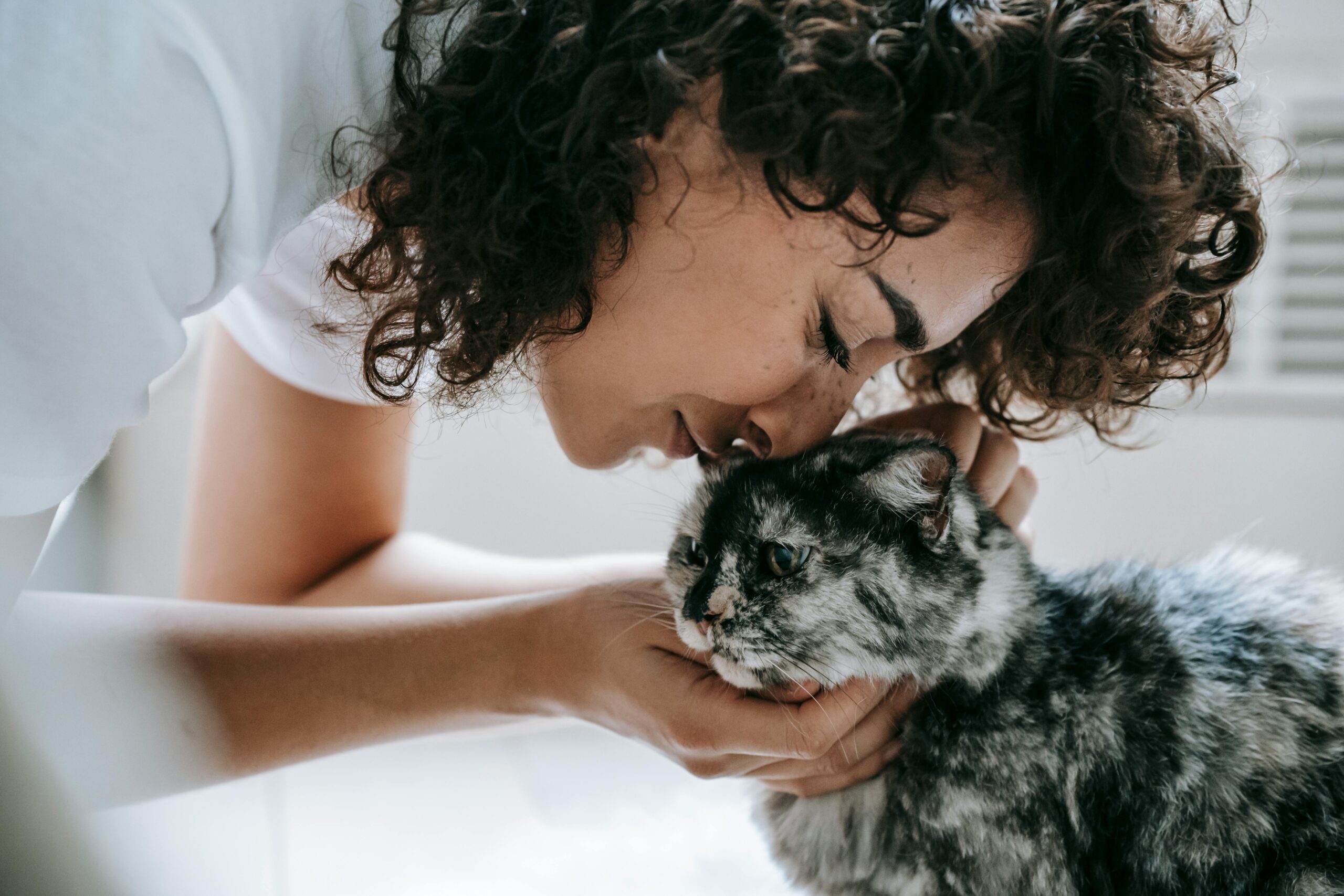
It feels like a tiny, unexpected bonk to the face. Then it happens again. Your cat leans in, presses their forehead against you, and lingers for a second like they’re trying to say something. They are. And what they’re actually communicating goes far deeper than most people realize. That small, almost playful gesture is not random affection or a quirky habit. It’s a deliberate form of communication rooted in instinct, social bonding, and a complex system of scent that humans can’t even detect. To you, it might feel like a soft nudge. To your cat, it’s a message packed with meaning, one that signals trust, familiarity, and a sense of belonging.
In fact, this behavior has a specific name and a surprisingly important role in how cats build relationships. Every gentle bump is part of a language they’ve been using long before they ever lived in human homes. And once you understand what it really means, that simple headbutt starts to feel like something much bigger.
It also explains why cats don’t do this with just anyone. You might notice your cat ignores guests but goes straight to you, pressing their head against your hand or face the moment you sit down. That selectiveness isn’t random. It reflects how carefully cats choose who they trust and how they express it.
And once you start paying attention, you’ll see patterns. The timing, the intensity, even the way your cat follows up that headbutt with a purr or a slow blink all adds layers to what they’re trying to communicate. What seems like a tiny moment is actually one of the clearest ways your cat shows you that you matter.
The Behavior Has A Name And It’s Not What You Think
What most people call a “headbutt” is actually known as bunting. It’s a specific feline behavior where a cat presses or rubs their head against a person, another animal, or an object.
This isn’t random. It’s one of the most intentional social signals a cat can give. It appears simple on the surface, but underneath it sits a layered communication system built on scent, memory, and trust.
Bunting shows up in cat colonies, multi-pet homes, and even with humans. But it’s never directed at everyone equally. Cats are selective. They do not waste this behavior on strangers or anything that makes them uneasy.
Cats choose who they bunt.
It’s One Of The Clearest Signs Of Trust
Cats are cautious animals by nature. They don’t easily put themselves in vulnerable positions, especially around their face and head.
When your cat presses their forehead against you, they are placing one of their most sensitive areas directly against you. That alone signals comfort. There is no defensive posture, no hesitation. Just contact.
In feline social groups, head contact is reserved for trusted companions. Cats that don’t get along avoid this kind of interaction completely. They keep distance, watch carefully, and move away instead of toward.
If your cat bunts you, you are not just tolerated. You are accepted. You are part of a circle that, in a cat’s world, is very small and very important.
Your Cat Is Literally Marking You As Safe
Here’s where it gets more interesting.
Cats have scent glands located around their cheeks, forehead, and chin. When they press their head against you, they release pheromones that humans can’t smell but other cats can detect instantly.
To another cat, that scent sends a clear message.
It signals familiarity. It signals safety. It signals that this human is already claimed within a known social group.
Rather than a territorial warning, this is a comfort signal. Your cat is blending your scent with theirs to create a shared identity. In their mind, you now carry a piece of them wherever you go.
That familiar scent helps them feel calm and secure in their environment. It turns a large, unpredictable world into something that feels controlled and known.
It’s Also How Cats Build Social Bonds
Bunting is not just about marking territory. It’s about connection.
In cat groups, this behavior helps create what’s known as a shared scent profile. Cats that live together will rub against each other to maintain this collective identity. It acts like a social glue.
This is why you might see cats grooming each other, rubbing sides, or touching noses. Each of these actions contributes to a shared scent that tells every member of the group they belong.
When your cat headbutts you, they are pulling you into that system.
You are being included in their inner group, not as an outsider, but as part of the environment they trust.
Sometimes It’s Just A Simple Request For Attention
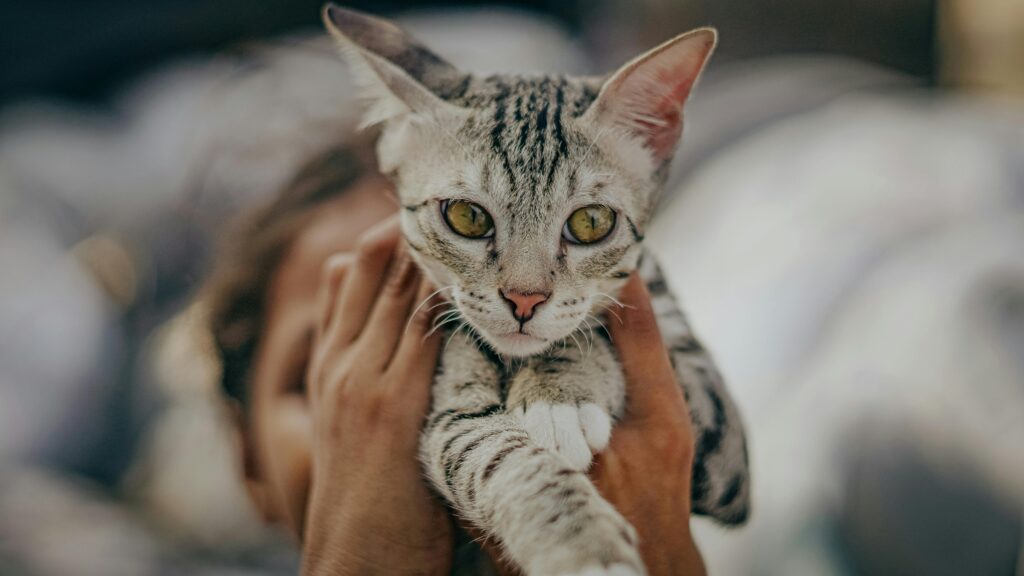
Not every headbutt is deeply symbolic. Sometimes your cat just wants something, and they’ve learned that this works.
Cats quickly figure out patterns. If you respond to bunting with attention, food, or affection, the behavior becomes reinforced.
Over time, it becomes a reliable way for them to communicate needs without making noise or creating chaos.
Common reasons your cat might headbutt you include:
- They want to be petted, especially around the head and chin
- They are greeting you after you’ve been away
- They are asking for food or routine attention
- They are waking you up in the morning
- They are trying to interrupt whatever you’re focusing on
The context usually makes the meaning clear. A gentle nudge at the door feels different from a persistent push at 6 a.m.
Why It Often Happens At Specific Times
You might notice your cat is more likely to headbutt you at certain moments during the day.
Morning is one of the most common. Cats are creatures of habit, and if they associate your waking up with food, they will find ways to speed that process along. A headbutt becomes their version of an alarm clock.
Evening greetings are another strong trigger. After hours apart, your cat may approach you, rub against your legs, and bunt your face or hands.
These moments combine routine, anticipation, and social bonding. Your cat is reconnecting and resetting that shared scent after time apart.
Not All Head Contact Is The Same
There is an important distinction that many cat owners miss.
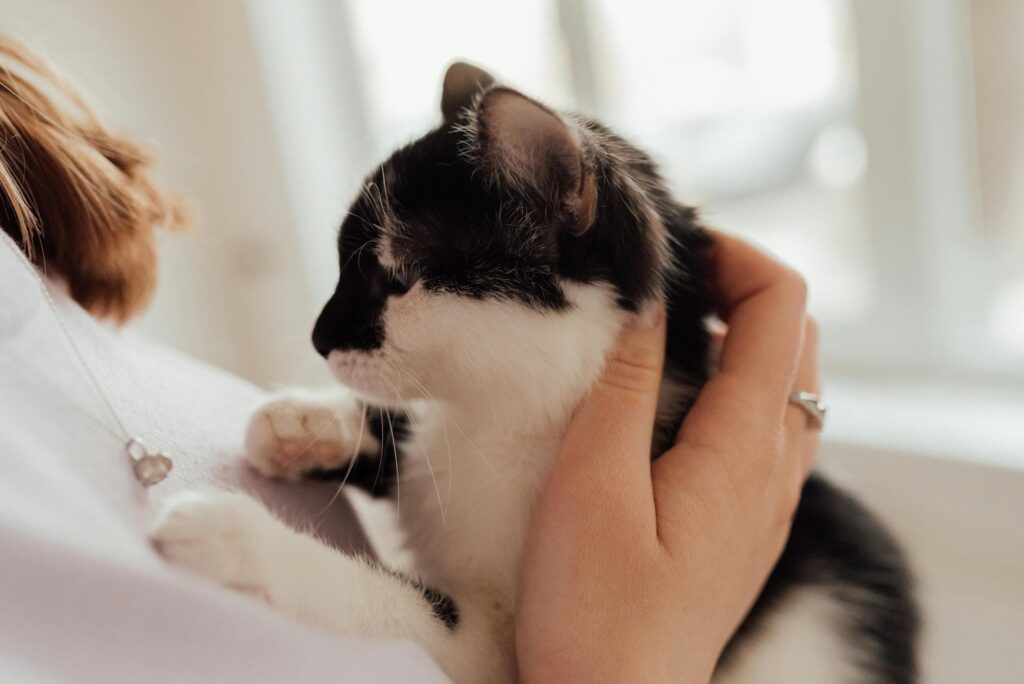
Bunting is gentle, brief, and relaxed. The cat appears calm, often purring, blinking slowly, or leaning into the contact.
Head pressing is very different. This is when a cat pushes their head against a wall or object and holds it there for an extended period.
This behavior can signal a serious medical issue and should not be ignored. It often comes with other unusual signs like disorientation or lack of responsiveness.
Understanding the difference matters because one is a sign of affection, while the other can indicate something is wrong.
Why Some Cats Headbutt More Than Others
Not every cat expresses affection in the same way.
Personality plays a major role. Confident and social cats tend to headbutt more often and with more force. They initiate contact easily and repeat behaviors that create connection.
Shy or anxious cats may show affection in quieter ways. Sitting near you, following you from room to room, or slow blinking can carry the same meaning without physical contact.
In multi-cat homes, dominant cats are often the ones initiating bunting. They help distribute the shared group scent across the household.
So if your cat rarely headbutts, it doesn’t mean they don’t like you. It simply means they express trust differently.
How You Should Respond When It Happens
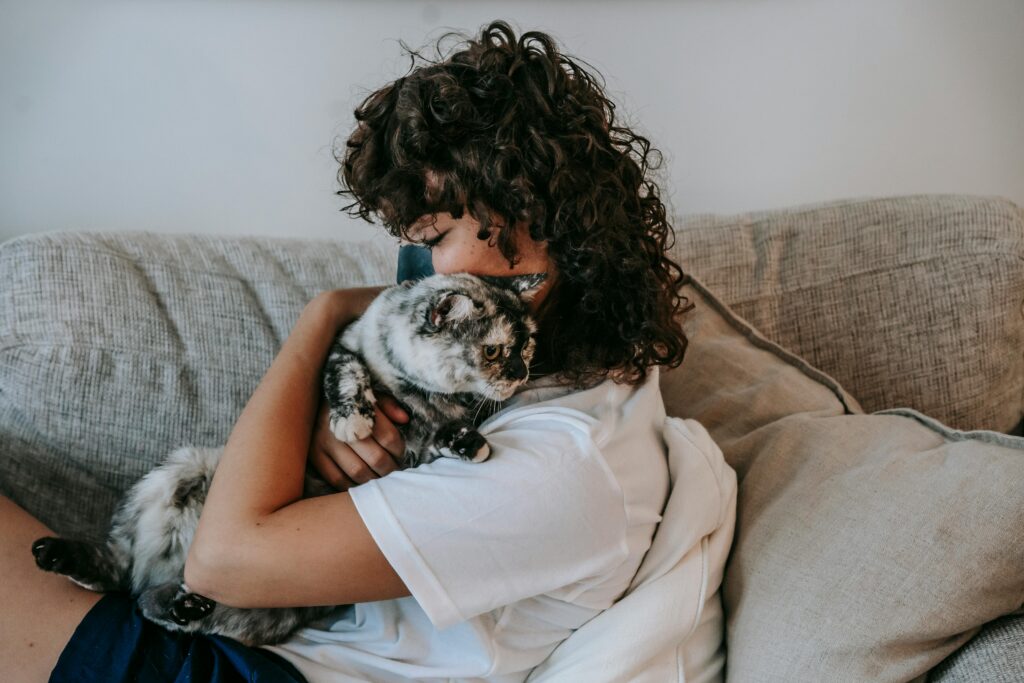
When your cat headbutts you, they are opening a moment of connection. Your response shapes how that interaction continues.
Most cats prefer gentle interaction focused on the head area. The cheeks, chin, and top of the head are usually safe zones where they expect contact.
Avoid assuming it’s an invitation for full-body petting. Some cats dislike being touched on the stomach or lower back in that moment and may react if boundaries are crossed.
A simple way to respond:
- Gently stroke the top of their head
- Rub under the chin or along the cheeks
- Speak softly to reinforce the interaction
- Pause if they pull away or shift position
Watching their body language tells you everything. A relaxed posture means continue. A flicking tail or sudden movement means stop.
The Hidden Emotional Side Of This Behavior
There’s a quieter layer to bunting that often goes unnoticed.
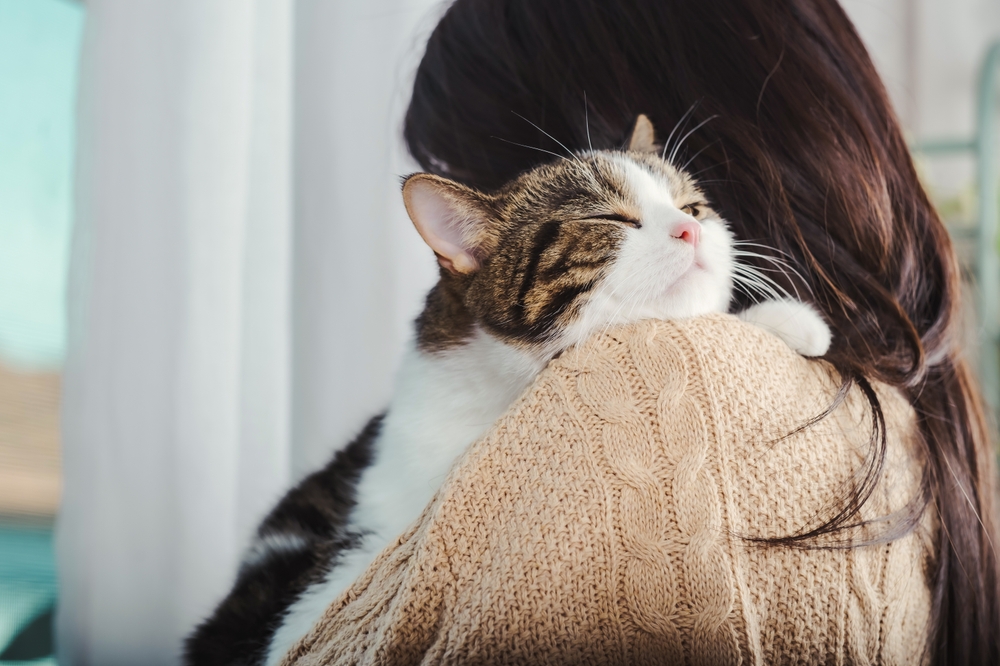
Cats sometimes use head rubbing as a way to regulate themselves. The act of releasing pheromones and engaging in familiar contact can have a calming effect on their nervous system.
You might see this when your cat seems slightly unsettled or when there are changes in the environment, like new people, loud sounds, or rearranged furniture.
By marking you, they are reinforcing something stable. You become part of what grounds them.
This turns a simple gesture into something more meaningful. It’s not just communication. It’s comfort.
The Evolutionary Roots Behind Bunting
This behavior did not develop randomly in house cats. It traces back to how wild and semi-social felines interact in shared territories.
Even species that hunt alone still rely on scent to map their environment. Scent marks help them track movement, recognize allies, and avoid conflict.
In group settings, like feral colonies, friendly cats create a shared scent that reduces tension. It signals that members belong and do not pose a threat.
Domestic cats carry that same instinct into your home. You become part of their mapped world. Bunting keeps that map updated.
Different Styles Of Cat Headbutting
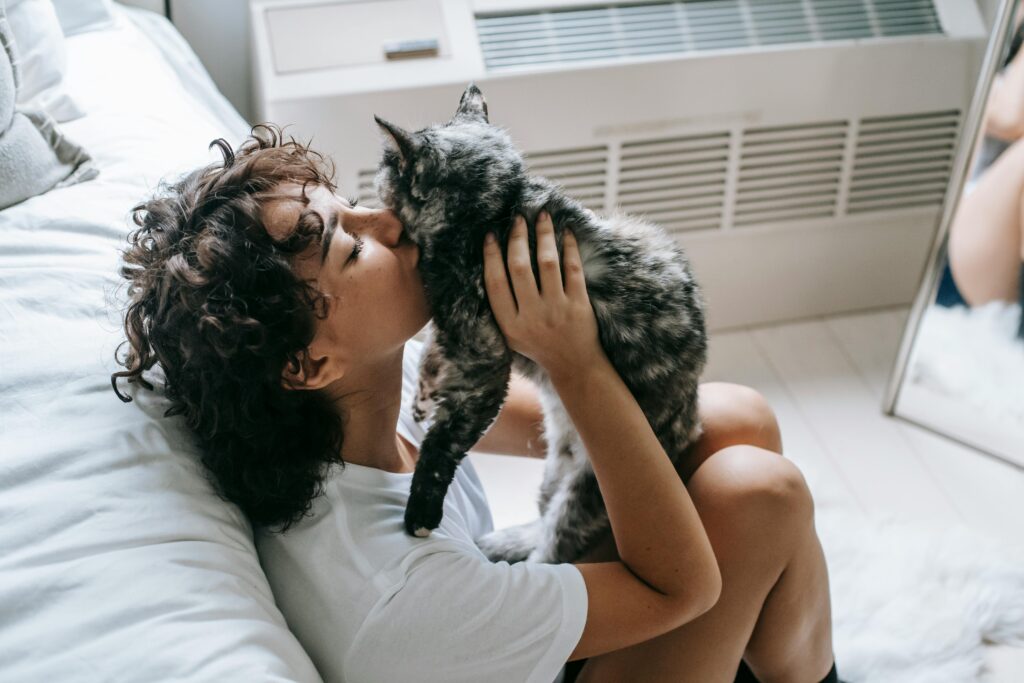
Not all bunting looks the same. Cats vary in how they perform it.
Some cats give light, slow nudges that feel almost like a gentle tap. Others lean their full weight into it, pressing firmly and repeatedly.
Some will combine bunting with cheek rubbing, sliding their face along yours or your hand. Others prefer quick, repeated bumps followed by sitting nearby.
These variations reflect personality, confidence, and past experiences. The meaning stays consistent even if the style changes.
What Kittens Learn From This Behavior
Bunting starts early in life.
Kittens observe and participate in scent-sharing behaviors with their mother and littermates. They rub, nuzzle, and press against each other as part of bonding.
This early exposure teaches them that physical contact combined with scent equals safety.
When a kitten grows up and begins headbutting humans, it is repeating a behavior tied to early comfort and survival. That history adds emotional weight to every interaction.
How Bunting Works In Multi-Pet Homes
If you have more than one pet, you may notice bunting happening between animals.
Cats often headbutt dogs, other cats, and even smaller animals they trust. It is their way of extending that shared scent circle.
In these environments, scent becomes a unifying signal. It reduces friction and helps animals coexist.
If one cat bunts you frequently while another avoids it, that difference often reflects social roles within the home.
When Headbutting Feels Too Forceful
Some cats are not gentle.
A strong headbutt can feel like a sudden knock, especially if your cat builds momentum or jumps toward your face.
In most cases, this is not aggression. It is enthusiasm combined with poor aim.
If it becomes uncomfortable, you can redirect the behavior. Lower your hand to meet their head before they reach your face. This gives them a safe target without discouraging the behavior entirely.
Consistency helps. Cats adjust quickly when they understand where contact is welcome.
Common Misunderstandings About This Behavior
There are a few persistent myths around cat headbutting.
Some people assume it is purely territorial, as if the cat is claiming ownership in an aggressive way. In reality, the scent left behind is associated with comfort and familiarity, not dominance.
Others think it always means the cat wants food. While that can be true in certain contexts, it is only one of several meanings.
Another misunderstanding is that all cats should headbutt. They should not. Affection in cats appears in many forms, and bunting is just one of them.
What It Means When The Behavior Changes
A sudden change in headbutting behavior can tell you something important.
If your cat becomes more persistent, they may be seeking extra reassurance or attention. This could happen during stressful periods or changes in routine.
If they stop bunting altogether, it may signal discomfort, illness, or emotional withdrawal. Especially if it’s paired with reduced appetite or energy.
Behavior shifts are often one of the first signs that something isn’t right. Paying attention to these small changes can help you catch bigger issues early.
The Science Behind Why It Feels So Meaningful
Even though humans cannot smell pheromones, we still respond emotionally to this behavior.
Physical touch, even from animals, can trigger feelings of comfort and connection. It lowers stress and builds attachment.
Cats, on the other hand, rely heavily on scent-based communication. When these two systems meet, something interesting happens.
Your cat experiences reassurance through scent.
You experience reassurance through touch.
The same moment delivers comfort in two completely different ways.
A Small Gesture That Means A Lot
To humans, a headbutt can feel playful or even a little strange. It can catch you off guard, especially if it comes with more force than expected.
To a cat, it carries meaning.
It signals trust, comfort, connection, familiarity, and belonging all at once. It’s a behavior rooted in instinct, shaped by experience, and repeated through bonding.
So the next time your cat leans in and gives you that gentle bump, it isn’t random.
It’s one of the clearest ways they can say you belong in their world.
And in a cat’s world, that kind of acceptance is never given lightly.