

The 2,000 Year Old Parable That Can Calm Your Anxiety In One Breath
Picture a normal Tuesday morning. You wake up running ten minutes behind. On your commute, a driver cuts you off, and you mutter something sharp into the steering wheel. At your desk, your boss sends back a one-word reply to a message you spent twenty minutes wording with care, and you spend the next hour wondering what you did wrong. By lunchtime, a close friend has left you on read for six hours, and your mind has already drafted three theories about what they must now think of you.
Most of us live like this without ever calling it out. We move through ordinary days collecting small grievances and stitching them into large internal storms. Anger pools in the chest. Anxiety hums under everything we do. We grow certain that other people aim their behavior at us with cruel precision, when in truth, those same people are barely aware that we exist.
What if a single old story, one that drifted from a Taoist sage thousands of years ago straight onto a TikTok feed near you, could loosen the grip of all that mental noise in under a minute?
What if the cure for so much daily frustration came down to a boat, a bump, and a moment of recognition that has been rewiring minds for centuries? Let me walk you onto the water.
A Thought Experiment on a Quiet Lake
Imagine yourself drifting on a still lake at dawn. Mist sits low on the surface. You came here for peace, maybe to meditate, maybe to think, maybe to hear yourself again after a noisy week.
Then you spot another boat in the distance. It moves toward you, slow but steady. As it gets closer, your jaw tightens. Who is this? Why are they coming straight at me? Your hands grip the oars. You begin rehearsing what you will say once they reach you. At the last possible second, you swerve. Your heart is pounding. You glance over, ready to glare at the careless rower who almost ruined your morning. Nobody is there.
That other boat is empty. It has been empty the whole time, drifting along the current with no captain, no aim, no opinion of you whatsoever. As TikTok creator @sean.of.the.living put it, “There was never anybody to be angry with in the first place.” Sit with that line for a moment.
All that adrenaline. All that mental theater. All that anger ready to be hurled at someone you had already turned into a villain in your head. None of it had a target. Every bit of that storm lived inside you.
An Old Parable Lands on a New Feed

Long before short videos and trending sounds, this same story traveled through Taoist teaching as a quiet lesson on the suffering we manufacture for ourselves.
A young monk hops into a small boat, hoping to find a peaceful pocket of the lake to meditate. Water is glassy. His breath slows. Then a sudden jolt rocks his vessel, knocking him out of his calm. Furious, he opens his eyes ready to scold whoever dared interrupt his practice.
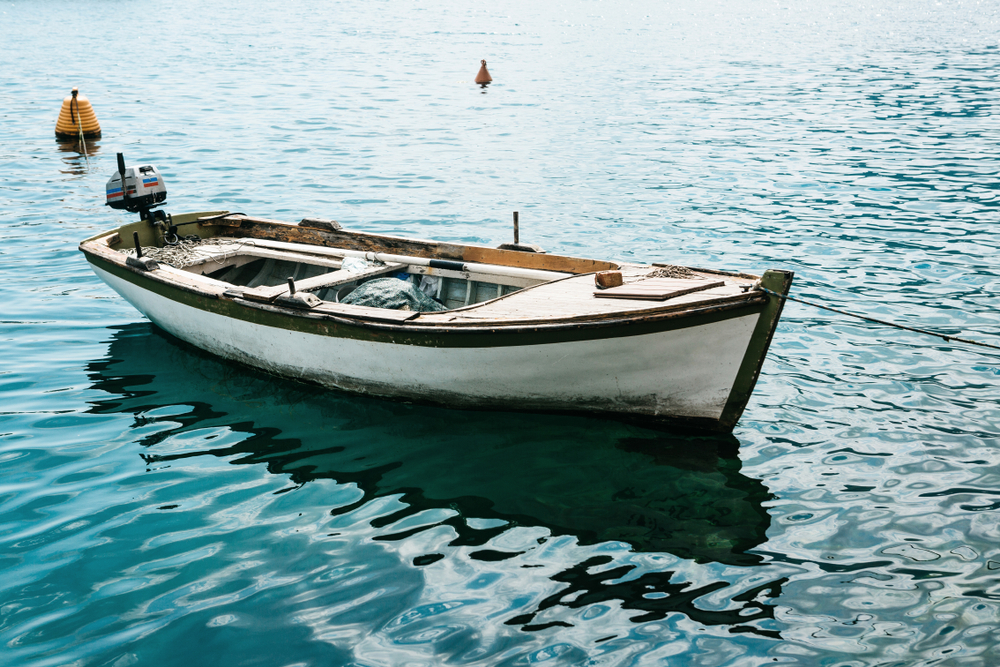
He looks. There is no one. Across the surface of the lake, only an empty hull bobs against his. His anger drops like a stone. There was no enemy. There was only water, wind, and a boat with no one steering it.
That single image carries more weight than most self-help books. Sometimes a bump is just a bump. We do not need to assume malice. We do not need to gather evidence for a courtroom drama in our heads. We can let the boat pass, return to our breath, and keep going.
What Modern Psychology Calls This Mental Trap

Modern therapists have a name for the mental glitch this parable points to. They call it the spotlight effect. Most of us walk around convinced that other people are watching us, judging our outfits, replaying our awkward sentences, and noticing when our hair sits weirdly. In reality, those same people are too busy worrying that we are doing the same thing to them.
Almost nobody is watching. Almost nobody has the bandwidth. As the original piece on the Empty Boat Theory put it, Most of the time, nobody’s thinking about you. Read that twice if you need to.
What feels like a personal attack is often someone else’s rough morning. What feels like a snub is often a forgotten phone, a stressful inbox, a kid throwing up at school. That boat coming at you is empty far more often than it is steered.
Once you begin seeing the world this way, your shoulders drop. Your grocery clerk, who barely looked at you, was not snubbing you. Your friend, who took two days to reply, was not punishing you. Your driver who cut you off was not staging an elaborate operation against your morning. Most boats are empty.
The Quiet Ego Living Inside All of Us

You do not have to be a narcissist to fall into this trap. Egocentrism lives in everyone, sometimes loud, sometimes whispered. We are the protagonists of our own stories, and from inside our own heads, the world does seem to revolve around us.
Without mindfulness, that natural self-focus inflates into something painful. We script other people’s thoughts about us. We treat those scripts as facts. We react to fictions we wrote ourselves. As the source piece captures it, much of our daily anger comes from one simple habit. We assume everything’s about us.
Once you see the pattern, it shows up everywhere. An unanswered text. A half-smile from a coworker. A flat tone in an email. We pour meaning into empty spaces and then react to the meaning we made up.
Mindfulness, in its plainest form, is a willingness to ask one question before reacting. Is there really a person in that boat? Or am I shouting at the wind?
How to Practice the Empty Boat in Daily Life

Knowing the parable is one thing. Living it is another. Try this. Next time you feel that hot surge of being wronged by someone, pause for one breath. Picture the boat. Ask yourself, is anyone rowing this thing, or is it drifting along on currents I cannot see?
Maybe your coworker who skipped your hello did not see you. Maybe your friend who cancelled plans is buried under something they have not yet told anyone. Maybe that person who honked at you just got fired and is barely holding it together behind the wheel.
Most of the time, that boat is empty. Most of the time, you are responding to a story you wrote about a person who never read it.
Practice this once a day for a week, and notice how much lighter your evenings feel. You will find that a huge slice of what passed for stress was nothing more than imagined hostility, manufactured by your own mind during otherwise ordinary moments.
Pick Your Battles With Care

None of this asks you to become a doormat. Some boats truly do have someone in them. Some bumps are deliberate. Some people behave with cruelty, who cut corners at your expense, who deserve to be answered with clear words and firm boundaries. The Empty Boat Theory does not ask you to swallow every offense or pretend harm away.
What it asks is harder and more useful. It asks you to slow down long enough to know the difference. To stop spending your fire on phantoms. To save your voice, your time, and your peace for moments that actually call for them.
When you stop fighting empty boats, you have far more energy for the real ones. Your anger, when it does arrive, lands with weight because you no longer scatter it across every minor breeze on the water.
A Lighter Way to Sail
Here is the gentle truth at the center of all this. Most days, nobody is plotting against you. Most days, the strangers you pass are too busy with their own stories to write you into theirs. Most days, the boats drifting your way are simply boats, moved by water, indifferent to your name and your reputation and your bad hair in the morning.
Letting that sink in is a quiet form of freedom. You get to stop guarding against shadows. You get to stop arguing with people who never said the thing your mind put in their mouths. You get to walk through your own day with softer eyes and a calmer chest, more curious than defensive, more present than reactive.
So tomorrow, when something bumps you, take one breath before you react. Look at the boat. Look hard. If it is empty, smile, steer around it, and keep moving toward whatever shore you came here to reach.
And if you ever do find a real person rowing in there with bad intent? Well, that is a whole different conversation, and one you will be far better equipped to have once you have stopped wasting your fire on every empty hull on the lake.