

Father Gets His Sons Heart Surgery Scar Tattooed On His Own Chest
Sometimes love takes a form that cannot be explained with a simple hug or a reassuring sentence. For Eric Conklin, it became a permanent mark on his own chest, one that mirrors the scar his young son Bennet carries after the hardest months of his life.
Bennet was born with a congenital heart defect and spent more than a month in a pediatric cardiac ICU at Mount Sinai in New York. Before his first birthday, he underwent seven surgeries. His father watched him endure all of it, then found a way to tell him something that words alone could never quite express: he would never have to carry that story by himself.
A Tiny Chest Carrying A Huge Story
Bennet’s surgical scar runs down the middle of his chest and continues across the top of his stomach. On a child so small, the line is striking. It records a period of his life he was far too young to understand.
His father, Eric, had been looking at that scar since the earliest days of Bennet’s life. He saw it in the hospital, during recovery, and later at home as his son’s chest rose and fell with each breath.
The family has described Bennet’s condition as a congenital heart defect. Coverage of their story has reported pulmonary atresia, although Eric’s public posts describe the condition more generally.
Pulmonary atresia affects the way blood reaches the lungs. The pulmonary valve does not form properly, making it difficult for blood to travel through the pulmonary artery and receive oxygen. Treatment can involve several procedures and surgeries as a child grows.
For Bennet, the medical journey was especially demanding. Seven surgeries came before his first birthday.
Yet the scar that records those experiences also represents something else: survival.
His Father Chose To Carry The Same Mark
Eric eventually decided that Bennet should not be the only person in the family with that scar.
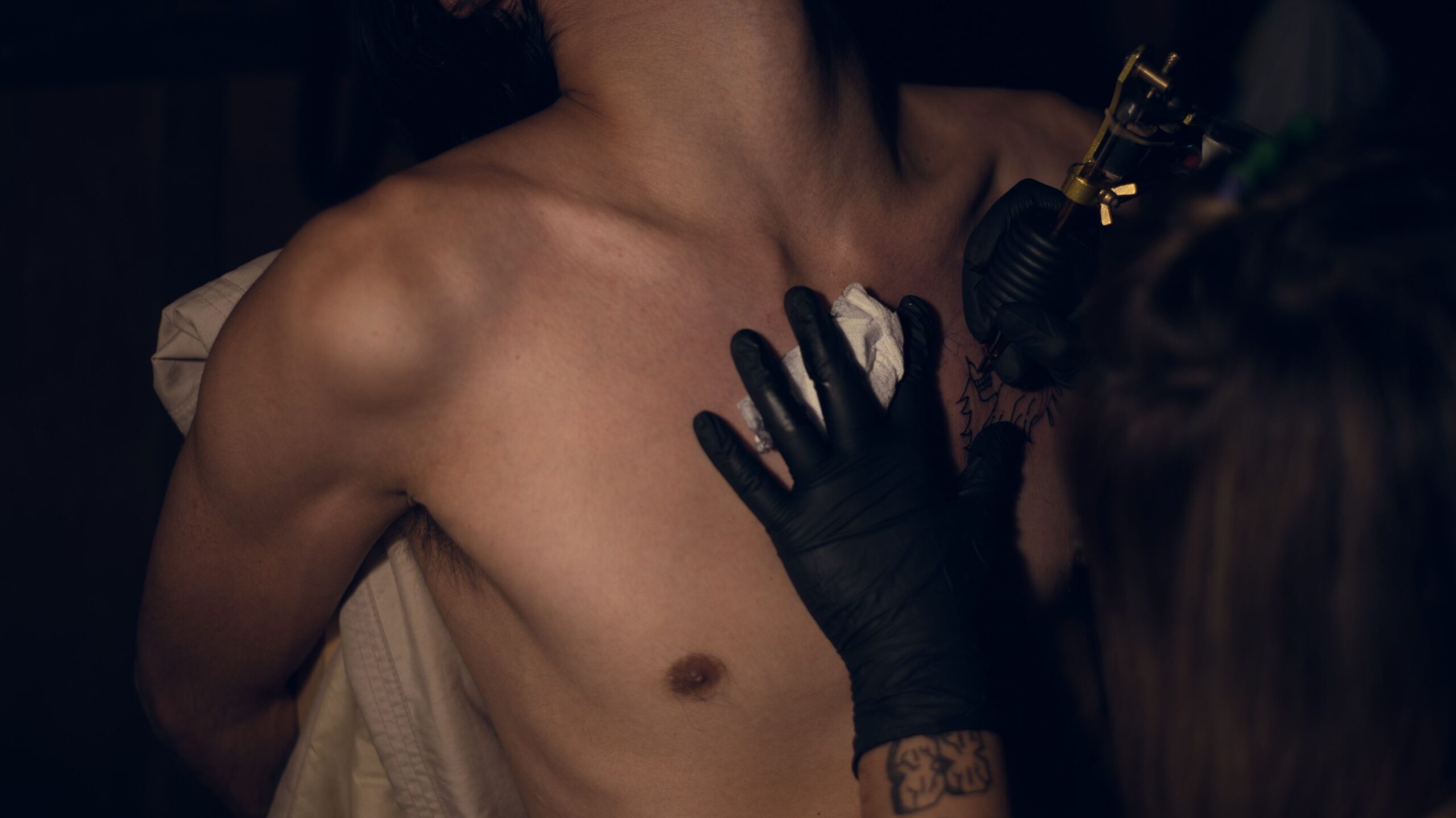
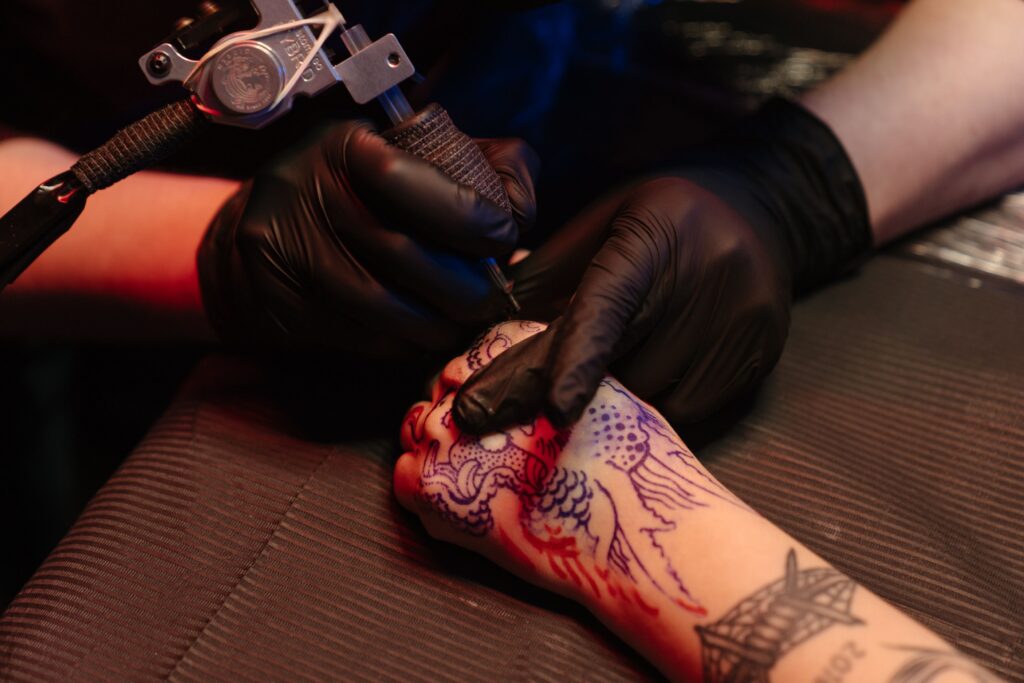
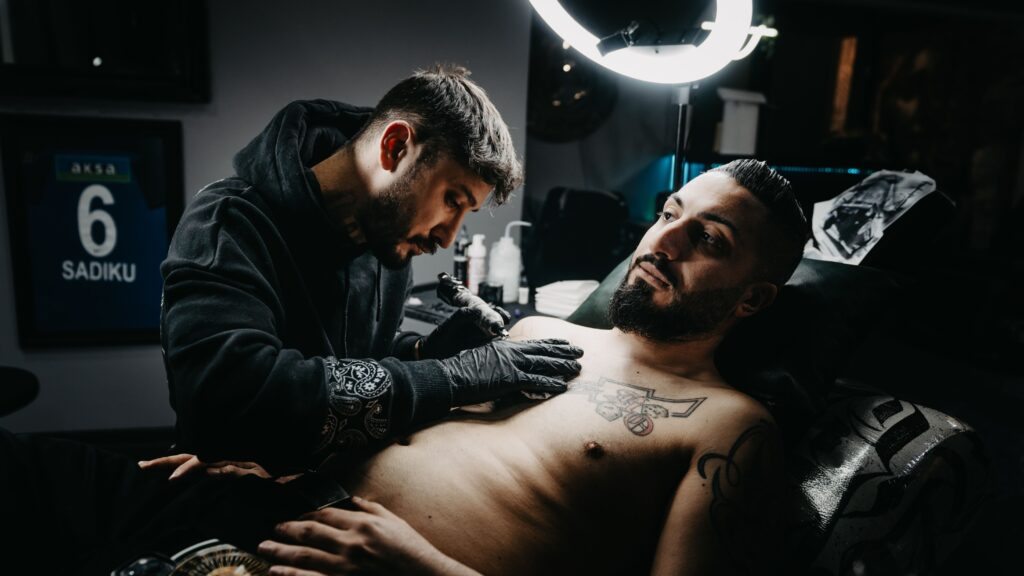
He had the surgical line tattooed across his own chest, following the same basic path down the center and across the upper stomach. The tattoo was created by Jimmy Ingram, who works as Jimmyinks at Sunken Ship Tattoo Studio in Boonton, New Jersey.
The choice was striking because the tattoo does not represent the scar from a distance. It deliberately resembles it.
That distinction gives the gesture its emotional weight. Eric did not simply choose a symbol connected to his son’s experience. He chose to place a version of that experience on his own body.
He later explained his reason in a public post: “I wanted him to know he’s never alone in this fight.”
That sentence says something about the kind of reassurance children often need. Being told that someone loves you can be powerful. Seeing evidence of that love can sometimes reach somewhere words cannot.
The Tattoo Is A Promise For The Future
Bennet is still too young to understand what his father’s tattoo means. Eric appears to have understood that the meaning may become clearer years from now.
A child who grows up with a prominent surgical scar may eventually have questions about it. There may be moments when he notices other people’s reactions or feels different from children who have never undergone major surgery.
The tattoo gives Eric an answer before those moments even arrive.
He described his son’s scar as “his story of survival” and his own tattoo as a promise that he would carry whatever his son carries.
There are several things that make that promise powerful:
- It gives the scar a different meaning: The mark can represent survival rather than something that needs to be hidden.
- It creates visible solidarity: Bennet will grow up knowing that someone chose to share a physical reminder of his experience.
- It preserves a family story: The tattoo can remain with Eric long after the hospital memories become harder for Bennet to remember.
- It leaves room for future conversations: When Bennet becomes old enough to ask questions, his father will already have an answer on his chest.
None of those things changes what happened medically. They change what the scar can mean within a family.
Other Parents Have Made Similar Promises

Eric’s decision is unusual, but he is not the first parent to copy a child’s heart surgery scar.
Matt Backe of Crystal Lake, Illinois, had a tattoo made to resemble the surgical scar carried by his daughter Everly, whom the family calls Evie. She was born with a critical congenital heart defect and underwent three open-heart surgeries before her first birthday.
Backe told Good Morning America that he wanted the matching scar to help his daughter feel less alone. He described the two of them as “zipper buddies.”
Evie’s own explanation was even simpler. She said her father did not want her to be alone and wanted to be special like her.
That story reveals something important about how children can interpret physical differences. Adults may see a scar as evidence of a frightening medical experience. A child can also see it as something shared with someone they trust.
The same idea appears in another story from England, where a father had a scar tattooed on his chest to match his son Joey’s after the boy underwent open-heart surgery in Leeds.
The gestures are different in detail, but the message is remarkably similar: your body does not make you less worthy of being seen.
A Scar Can Become Part Of A Child’s Identity
Surgical scars can carry complicated emotions. They can be reminders of fear, pain, uncertainty, and long periods spent away from ordinary childhood.
They can also become records of what a person survived.
That distinction may become especially important as a child grows older. A scar can attract questions from strangers or create self-consciousness in situations where the body is more visible, such as swimming or changing clothes.
For some families, changing the story around the scar begins at home.
The parents who choose matching tattoos cannot erase the difficult experiences their children endured. They can show that those experiences belong to the family rather than belonging to the child alone.
That is a subtle but meaningful difference.
Bennet’s scar will always be his own. His father’s tattoo does not take that away. Instead, it gives him a visible companion to the story.
The Message Goes Beyond One Family

Eric has also used his son’s story to raise awareness about congenital heart defects and to acknowledge the medical team that cared for Bennet.
He thanked the Mount Sinai staff for saving his son’s life and for advocating for him throughout his treatment.
His words point toward another part of the story that is easy to overlook. Behind every child’s recovery is usually a network of people carrying part of the burden: parents, relatives, nurses, surgeons, doctors, therapists, and countless others.
The child may be the one lying in the hospital bed, but the experience changes everyone around them.
Eric’s tattoo makes that shared experience visible.
It also connects Bennet’s story with many other families who have spent nights in children’s hospitals, learned unfamiliar medical language, and watched their children face procedures no parent ever wants to imagine.
For those families, a scar can be more than a physical mark. It can become a place where memory, fear, courage, and love all meet.
What Children Often Need Most Is Someone Beside Them
There is a temptation to think of strength as something a person develops alone. Stories like Bennet’s offer a different picture.
Sometimes strength is built through connection.
A child does not need another person to experience the exact same pain to feel understood. But a parent can say, through actions, that the child will not have to face difficult moments in isolation.
Eric’s tattoo makes that message unusually literal.
He cannot give Bennet back the months spent in the hospital. He cannot remove the scar or change the surgeries his son endured. What he can do is stand beside him when the meaning of that scar changes over time.
Eric ended his message to his son with words that bring the whole gesture into focus: “Benny, you are my hero. And now we wear the same armor.”
For Bennet, that tattoo may one day become an ordinary part of his father’s body. But behind it will remain a simple promise: when he looks at the mark on his chest, he will know someone chose to carry a piece of the story with him.