


For Four Children With Brain Cancer, Their Own Blood Became a Reason to Keep Hoping
For some parents, a cancer diagnosis changes the meaning of time. A birthday becomes something to hope for. A school year becomes something to reach. An ordinary afternoon can suddenly feel like a gift that medicine may not be able to guarantee. That is what makes the early results from a clinical trial at Children’s National Hospital so difficult to read without thinking about the lives behind the numbers. Researchers treated children with some of the most aggressive brain tumors using immune cells taken from their own blood. Three children with relapsed brain tumors remained alive with no evidence of disease years after treatment, and a fourth became a long-term survivor.
The researchers are careful about what those results do and do not mean. This was a small, early-stage trial, and it did not produce a cure for the deadliest childhood brain tumors. One child died after a serious reaction to treatment, and children with diffuse intrinsic pontine glioma, or DIPG, saw little improvement in survival. Still, something important happened inside a study designed primarily to examine safety and feasibility. For a handful of families who had already exhausted conventional options, their own immune systems became capable of reaching a place doctors have long struggled to treat.
A Cancer That Leaves Families With Few Choices
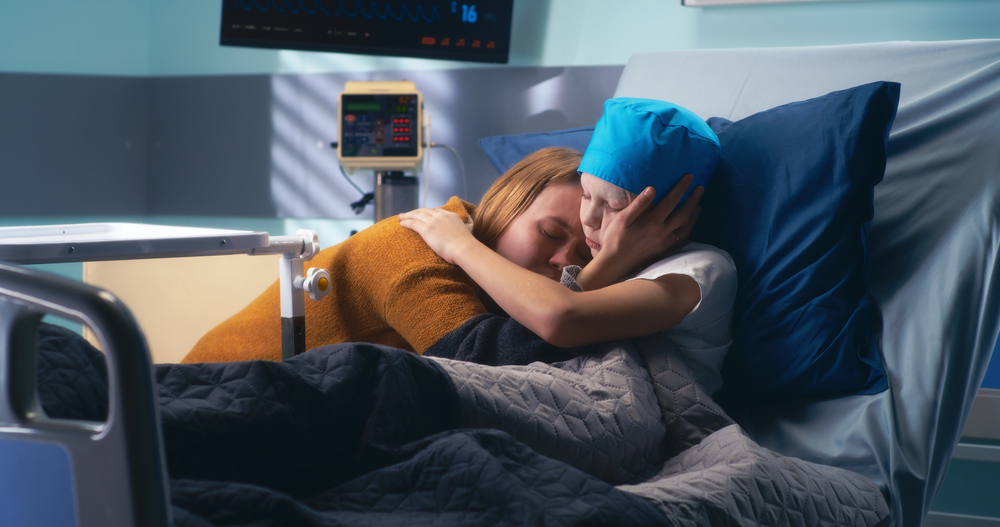
Central nervous system tumors are among the deadliest cancers affecting children. One of the most difficult is DIPG, a tumor that grows in the pons, a part of the brainstem responsible for essential functions including breathing, swallowing, and eye movement.
Because the tumor grows through this delicate region, surgery is generally not possible. Radiation can temporarily slow the disease, but its effects eventually fade. Most children diagnosed with DIPG survive for roughly a year, leaving families with very little time after diagnosis.
The children entering the Children’s National trial were therefore not simply volunteers for an experimental treatment. Many had already endured repeated rounds of chemotherapy, radiation, surgery, or other therapies. One child had gone through as many as 17 rounds of treatment before entering the trial.
Eugene Hwang, a pediatric oncologist involved in the research, captured the human significance of the results when he said, “These children are getting to grow up.” For families confronting a disease that can take away that possibility so quickly, those words describe something far more meaningful than a number on a survival chart.
The Treatment Came From the Children Themselves
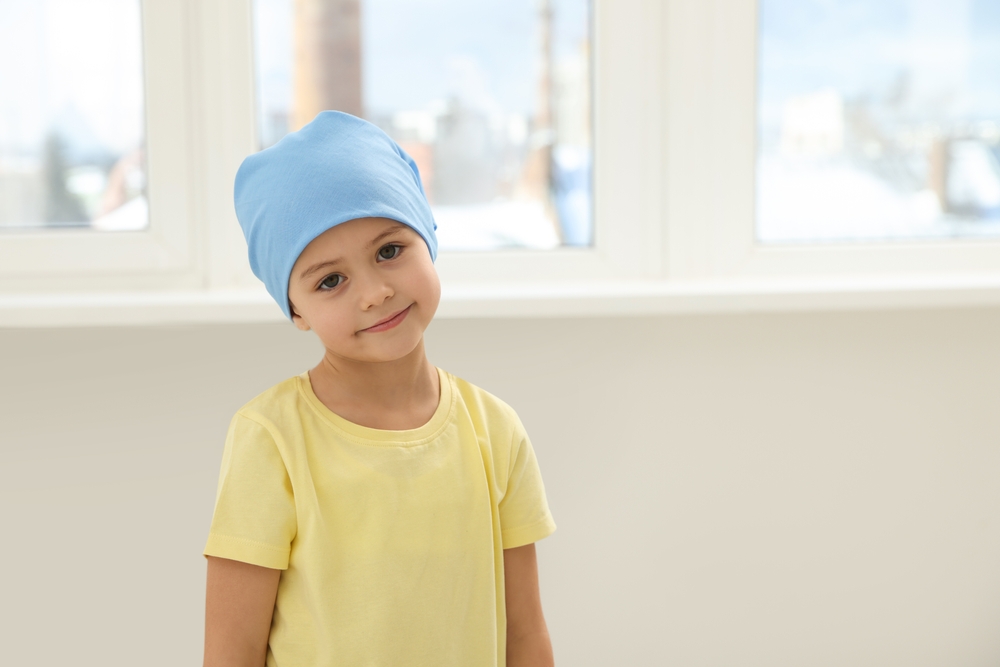
The approach used in the trial is a form of adoptive cell therapy. Instead of creating an entirely new drug, researchers began with immune cells already circulating inside each child’s body.
Doctors collected blood and identified T cells that could recognize proteins associated with the tumor. Those cells were then expanded in the laboratory, creating a much larger population that could be returned to the patient through an intravenous infusion.
The concept is surprisingly intimate. The treatment came from the patient’s own immune system. Researchers did not genetically engineer the cells or attach a synthetic receptor to them. They selected cells that already showed an ability to recognize cancer-related targets and increased their numbers before giving them back.
The researchers were also testing an important question about brain tumors. The brain has long been considered a difficult environment for immune-based treatments, partly because of biological barriers that can limit what reaches brain tissue. In this trial, the infused T cells were able to travel through the bloodstream and reach tumors in the brain.
That does not mean every infused cell found a tumor or that every tumor responded. It does show that a patient’s own immune cells can be collected, expanded, returned through an IV, and reach the brain in a way that can produce measurable biological and clinical effects.

Why Researchers Chose Three Cancer Targets
Cancer cells can be difficult targets because they are constantly changing. A treatment that depends on one particular protein may lose effectiveness if the tumor stops displaying that protein.
The Children’s National researchers tried to make that escape more difficult by targeting three proteins: WT1, PRAME, and survivin. These proteins are found in a range of pediatric cancers, including brain tumors.
The strategy gives the immune system more than one feature to recognize. If a tumor becomes less visible through one target, the researchers hoped the remaining targets could still give T cells a way to identify malignant cells.
The trial also showed that the manufacturing process could be carried out across individual patients. That is an important practical consideration for personalized cell therapies. A treatment can only become broadly useful if researchers can reliably produce a safe cellular product for different people.
“We were excited to see that we could preserve safety and quality of life while generating anti-tumor responses by attacking three targets at once,” Hwang said.
The wording is important. The researchers described anti-tumor responses, not a universal cure. The distinction matters because early clinical trials can reveal that a treatment works in some patients without showing that it will work consistently across a larger population.

Three Children Reached Years Without Detectable Cancer
The trial began at Children’s National in December 2018. In total, 33 children and young adults received the treatment across several groups.
Some participants had newly diagnosed DIPG. Others had tumors outside the brainstem that had returned or relapsed after earlier treatment. Some patients also received a preparation intended to reduce parts of their existing immune system before receiving the new cells.
Most participants did not experience the kind of long-term response that researchers hope to see in a successful cancer treatment. But three children with relapsed or recurrent tumors outside the brainstem remained alive with no evidence of disease at extended follow-up.
Their cancers included glioblastoma and astroblastoma. At the reported follow-up points, they had reached 31.8, 41.2, and 51.6 months without detectable disease. None had needed additional treatment during that period.
A fourth child also became a long-term survivor. The researchers described these cases as preliminary evidence that the therapy could produce lasting clinical benefit in some children who had very few remaining options.
Catherine Bollard, the hospital’s chief research officer and a leader of the trial, said, “Even in this early-stage trial focused on safety, we were encouraged to see lasting clinical benefit in several patients who otherwise had very few options.”
Those cases are the part of the study that naturally captures attention. Yet the broader results are more complicated, and that complexity is important to preserve.
The Trial Also Showed How Much Remains Unsolved
The treatment did not produce the same response in every type of tumor. DIPG remained particularly difficult.
Children in the DIPG group had a median survival of 13.7 months from diagnosis. That was somewhat longer than historical figures around 11 or 12 months, but it does not represent the kind of dramatic change that would suggest the disease had been overcome.
There was also a serious safety problem. Two children experienced significant reactions associated with tumor swelling during treatment. One child with DIPG died after receiving the highest dose tested, and researchers subsequently established that dose as the upper limit.
That outcome is a reminder of why early clinical trials proceed cautiously. A treatment can produce encouraging responses while also carrying risks that researchers need to understand before it can move into larger studies.
The study itself also had limitations. It was a phase 1 trial without a control group or comparison arm. Phase 1 studies are primarily designed to examine safety, dosing, and feasibility rather than prove that a treatment is effective. The researchers therefore describe the findings as preliminary signals of efficacy.
Tim Hassall, a pediatric oncologist at Queensland Children’s Hospital in Australia, told Scientific American that the results were encouraging while cautioning against treating them as a final answer. His assessment reflects where the science stands: the treatment may have opened a useful door, but researchers still need to determine how far it leads.
What The Children’s Experience Could Teach Medicine
The most interesting part of this work may be the question it raises about the immune system and the brain.
For decades, cancer treatment has often relied on surgery, radiation, chemotherapy, or combinations of those approaches. Immunotherapy has added another possibility: instead of attacking the tumor directly, doctors can sometimes help the body’s own defenses recognize and attack malignant cells.
Brain tumors make that idea especially complicated. The location of these cancers can make surgery dangerous or impossible, while the biology of the brain creates additional challenges for treatments that depend on immune cells reaching the tumor.
This trial suggests that the bloodstream may be more useful as a route into the brain than researchers once hoped. The infused T cells did not need to be surgically placed beside the tumor. They were given through an IV and were able to reach the brain.
The approach also points toward a broader idea in cancer medicine: the immune system may be capable of doing more when scientists learn how to identify the right targets and expand the right cells.
For the children in this trial, researchers were working with three shared tumor-associated proteins. Future approaches may become even more individualized.
The Next Generation Of Treatments Is Already Taking Shape
The Children’s National team is now building on what it learned from the trial. Two follow-up approaches are being developed around the same basic idea.
One combines the T-cell treatment with low-frequency ultrasound. Researchers hope the ultrasound could help more immune cells reach the tumor.
Another trial is already open and takes a more personalized approach. Rather than relying on three proteins shared across different tumors, researchers are looking for targets specific to an individual child’s cancer.
That shift could become important because no two tumors are exactly alike. A treatment that works for one child may not work for another if the cancer presents different molecular targets.
The research team is therefore moving in two directions at once:
- Improving delivery: Researchers are studying whether ultrasound can help more T cells reach brain tumors.
- Personalizing the target: Another approach looks for proteins unique to each child’s tumor.
- Building on the established dose: The dose developed during the original trial is being carried forward into the next generation of studies.
None of these approaches has yet established a new standard of care. They are experiments built from what researchers learned in an earlier experiment.
That is often how progress in medicine actually looks. One trial answers a narrow question, and the answer gives scientists enough information to ask a better one.
Sometimes Progress Looks Like More Time
It is easy to look at a study like this and focus only on the scientific terminology. T cells. Tumor antigens. Phase 1 trials. Cellular therapy. Dose limits. Follow-up periods.
Behind those terms are children who were once expected to have very little time.
Three children in this study reached follow-up periods measured in years without detectable cancer. They were able to live beyond the immediate horizon their families had been given. They got time for ordinary things that rarely appear in clinical papers: school days, birthdays, family dinners, plans for the following year.
That does not make the treatment a cure. It does not erase the child who died from a treatment-related complication. It does not change the reality that DIPG remains one of the most devastating cancers in childhood.
But it does show something worth holding onto. A treatment can be imperfect and still open a possibility that did not exist before.
Medicine advances through those possibilities. The first treatment may not be the answer. It may simply teach researchers where to look next.
For four families, that next question came with something precious: more time. And for children facing cancers that have taken away so much, time can be the beginning of everything else.
Sources:
- Macdonald, S. (2026, July 14). Experimental immune therapy shows promise against deadly childhood brain cancer. Scientific American. https://www.scientificamerican.com/article/experimental-immune-therapy-shows-promise-against-deadly-childhood-brain-cancer/
- Gomez, S., DiCioccio, R. A., Geiger, A. E., Grant, M. L., Reynolds, E., Datar, A., McCann, C. D., Tanna, J., Kukadiya, D., Hoq, F., Zhang, A., Hanley, P. J., Webb, J. L., Kilburn, L. B., Rood, B. R., Fonseca, A., Meany, H. J., Vézina, L. G., Packer, R. J., . . . Hwang, E. I. (2026). Multi-antigen-targeting T cells in pediatric central nervous system tumors: a phase 1 trial. Nature Medicine, 32(7), 2481–2493. https://doi.org/10.1038/s41591-026-04449-9