

A Gen X Psychiatrist Says We Don’t Miss the ’80s. We Miss What Life Used to Feel Like
Nostalgia has a remarkable way of reshaping our memories. Time softens disappointments, blurs everyday frustrations, and leaves behind snapshots that feel warmer than reality ever was. It’s why so many people look back on certain decades with a sense of longing, convinced life itself was somehow richer, simpler, or happier. Few eras have been romanticized quite like the 1980s, with their colorful fashion, booming pop culture, and slower pace of life becoming symbols of a world many wish they could revisit.
Yet according to Gen X psychiatrist Jeff Knuppel, that feeling isn’t really about neon lights, cassette tapes, or arcade games. Through his popular YouTube channel GenXistence, where he reflects on aging, mental health, and modern life, Knuppel argues that people aren’t longing for the decade itself. They’re grieving the quiet disappearance of everyday experiences that once made life feel more human. His perspective shifts nostalgia away from old trends and toward something much deeper: the emotional environment people lived in before constant connectivity reshaped nearly every moment of daily life.
I always enjoy a good debunking of nostalgia for some lost Golden Age. This time it's one I actually lived through!
— Maarten Boudry (@mboudry) July 20, 2026
I can personally attest that kids in the '80s and '90s watched tons of TV. At home, we only had a lousy black-and-white set with no cable, and screen time was… pic.twitter.com/tdkJjjJOHF
Nostalgia Is Less About the Past Than the Life We Once Lived
Knuppel speaks from both personal experience and years of working with clients navigating the pressures of modern adulthood. Having spent his teenage years in the 1980s, he readily admits there were plenty of things about the decade that deserve to stay in the past. Social inequalities existed, world events were often frightening, and life came with its own unique struggles. The difference, he explains, is that many people remember only the emotional atmosphere surrounding those years rather than the decade itself.
“I was a teenager in the 1980s. And I really did enjoy that era,” Knuppel says in his viral video. “But the fantasy I actually want… it’s the one where I wish we could rewind certain parts of daily life to that era and just sort of leave them that way. Not the whole decade, not all of the parts of it, just the parts that made life better.”
That distinction resonates because psychology has long shown that memory is selective. Rather than storing life as an objective recording, the brain reconstructs experiences by emphasizing emotionally significant moments while allowing countless ordinary frustrations to fade. When people say they miss the ’80s, they are often remembering how they felt rather than what life objectively looked like. The comfort wasn’t necessarily created by the decade itself. It came from routines, relationships, and social norms that quietly shaped everyday well-being.
Seen through that lens, nostalgia becomes less about escaping the present and more about identifying what modern life has gradually taken away. Instead of asking whether one decade was better than another, Knuppel invites people to ask a different question: which parts of life once supported our mental health, and can we intentionally rebuild them today?

When Everyday Life Allowed Your Mind to Rest
One of the biggest differences between life then and life now wasn’t technological sophistication. It was the simple freedom of being unavailable. Before smartphones became extensions of ourselves, leaving the house often meant disappearing for several hours. Friends, coworkers, and even family accepted that reality because everyone lived by the same expectations. There was no pressure to explain delayed replies or justify moments of silence. Being unreachable wasn’t viewed as neglect. It was simply part of ordinary life.
Today that natural boundary has almost completely disappeared. Knuppel points out that while anyone can technically switch off notifications or silence their phone, doing so now requires conscious effort and often social explanation. “Being unreachable has gone from the default state of a normal day to being something you have to actively create and defend,” he explains. What once happened automatically has become something people must intentionally protect, often feeling guilty for doing so.
The constant expectation of availability affects far more than convenience. It changes how the mind experiences rest. A quiet afternoon is no longer entirely quiet if every vibration carries the possibility of work, family obligations, breaking news, or social demands. Even when notifications remain unopened, the awareness that they exist occupies mental space. Psychologists increasingly describe this state as continuous partial attention, where the brain never fully settles because it remains prepared for the next interruption.
That sense of overload extends well beyond messaging. Knuppel notes that many people now begin their mornings immersed in emotionally charged information before they’ve even finished breakfast. News alerts, political debates, viral arguments, distressing videos, and endless opinions arrive in rapid succession through social media feeds designed to capture attention. “You open social media, and within 60 seconds you’ve been exposed to a political argument, someone’s outrage about something, a clip designed to make you angry… and that’s all before 7 or 8 in the morning,” he says. The world has always contained conflict and uncertainty, but previous generations consumed that information in far smaller doses. Newspapers and evening broadcasts informed people without accompanying them every waking hour, leaving far more room for emotional recovery and simple presence.
When Life Didn’t Need an Audience
Another part of Knuppel’s reflection centers on something that has quietly transformed over the past few decades: our relationship with ordinary moments. During the 1980s, people certainly documented birthdays, vacations, and milestones, but most daily experiences simply existed for their own sake. A weekend spent fishing, repairing a bicycle, or listening to an entire album rarely carried the expectation that it should be photographed, posted online, or turned into something productive. Those moments were valuable because they were lived, not because they were shared.
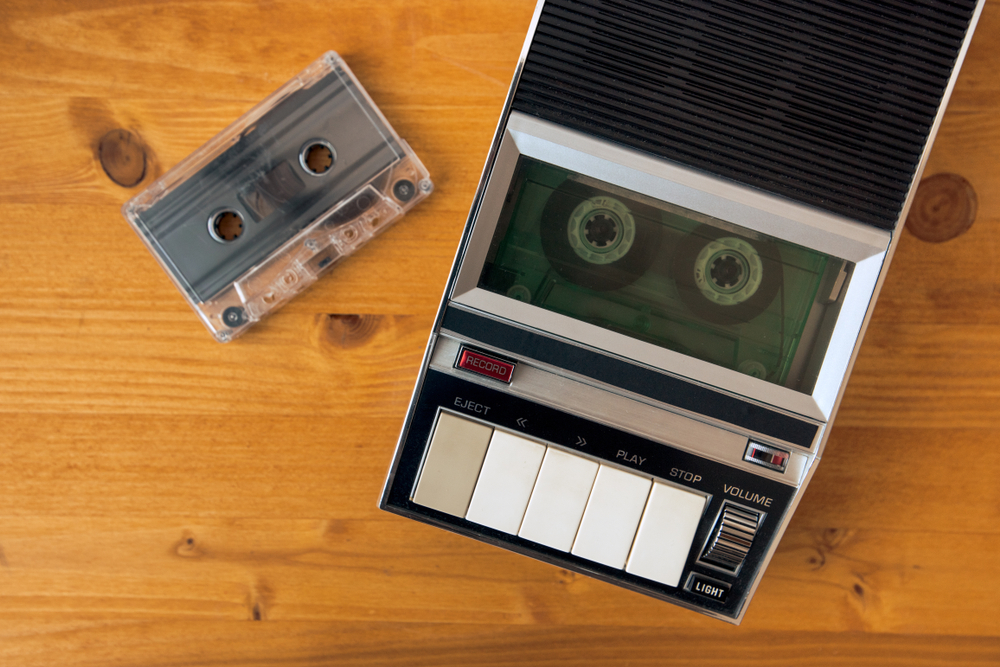
“You could spend a Saturday working on a car in the driveway or going fishing or listening to a record or cassette from front to back,” Knuppel recalls. “None of that needed to be anything. It didn’t need to be a practice or a ritual. It wasn’t content. It wasn’t a side hustle. It was just a Saturday.”
That observation captures one of the defining pressures of modern culture. Social media has created remarkable opportunities for creativity and connection, yet it has also blurred the line between living and performing. Hobbies increasingly become businesses, vacations become photo opportunities, and quiet moments often feel incomplete unless they can be shared with an audience. Even people who rarely post online can find themselves measuring experiences against invisible standards of productivity and achievement.
The psychological cost of this shift is subtle but significant. Research on social comparison consistently shows that frequent exposure to carefully curated versions of other people’s lives can increase anxiety, reduce life satisfaction, and create unrealistic expectations. Knuppel’s point is not that technology is inherently harmful. Rather, he suggests that people miss having spaces in life where nothing needed to be optimized, monetized, or justified. Sometimes the greatest luxury is simply doing something because it brings joy.
Why Self-Reliance Felt So Meaningful
Technology has undoubtedly made modern life more convenient. Smartphones place extraordinary computing power in our pockets, and countless everyday tasks have become faster and easier than previous generations could have imagined. Yet alongside those advances, many people have lost something less obvious: the confidence that comes from understanding and repairing the physical world around them.
Knuppel says many of the men he counsels speak about missing a time when broken appliances, vehicles, or household equipment could often be repaired with basic tools and a simple instruction manual. Problems had visible causes and practical solutions. Today, many products are sealed, software-controlled, or intentionally designed to be replaced rather than repaired, leaving consumers dependent on manufacturers instead of their own abilities.
“It used to be a $14 part in 20 minutes with a screwdriver,” Knuppel explains. “Now it’s a circuit board and the manufacturer doesn’t sell the board separately. So, you’re replacing the whole unit.” He believes what has disappeared goes beyond convenience. Understanding how things worked gave people a sense of competence and authority over their surroundings. Solving tangible problems reinforced confidence in ways that are difficult to replicate when technology functions like an inaccessible black box.
That growing distance from the physical world mirrors another challenge of modern life: the steady erosion of trust. Every day requires dozens of invisible judgments. Is an email genuine or a phishing attempt? Was a review written by a real customer? Is an image authentic or generated by artificial intelligence? Can this news story be trusted, or was it crafted to provoke outrage? Knuppel argues that carrying this constant skepticism consumes mental energy even when people barely notice it. The brain rarely gets the chance to relax because it is continuously evaluating what is real.

What We Really Long for Can Still Be Rebuilt
Knuppel’s reflections could easily leave viewers believing that these experiences disappeared forever. Yet his conclusion is far more hopeful. The qualities people miss are not locked away in another decade. They are choices that individuals and communities can begin reclaiming, even within a world shaped by smartphones, streaming platforms, and artificial intelligence.

Interestingly, many younger people appear to be moving in exactly that direction. Vinyl records have found new audiences. Film cameras and instant photography have become popular again. Some young adults are intentionally replacing smartphones with simpler devices that limit distractions. Community clubs, local hobby groups, and in-person gatherings are quietly growing as more people search for relationships that exist beyond digital platforms. These trends are less about rejecting technology altogether and more about restoring balance between convenience and genuine presence.
One viewer in the comments beneath Knuppel’s video perhaps captured the heart of the conversation better than anyone else. “I’m 63,” they wrote. “I miss the community from the 80s. We were always together with people. We were always laughing and talking and living in the moment. We knew all our neighbors by name. Kids could run free, together, in groups on bikes. Human beings need community more than information. I think we’re starved for it.”
Perhaps that is the lesson hidden beneath our nostalgia. The longing many people feel isn’t asking us to recreate another era or abandon modern progress. It invites us to protect the parts of life that help us feel connected, present, and fully alive. Those moments never truly belonged to the 1980s. They have always belonged to us, waiting to be chosen again.