


What Your Child Really Needs From You Has Nothing To Do With Money
Dinner is on the table, everyone sits in the same room, and one parent is halfway through a work email while another mentally rehearses tomorrow’s morning meeting, and their fork moves on autopilot. A child at the table talks about something that happened at school, something small but bright in their eyes, and receives a distracted “mm-hmm” in return.
Nobody in that house is doing anything visibly wrong, and yet something important is missing from that room, something the child feels with every unanswered glance, and something the parent will later wish they had gone back to catch.
Most parents work hard because they love their children. They chase financial security, better schools, and more comfortable lives because those things feel like a language of love that never needs translating. Children do need safety, warmth, and enough. But a gap exists between what children receive from material comfort and what they carry forward from years of feeling genuinely seen, and that gap runs wider than most families ever expect.
What children need most cannot be found in a toy store, wrapped in a birthday box, or credited to a savings account. What they need lives in something far simpler and far more difficult to give in an era of distraction and relentless overwork. Before we name it plainly, it helps to understand exactly how deeply its absence marks a child who grew up waiting for something that never fully arrived.
Being There And Being Present Are Not The Same Thing
A parent can share a roof with their child for eighteen years and remain, in every way that matters, genuinely absent. Physical proximity is not presence. A body in the same room, eyes aimed at a screen, mind already three problems ahead of the current moment, does not register to a child as a connection. Children feel the difference between being near someone and being with someone long before they have the vocabulary to name the distinction.
Sit with that line long enough to feel its weight. Every other adult in a child’s life, teachers, coaches, grandparents, and family friends, can offer pieces of what a parent offers. None of them can offer the whole thing. No amount of money spent on experiences, tutors, or gifts fills the particular space that a parent’s genuine attention occupies in a developing child’s inner world. When that space stays mostly empty, children do not simply move on and find other sources of comfort. They keep looking for ways to fill it, often in places and with people who were never meant to carry that weight.
What Research Confirms About Involved Parents
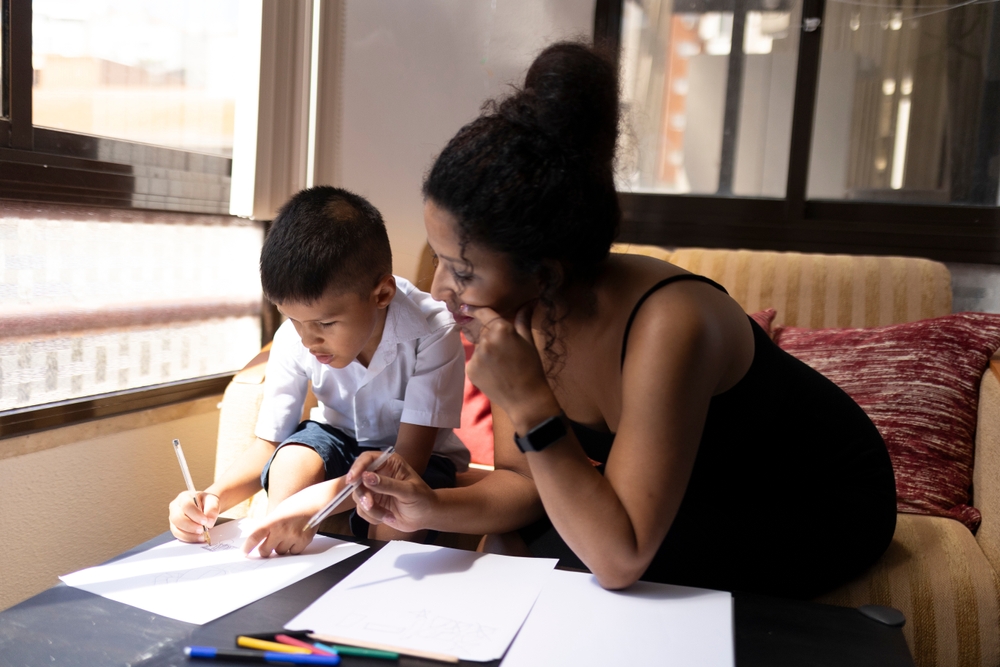
Researchers have spent decades studying what happens inside children when parents genuinely show up, and the findings do not leave much room for ambiguity. Data drawn from the National Institute of Child Health and Human Development Study of Early Childcare and Youth Development, which followed 1,364 children across first, third, and fifth grades, produced results that teachers and parents alike reported seeing from more than one angle.
Children with highly involved parents demonstrated stronger social functioning and fewer behavior problems than their peers. When a child’s level of parent involvement improved over time, that improvement predicted measurable declines in disruptive behavior and real gains in social skills. Both teacher reports and parent reports pointed to the same outcomes, which means the effects did not live only in a parent’s hopeful perception. They showed up in classrooms, in friendships, and in every space where children had to face life beyond their own front door.
Children Need To Feel Noticed

Children watch their parents with an intensity that most adults never apply to anything in their own lives. They track a parent’s mood before a single word is spoken. They notice whether you look up when they walk into a room. They remember which moments landed in your full attention and which ones slipped past unacknowledged, and they build a quiet internal record of where they stand in your list of priorities.
What they want, more than the newest toy or the biggest celebration, is for you to see their smiles, hear their stories, and stay present when their emotions ask something difficult of you. They want you active in the hard moments as much as the easy ones, to stay in the room when their sadness or frustration makes your own afternoon harder than you wanted it to be. When a parent consistently shows up for both kinds of moments, a child grows up carrying a sense of worth that no classroom grade or social achievement could give them on its own.
When a parent misses those moments with regularity, the effect does not announce itself through a single conversation. It accumulates slowly and gets carried forward into adolescence and adulthood as a quiet, persistent sense that they were never quite worth anyone’s full attention.
Security That No Bank Balance Can Provide
Ask any child psychologist what children are searching for when they follow a parent from room to room without any particular request, and the answer always lands in the same place. They are not looking for anything specific except confirmation that the person they love most is still there.
Parents who consistently put financial ambition above time at home may provide everything a child needs in a material sense and still leave them emotionally exposed in ways that take years to recognize or name. Security, in the way children feel it, does not live in a well-stocked refrigerator or a savings account growing on a spreadsheet. It lives in the felt certainty that the person they depend on most will be in the next room when the lights go out, and that person will stay.
Physical warmth carries more weight in this equation than most modern parenting conversations allow. Hugs, a child settling into a parent’s lap, and an arm around small shoulders at the right moment all do real work inside a developing nervous system. Physical touch from a trusted parent supports brain development, lowers stress responses, and guards against the kind of chronic, low-level anxiety that grows in prolonged emotional distance. Presence functions as much as a physiological gift as a psychological one, working on a child’s body through the nervous system as deeply as it works on their mind through connection.
How Presence Builds Communication And Confidence
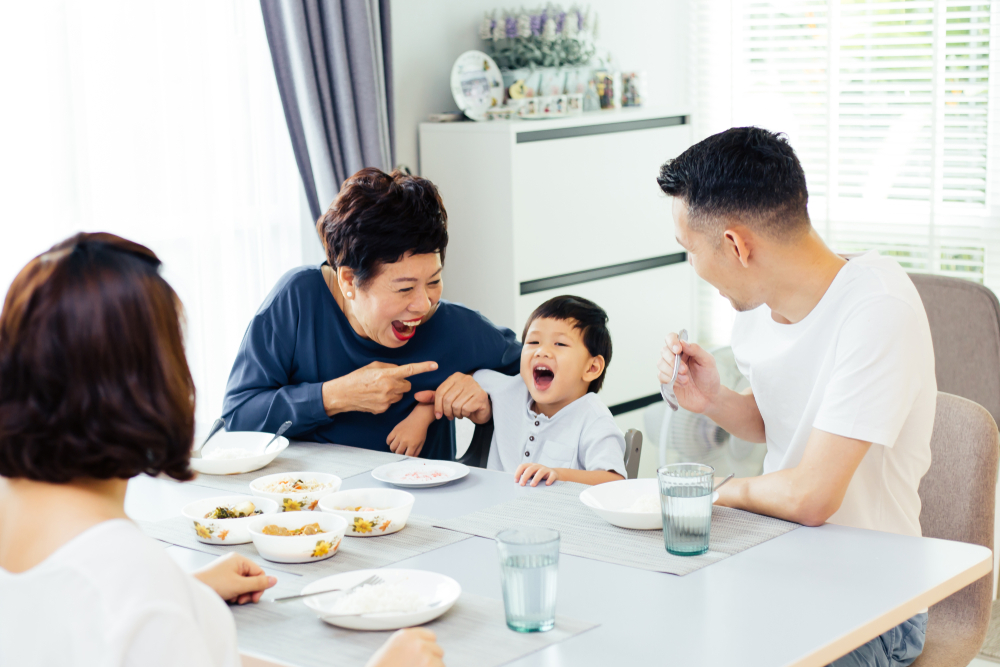
Children learn to speak by listening to their parents speak. They build the capacity to hold a conversation, read emotional cues, and engage with other people by watching how the adults they trust most move through the world. All of that learning asks for a parent who is genuinely in the room rather than merely occupying it.
Children who grow up inside homes where real conversation flows carry stronger vocabulary, better communication skills, and a more confident sense of how to belong in a room full of other people. Every hour a parent spends talking, listening, asking questions, and truly responding builds something in a child that still does its quiet work thirty years later.
Self-esteem moves through the same channel. A parent who attends the school play, sits in the bleachers for the game, helps wrestle through a difficult homework problem, and shows genuine delight in small victories communicates something that needs no words. It tells a child they are worth showing up for, and children who receive that message early and often do not spend their adult years searching for it from everyone else they encounter.
Behavior, Boundaries, And The Parent Who Stays

Children with present, involved parents get into less trouble at school, show lower rates of involvement with alcohol and harmful substances during adolescence, commit fewer dangerous acts, and experience less aggression than children whose parents remain physically close but emotionally distant. Children who feel securely attached to an attentive parent carry something worth protecting in that relationship, and that changes how they move through the world when no one is watching.
Good behavior is less about rules than it is about relationships. A child who knows, at a felt level, that they matter to a caring and present parent carries an internal anchor that most external discipline could never fully replicate.
Practical Ways To Return To The Room
Being more present does not demand a complete restructuring of your life. Small, deliberate shifts in your daily habits can change everything. Here are four ways to start.
Put your phone away during family time: During dinner, during homework, during bedtime, put the phone face down or out of the room entirely. Multitasking during connection is not connection. Your child reads your divided attention as a signal about where they rank, and that signal lands harder than most parents realize.
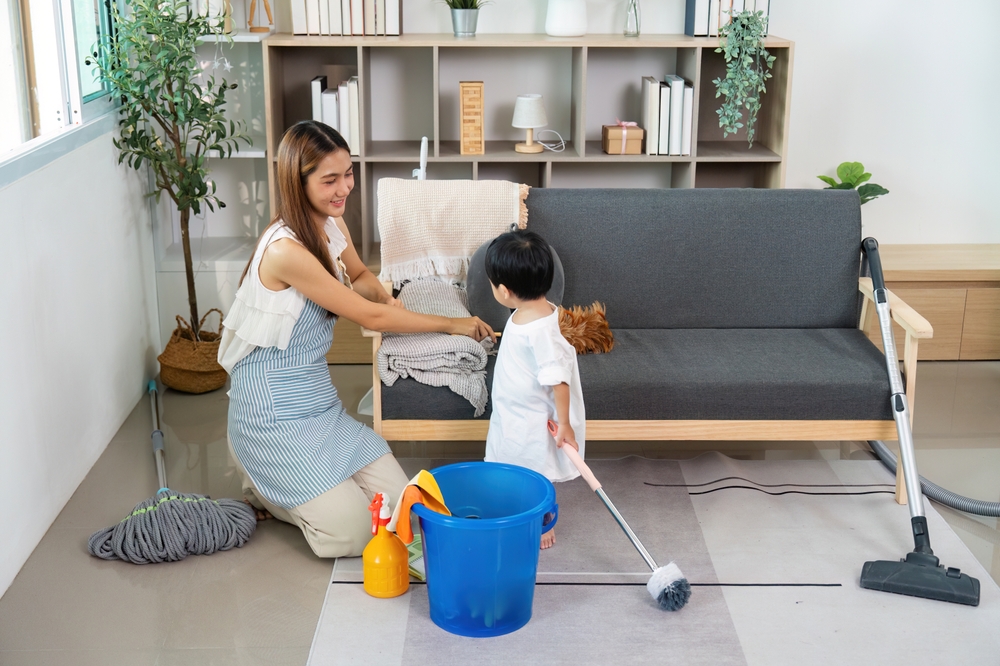
Do household chores together: Folding laundry, washing dishes, sweeping the floor. None of these tasks needs to happen in silence or alone. Invite your child in, let conversation drift wherever it wants to go, and let the chore become the backdrop rather than the point. Bonding rarely announces itself. It happens inside ordinary moments when nobody is trying too hard.
Reset when your mind drifts: Every parent loses focus during time with their child. When it happens, take one breath, tune back into your senses, and return your attention to the person sitting right in front of you. Presence is not a permanent state; you either have it or lack it. It is a choice you make again and again, as many times as the moment asks.
Audit your schedule with honest eyes: If your calendar carries no protected time for your children, something else is taking hours that belong to them. Look at what fills your week and ask which commitments can be released without real loss. Read together. Create something small. Share a room without an agenda. A gratitude practice at the end of each day helps anchor the intention when life pulls hardest against it, and children who watch a parent practice gratitude quietly build that same habit long before they understand what they are learning.
No One Else Can Stand Where You Stand
Childhood does not wait for a parent to finish being busy. It moves forward on its own calendar, and each stage carries moments that arrive only once before they belong to memory rather than the present. A parent who intends to be more present next month, after the promotion, after the mortgage quiets down, will eventually look up and find that the child who needed them in that particular way has already grown past the age of asking.
Every ordinary evening already carries a moment where a parent can choose presence over productivity. A genuine look up from a screen, a question asked with real curiosity, or an arm around small shoulders at exactly the right moment changes something permanently inside a child’s sense of who they are and whether they matter to the people they love most. Your child has been watching for that moment for longer than you know. Give them what only you can provide.